
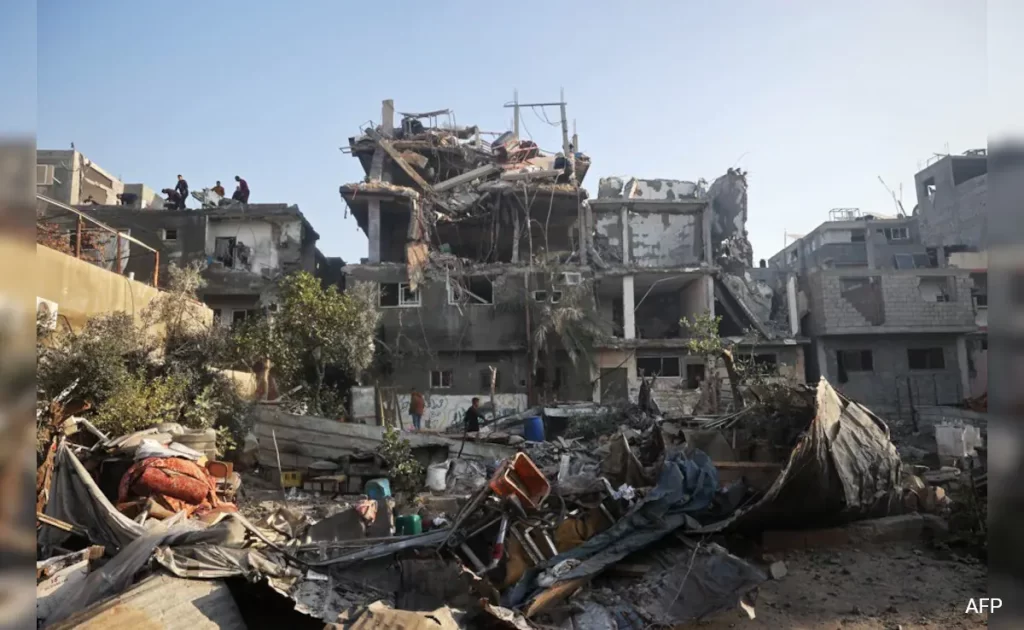
On October 29, 2025, the Gaza Strip was rocked by a devastating wave of airstrikes from Israel that claimed the lives of more than 100 Palestinians, including scores of women and children. Following the bombardment, Israeli forces announced that the ceasefire with Hamas was now back in effect — but analysts warn that the truce stands on perilously unstable ground.
The deadly escalation marks the gravest breach yet of the truce that began on October 10 under a U.S.-brokered agreement. Palestinian health officials in Gaza reported that at least 104 deaths resulted from the overnight strikes, including 46 children. The strikes reportedly targeted what Israel described as “weapons storage sites” and command posts of Hamas militants.
According to Israeli military statements, the bombardment was triggered in response to the death of an Israeli soldier in the southern Gaza region of Rafah. Israel asserted that while it carried out the strikes, it remained committed to the ceasefire regime and expected Hamas to reciprocate. Conversely, Hamas denied responsibility for the incident, accused Israel of violating the truce, and labelled the strikes as deliberate attempts to undermine the agreement.
The ceasefire, which took effect after protracted negotiations, included provisions such as hostage and body returns, prisoner exchanges, and the redeployment of Israeli forces. The renewed violence exposed the deep fragility of the accord and the broader peace plan underlying it. U.S. officials continue to mediate and pressure both sides to adhere to the terms, emphasizing that further escalation could unravel the entire framework.
Beyond the immediate human cost, the latest strikes carry significant regional implications. The high civilian toll — including dozens of children — has prompted international outcry and potential shifts in humanitarian aid strategies in Gaza. The question of long-term governance of Gaza, disarmament of Hamas, and the role of external mediators remain unresolved, placing the truce’s second phase in jeopardy. Analysts warn that without clear and enforceable mechanisms for compliance, the ceasefire may merely be a temporary lull rather than the basis for lasting peace.
While Israel has announced that the ceasefire is back in place, the deadly airstrikes of October 29 have exposed how precarious the peace deal truly is. The interplay between military retaliation and diplomatic restraint now sets the tone for the next stage of the Gaza conflict. Unless both Israel and Hamas recommit to the truce terms — and third-party mediators secure mechanisms to enforce them — the risk of renewed large-scale hostilities looms large. For the civilians of Gaza and Israel alike, the hope of a sustained calm continues to hang by a thread.

