
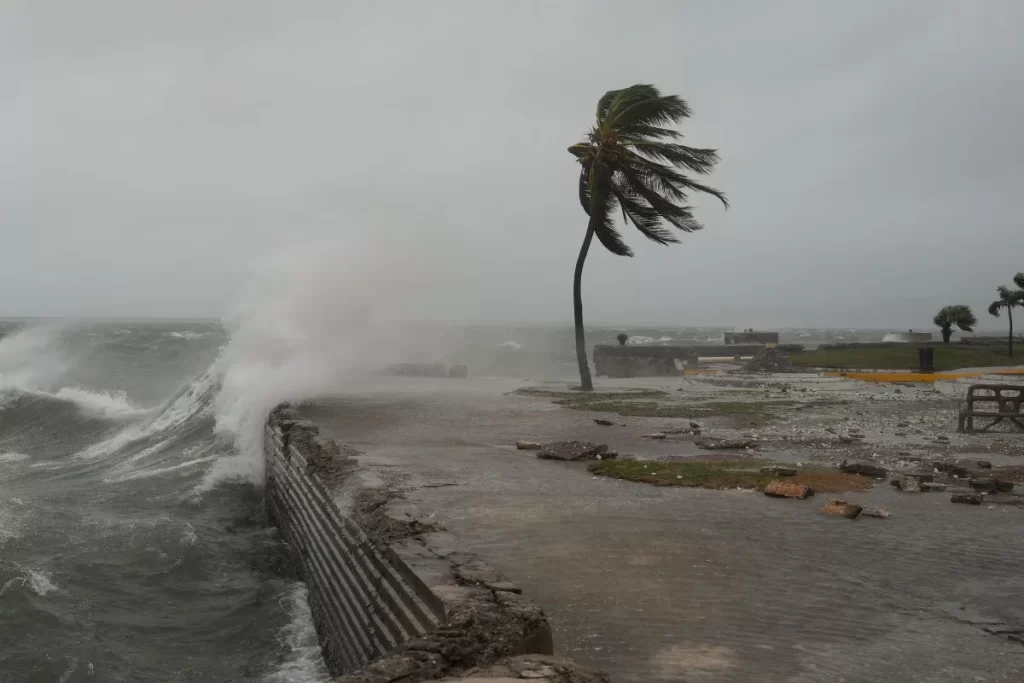
In late October 2025, Hurricane Melissa unleashed catastrophic flooding across southern Haiti, leaving at least 25 people dead and dozens missing in the coastal town of Petit-Goâve. The storm’s relentless rainfall caused the La Digue River to overflow, sweeping away homes, bridges, and roads while trapping residents beneath debris.
According to Haiti’s Civil Protection Agency, the flooding struck with little warning as Melissa’s rain bands intensified overnight. Entire neighborhoods were submerged, with rescue operations hampered by damaged infrastructure and power outages. Local authorities described the situation as one of the worst natural disasters the region has faced since the 2021 earthquake.
“We are still searching for survivors,” said a local official in Petit-Goâve. “Many families have lost everything—homes, livestock, and loved ones. The river rose so fast that people had no time to escape.” Emergency shelters have been set up in nearby schools and churches to house displaced residents.
Severe Infrastructure Damage and Communication Breakdown
Meteorologists reported that Hurricane Melissa reached Category 3 intensity before weakening to a tropical storm over land. The heaviest rainfall—exceeding 250 millimeters in less than 24 hours—triggered flash floods and mudslides across Haiti’s southern peninsula. Roads linking Petit-Goâve to Port-au-Prince were blocked by debris, severely hindering relief efforts.
The flooding also disrupted communication networks and electricity in multiple districts. Humanitarian agencies, including the United Nations Office for the Coordination of Humanitarian Affairs (OCHA) and the Red Cross, have begun deploying aid teams to assess damage and deliver emergency supplies such as clean water, food, and medical kits.
Climate Vulnerability and Ongoing Recovery Challenges
Experts warn that the devastation from Hurricane Melissa highlights Haiti’s growing vulnerability to extreme weather events, worsened by deforestation, poor drainage systems, and limited disaster preparedness. Over 80% of Petit-Goâve’s population reportedly lives in flood-prone areas near riverbanks or unstable hillsides.
Climate scientists have noted a worrying trend in the Atlantic hurricane season, with warmer ocean temperatures contributing to stronger, more destructive storms. “Melissa is another example of how climate change is amplifying tropical cyclone risks for Caribbean nations,” said Dr. Jean-Baptiste Lormier, a climatologist at the University of the Antilles.
Global Aid and Government Response
Haiti’s interim government has declared a state of emergency across the southern provinces and appealed for international assistance. Neighboring countries and regional organizations—including the Caribbean Disaster Emergency Management Agency (CDEMA)—have pledged support in relief coordination and reconstruction efforts.
The World Food Programme (WFP) announced plans to provide emergency rations for 10,000 affected families, while UNICEF has mobilized teams to prevent outbreaks of waterborne diseases such as cholera.
As rescue teams continue to search through the wreckage, the death toll is expected to rise. For many Haitians, the road to recovery will be long and uncertain. Yet amid the devastation, local volunteers and aid workers persist, embodying a spirit of resilience that has defined Haiti through years of hardship.

