
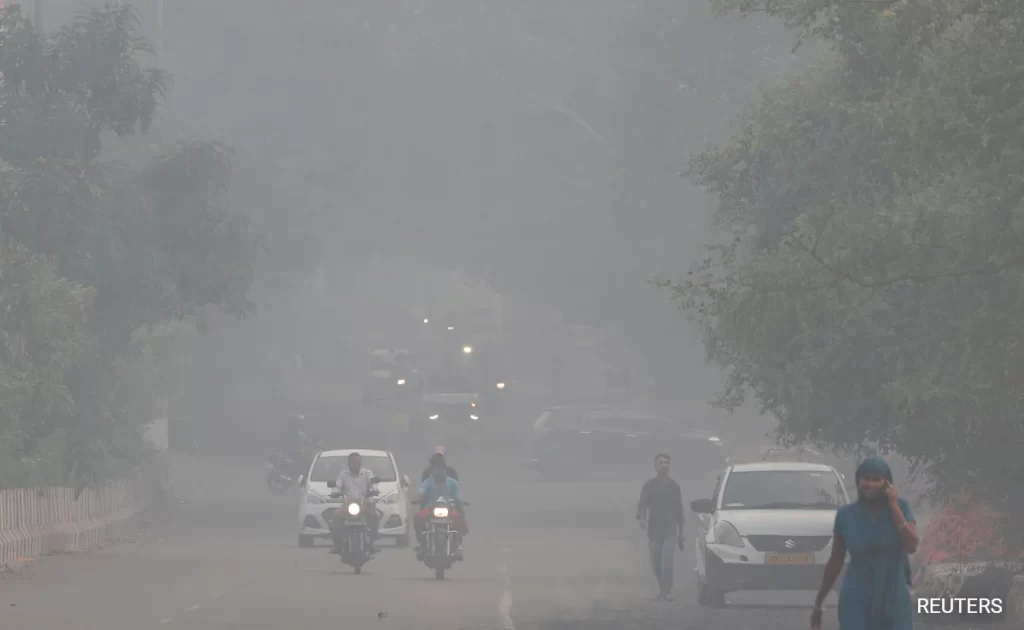
Delhi’s artificial rain initiative with IIT Kanpur has come to a standstill as insufficient atmospheric moisture has hindered progress. The project, designed to combat the capital’s worsening air pollution, was not halted due to financial constraints but rather because the initial trials failed to generate significant rainfall. The ₹3.2 crore program, aimed at conducting five cloud-seeding tests, highlights both the ambition and the limitations of weather-modification technologies in addressing Delhi’s persistent air quality crisis.
The Delhi government, in partnership with the Indian Institute of Technology Kanpur, the India Meteorological Department, and the Indian Institute of Tropical Meteorology in Pune, planned a series of artificial rain trials over northwest Delhi. The goal was to disperse fine particulate matter through precipitation, providing temporary relief from hazardous pollution levels. The aircraft, a Cessna 206-H (VT-IIT) operated by IIT Kanpur, was approved for flight after receiving clearances from the Directorate General of Civil Aviation and 23 other departments.
Preparations were completed earlier this month, including funding transfers, permissions, and the aircraft’s positioning in Meerut. However, despite the logistical readiness, the first trial could not proceed as planned. Delhi Environment Minister Manjinder Singh Sirsa clarified that the issue lies in the weather conditions. The region currently lacks sufficient cloud moisture, a critical factor required for cloud seeding to be effective.
IIT Kanpur Director Manindra Agrawal emphasized that successful cloud seeding requires moisture levels of at least 40 to 50 percent. Without the right atmospheric conditions, any attempt would be futile. Experts further noted that even if artificial rain does occur, its impact would be temporary—lasting no more than two weeks. They argue that cloud seeding cannot replace comprehensive, long-term strategies aimed at reducing emissions from vehicles, industries, and construction.
Environmental scientists have expressed skepticism about relying on such short-term measures to tackle Delhi’s chronic pollution. They argue that while artificial rain may provide a brief respite, it does not address the structural causes of poor air quality, such as unchecked urban growth, vehicular congestion, and crop residue burning in neighboring states. Moreover, the unpredictability of weather patterns makes the success of cloud seeding uncertain, especially in a dry atmosphere like Delhi’s during winter months.
The ₹3.2 crore budget for the five planned trials includes costs for equipment, chemical agents, and operational logistics. While some critics called it an expensive experiment, officials insist that financial considerations are secondary to scientific feasibility. The government remains hopeful that future weather conditions will permit the resumption of trials, potentially marking India’s first large-scale urban cloud-seeding attempt aimed at pollution control.
The delay in implementation highlights the complexity of using artificial weather techniques to mitigate environmental crises. It also underscores the need for long-term solutions, including stricter emission standards, improved waste management, and sustainable transportation policies. As Delhi faces another smog-laden winter, experts caution that technological interventions like cloud seeding can at best serve as temporary relief—not a cure for the capital’s deep-rooted pollution problem.

