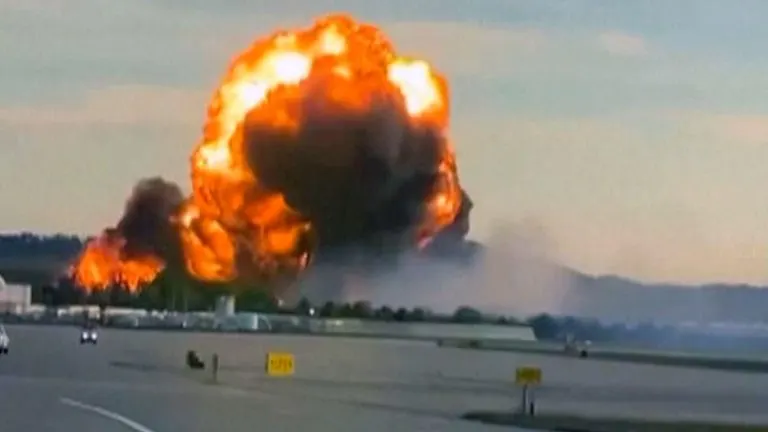
A devastating incident struck air-cargo operations on Tuesday, November 4, 2025, when UPS Airlines Flight 2976, operated by a McDonnell Douglas MD-11 cargo aircraft, crashed shortly after take-off from Louisville Muhammad Ali International Airport in Kentucky. The aircraft, en route to Honolulu, Hawaii, exploded into a fireball near the end of the runway, killing at least 14 people — including the three-member flight crew — and injuring others on the ground. As authorities scramble to determine the cause, major cargo carriers have taken precautionary actions, and the incident has raised urgent questions about fleet safety and maintenance protocols.
The tragic event occurred around 5:15 p.m. local time as the MD-11 departed the Louisville hub, home to UPS’s massive freight operations. Witnesses described a loud explosion, a left wing engulfed in flames, and an engine separating mid-take-off. Ground casualties approached double digits as the aircraft impacted an industrial zone adjacent to the runway, compounding the human toll.
In response, UPS grounded its entire MD-11 fleet “out of an abundance of caution,” following a recommendation from the aircraft’s manufacturer, Boeing. Its competitor, FedEx Express, similarly suspended operations of its MD-11 cargo aircraft. These actions reflect the scale of concern across the air-freight sector, given how integral the MD-11 remains for long-haul cargo routes.
Investigators from the National Transportation Safety Board (NTSB) and the Federal Aviation Administration (FAA) are examining flight data and maintenance records. Early findings point to structural and maintenance issues — in particular, this aircraft had undergone servicing in San Antonio, Texas, in September and October after a crack was detected in a center-wing fuel-tank structure. The NTSB has recovered the cockpit voice recorder and flight-data recorder and is analyzing whether the engine detachment or wing fire triggered the crash.
The implications are substantial. The Louisville hub is a critical node for UPS’s international supply-chain network. The grounding of a portion of its fleet will ripple through logistics timelines, likely affecting package delivery schedules worldwide. Meanwhile, aviation-safety experts stress this crash underscores the risks inherent in aging freighter aircraft, especially those repurposed from passenger service and used intensively in global commerce.
The crash of UPS Flight 2976 marks one of the deadliest cargo-aircraft accidents in recent U.S. history and has triggered far-reaching consequences across aviation and logistics sectors. With at least 14 confirmed fatalities and multiple wounded, the urgency of the investigation is evident. As the NTSB delves into maintenance records, engine separation, and structural integrity of the MD-11 platform, the industry will watch closely. The grounding of fleets by UPS and FedEx signals a shift toward heightened caution and renewed focus on the safety of aging aircraft in global cargo operations.