
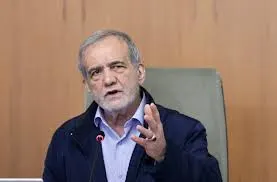
Iranian President Masoud Pezeshkian stated on Friday, November 7, 2025, that the Islamic Republic of Iran remains committed to peace but will not be pressured into abandoning its nuclear and missile programmes. His remarks came amid renewed global debate on sanctions, regional stability, and Iran’s defence posture, signaling Tehran’s firm stance on sovereignty and self-defence.
Pezeshkian’s declaration reflected both openness to dialogue and resistance to external coercion. He affirmed that Iran is willing to engage in diplomatic discussions within international frameworks but will not compromise its right to scientific advancement or defence. “We are willing to hold talks, but not under the condition that we must give up our science or the right to defend ourselves,” he said. The statement, viewed as a reaffirmation of Iran’s long-standing policy, drew attention amid speculation over potential diplomatic overtures involving the United States and European powers.
While reiterating Iran’s desire for peace, Pezeshkian stressed that his country would never accept humiliation or one-sided demands. He emphasised that Iran’s ballistic missile capability serves purely as a deterrent, designed to ensure national security rather than to threaten other nations. He added that Iran seeks to live “in peace and security, but not in humiliation,” rejecting what he described as attempts by powerful nations to impose conditions on Tehran’s domestic and military affairs.
The backdrop to his remarks involves a complex web of geopolitical tensions. Iran’s nuclear enrichment programme and missile arsenal have long been sources of contention with Western countries, particularly the United States and its allies. Tehran maintains that its nuclear activities are entirely peaceful, dedicated to energy production and medical research, and not aimed at developing nuclear weapons. However, scepticism persists among Western governments, and regional actors like Israel continue to express concern over Iran’s strategic intentions.
In recent months, there have been renewed discussions around easing U.S. sanctions in exchange for curbs on Iran’s nuclear development. However, these efforts have often faltered due to mutual distrust and conflicting demands. Pezeshkian’s comments suggest that Tehran will not accept any agreement that undermines its scientific autonomy or military deterrence. The Iranian leadership appears determined to protect what it perceives as its sovereign rights, even if that stance prolongs economic hardships under ongoing sanctions.
The president’s statement also highlights a broader message of balance — a call for peaceful coexistence while asserting national pride and independence. Iran’s insistence on dialogue, coupled with a refusal to capitulate to foreign pressure, suggests that future negotiations with Western powers will need to address Tehran’s core concerns rather than impose unilateral restrictions. For the international community, Pezeshkian’s words reaffirm that diplomacy with Iran must navigate a delicate equilibrium between engagement and enforcement.
In conclusion, President Masoud Pezeshkian’s remarks underline Iran’s dual commitment to peace and sovereignty. While signalling openness to diplomacy, Tehran remains steadfast in preserving its nuclear and missile programmes as essential elements of its national identity and defence strategy. As the global community continues to deliberate on sanctions and non-proliferation, Iran’s position serves as a reminder that meaningful progress will require dialogue grounded in mutual respect and recognition of sovereign rights.

