
Health officials in the Gaza Strip have reported that the death toll from the ongoing war between Gaza and Israel has now exceeded 69,000 — a grim milestone that underscores the devastating human cost of a conflict now in its third year. According to the Gaza Health Ministry, the latest figure stands at 69,169 deaths as of November 8, 2025.
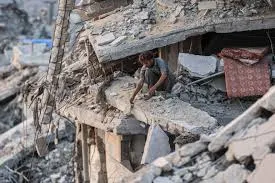
The sharp rise in fatalities is attributed largely to the recovery of bodies from under the rubble in Gaza and the identification of previously unaccounted victims since the ceasefire began in October 2025. The truce deal between Israel and Hamas included the exchange of remains of hostages and bodies of dead Palestinians — underlining how even during a fragile peace, the consequences of war continue to unfold. Officials say that since the truce took effect, 241 people have been killed and another 614 injured in Gaza, as rescue teams continue to retrieve bodies from the ruins.
Beyond the immediate death toll, the conflict has left deep and lasting scars on Gaza’s infrastructure and civilian population. Hospitals and homes remain in ruins, humanitarian access continues to be restricted, and the cumulative toll of displacement, destruction, and trauma grows daily. Analysts warn that the official figure of 69,169 may still understate the full human cost, given the difficulties in retrieving bodies and verifying all casualties.
Meanwhile, in the occupied West Bank, violence between Israeli settlers and Palestinian civilians has intensified, particularly around the olive harvest season. This escalation has raised fears that the broader regional situation remains unstable despite the Gaza truce.
The rising death toll carries major implications. For one, the sheer scale of fatalities underscores how destructive the war has been to Gaza’s civilian population. Although the Gaza Health Ministry does not provide breakdowns of combatants versus non-combatants, observers note that the majority of casualties are believed to be civilians, including women and children.
The body-exchange mechanism built into the ceasefire also highlights how the humanitarian dimension remains central to any durable pause in the fighting. Each returned set of remains represents not only an individual loss but also political and diplomatic leverage for both sides.
The continued recovery of bodies further reveals a troubling reality — significant numbers of victims remain unaccounted for and buried beneath debris. The incomplete nature of the death tally suggests that the true human cost of the conflict may be even higher than currently reported.
As the Gaza death toll surpasses 69,000, the war between Israel and Hamas continues to exact a staggering human cost. While the recent ceasefire offers a fragile respite, the ongoing exchanges of bodies and the steady recovery of victims highlight that for many in Gaza, peace remains distant. The devastation stretches beyond immediate casualties — it also perpetuates a cycle of trauma, loss, and uncertainty. The international community, regional actors, and the parties themselves now face the urgent task of turning this temporary calm into lasting protection for civilians and a credible path toward rebuilding lives in Gaza.

