
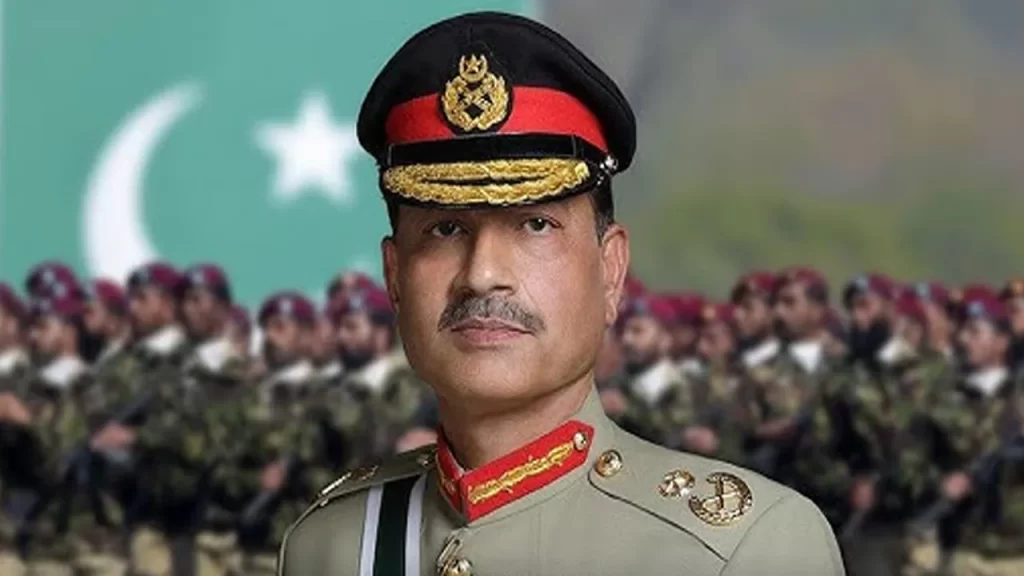
Pakistan’s political landscape witnessed renewed turbulence on Saturday, November 8, 2025, as Law Minister Azam Nazeer Tarar tabled the 27th Constitutional Amendment Bill in the Senate. The proposed legislation seeks to restructure the country’s military command framework — a move that has triggered heated debate among political parties, legal experts, and civil society groups concerned about the potential erosion of civilian authority.
According to the draft, the bill aims to formalize new mechanisms for the appointment, promotion, and accountability of top military officials. It reportedly proposes the creation of a National Security Council Secretariat, which would coordinate defense and internal security policy decisions. While the government insists that the amendment will “modernize and streamline” military governance, critics argue that it could entrench military influence over Pakistan’s political system, diminishing parliamentary oversight and democratic checks and balances.
Opposition parties swiftly condemned the bill, labeling it an attempt to institutionalize military dominance. Former Prime Minister Shehbaz Sharif of the Pakistan Muslim League-Nawaz (PML-N) stated that the move “undermines the principle of civilian supremacy” enshrined in Pakistan’s Constitution. Similarly, the Pakistan Tehreek-e-Insaf (PTI) termed the amendment “a constitutional overreach” that threatens to tilt the balance of power further away from elected representatives.
Legal scholars have also voiced apprehension. Constitutional expert Dr. Osama Malik noted that the proposed changes could blur the separation of powers between civilian and military institutions. “If passed, the amendment could legally formalize what has long been criticized as Pakistan’s deep-state structure,” he remarked, emphasizing the potential implications for governance and the rule of law.
Government officials, however, have defended the bill as a “necessary reform.” Minister Tarar argued that the amendment is intended to ensure better coordination between civil and military leadership in matters of national security. “This is not about reducing civilian oversight but about strengthening national decision-making structures,” he asserted during the Senate session.
The Senate debate is expected to extend into next week, with opposition senators demanding greater transparency and a clause-by-clause review before the bill proceeds to the National Assembly. Analysts suggest that the proposed amendment could face significant hurdles if opposition parties unify against it, especially given growing public skepticism about the military’s political role.
Observers also highlight the bill’s broader implications for Pakistan’s democratic evolution. If enacted, it could reshape the institutional power dynamics that have long defined the country’s governance — a system where the military has often exerted behind-the-scenes influence. Human rights organizations have urged lawmakers to prioritize constitutional balance and ensure that any reforms uphold democratic accountability.
As the debate unfolds, Pakistan stands at a critical juncture once again — confronting questions about the future of civilian supremacy, constitutional governance, and the delicate civil-military equilibrium that has shaped its history for decades.

