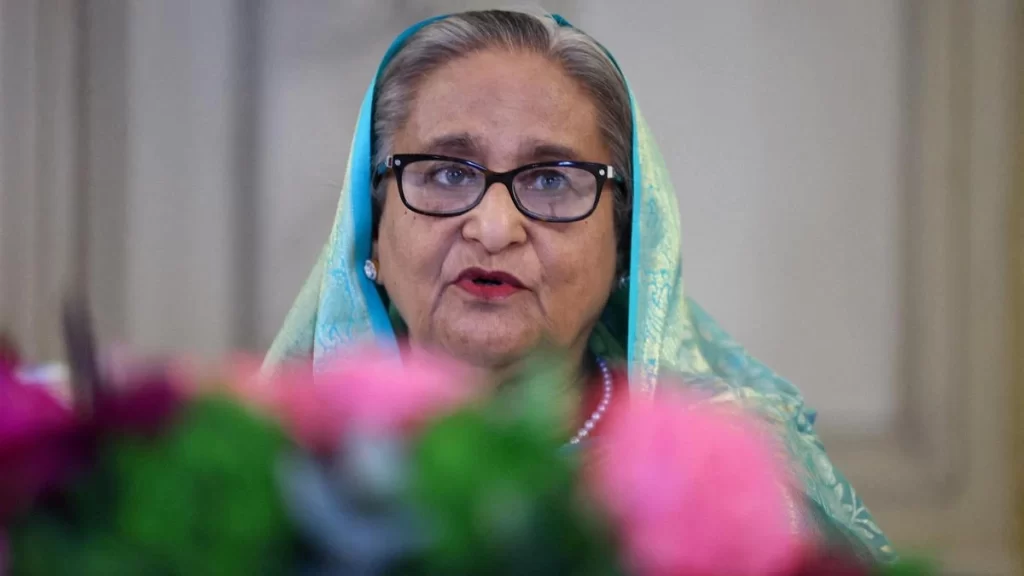
In a landmark and deeply polarising verdict, Bangladesh’s International Crimes Tribunal (ICT) has sentenced former Prime Minister Sheikh Hasina to death in absentia, declaring her guilty of crimes against humanity. The ruling has intensified political tensions and triggered heightened security across Dhaka, raising alarm over potential unrest.
Verdict and Charges
The three-member tribunal, led by Justice Md Golam Mortuza Mozumder, found Hasina guilty on multiple counts, including ordering lethal force, incitement, and failure to prevent killings during mass protests. Prosecutors presented five formal charges, ranging from murder and torture to conspiracy. Alongside Hasina, former home minister Asaduzzaman Khan Kamal was also handed the death sentence, while ex-police chief Chowdhury Abdullah Al‑Mamun, who cooperated with the tribunal, received a prison term.
The verdict described Hasina as the “mastermind of the killings” during a brutal crackdown on a student-led uprising in July–August 2024, marking one of the most severe judgments against a former head of government in Bangladesh’s history.
Backdrop: The Uprising and Its Aftermath
The crisis originated from a student-led revolt in mid-2024, which escalated into nationwide protests. Tribunal findings estimate that up to 1,400 people may have died, many from state-led violence using helicopters, drones, and live ammunition. Hasina fled to India in August 2024, refusing to return to face trial, and has denounced the tribunal as politically motivated. Earlier this year, she was sentenced to six months in prison for contempt of court following a leaked audio tape widely circulated in Bangladesh.
Security and Reaction
Authorities imposed tight security around the tribunal, deploying the army, border guards, paramilitary forces, and riot police. Ahead of the verdict, Dhaka police issued shoot-on-sight orders for anyone involved in arson or bomb attacks, underscoring the volatile mood in the capital. In her first response since the sentence, Hasina described the trial as a “kangaroo court”, rejecting the judgment as a politically driven process.
Implications and Analysis
The ruling marks one of the most consequential moments in Bangladesh’s modern political history. By convicting a former head of government of crimes against humanity and imposing the death penalty, the tribunal sends a strong message about accountability — but also risks deepening societal fissures.
- Political stability: The death sentence could inflame unrest among Hasina’s supporters, particularly within the Awami League, which remains a powerful force in Bangladeshi politics.
- Judicial credibility: Critics argue the tribunal lacks impartiality, while supporters say it’s a long-overdue reckoning for past abuses.
- International ramifications: The case draws global attention to human rights in Bangladesh and may prompt calls for international scrutiny.
- Future governance: With Hasina’s political future in limbo, the interim government faces the delicate task of maintaining order and legitimacy during a fraught transition.
The death sentence for Sheikh Hasina represents a dramatic and unprecedented turn in Bangladesh’s political and judicial saga. As Dhaka braces for potential unrest, the verdict raises profound questions about justice, retribution, and the country’s path forward. Whether this marks a moment of accountability or deepens political division will depend on how the interim government and wider society navigate the fallout.