
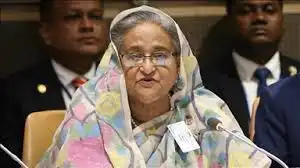
In a development that has intensified political tensions across Bangladesh, a special International Crimes Tribunal in Dhaka has sentenced former Prime Minister Sheikh Hasina to death in absentia for crimes against humanity connected to the violent protests that swept the country in mid-2024. The verdict has drawn strong opposition from the United Nations and several leading human rights organisations, which have raised concerns about due process and the broader implications for Bangladesh’s democratic future. Hasina, who was ousted from power in August 2024, is currently living in exile in India.
Details of the Tribunal’s Verdict
The three-judge tribunal found Hasina guilty on five major counts, including incitement to violence, ordering killings, and failing to prevent atrocities during the student-led uprising that left more than 1,400 people dead. According to the court, Hasina authorised the deployment of drones, helicopters, and lethal weapons against unarmed demonstrators, actions the tribunal classified as crimes against humanity.
Two of the charges resulted in death sentences, while another carried a life term. Former Home Minister Asaduzzaman Khan Kamal received a death sentence in the same trial, also in absentia. Former Police Chief Chowdhury Abdullah Al-Mamun, who cooperated with investigators, was sentenced to five years in prison.
UN and Human Rights Groups Express Strong Opposition
The United Nations expressed deep concern over the ruling, noting that the death penalty undermines global human rights standards. UN officials questioned whether the trial met internationally accepted norms of fairness, particularly given that Hasina was tried in absentia and allegedly denied adequate legal representation.
Human Rights Watch and Amnesty International echoed these concerns. Rights advocates argued that the proceedings lacked transparency and failed to meet basic judicial safeguards. Amnesty International reiterated its long-standing position that the death penalty represents a violation of human rights, especially when issued in politically charged cases.
Political Repercussions Inside Bangladesh
The verdict has arrived at a delicate moment for Bangladesh, where the Awami League—the party Hasina led for over a decade—has already been banned following the events of 2024. National elections are scheduled for February 2026, and the ruling has heightened tensions ahead of the crucial vote.
Authorities in Dhaka imposed strict security measures prior to the announcement, anticipating public unrest. While families of victims of the 2024 violence welcomed the verdict, supporters of Hasina condemned it as a politically motivated act designed to eliminate her influence permanently.
In exile, Hasina denounced the tribunal as illegitimate, claiming she never ordered the use of lethal force and acted only to restore stability during widespread unrest.
Regional and International Implications
The tribunal’s decision has placed India in a sensitive diplomatic position. Bangladesh’s interim government has requested Hasina’s extradition under existing bilateral agreements—an issue that could strain relations between the two neighbouring countries.
Key implications moving forward include:
- Pressure on India to decide whether to extradite Hasina or continue to provide refuge.
- Increased scrutiny of Bangladesh’s judicial processes by the international community.
- Risk of renewed unrest, particularly from Awami League sympathisers.
- Heightened debate over the use of the death penalty in politically sensitive cases.
The death sentence handed to Sheikh Hasina marks a watershed moment in Bangladesh’s modern political history. While the tribunal frames the ruling as a long-awaited step toward accountability, global criticism highlights lingering doubts about fairness and judicial independence. As the country moves toward the 2026 elections, the verdict is likely to shape not only domestic politics but also Bangladesh’s relationships on the international stage.

