
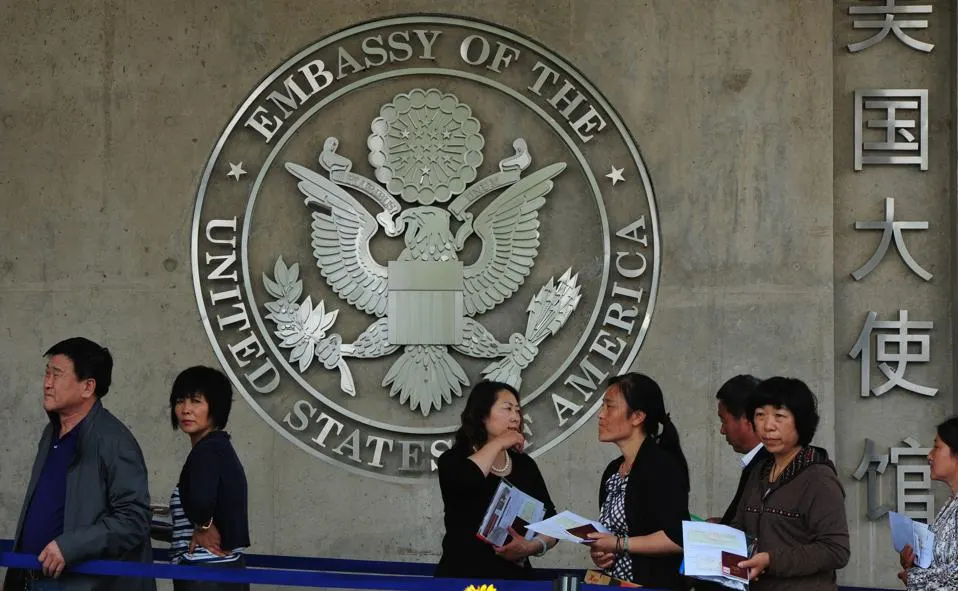
The United States is witnessing a significant and sustained decline in the number of Chinese students enrolling in its universities, marking the fifth consecutive year of downward movement. Stricter visa rules, heightened security protocols, and prolonged processing delays have collectively contributed to this trend, reshaping one of the world’s most influential international education corridors.
Rising Visa Hurdles Fuel Uncertainty
A central driver of the decline has been the increasingly challenging visa landscape. Recent policy changes introduced more rigorous background checks for Chinese applicants, particularly those pursuing STEM fields or individuals perceived to have affiliations with sensitive sectors. Added layers of scrutiny — including social media reviews and intensified security vetting — have significantly lengthened processing times and increased rejection rates.
Compounding the situation, periodic suspensions of visa interview appointments have created further bottlenecks. For many Chinese families, the unpredictability of securing an F-1 student visa has transformed the once-straightforward process into a source of stress and financial risk.
Sharp Decline from Peak Enrollment
Data from higher education monitoring bodies indicate that the number of Chinese students in the U.S. has fallen from a peak of around 370,000 in 2019 to roughly 265,000 during the 2024–25 academic year. This represents a drop of nearly 100,000 students within five years and reflects persistent geopolitical tensions.
Despite the decline, Chinese students continue to represent a major share of STEM program enrollments, with more than half pursuing degrees in science, technology, engineering, and mathematics. However, these very fields have become focal points for security-based visa scrutiny, further discouraging prospective applicants.
Economic and Career-Related Concerns Intensify
Rising tuition costs at U.S. institutions — with annual expenses at private universities frequently climbing above $40,000 to $50,000 — are creating additional financial barriers. Middle-class Chinese families, once a major source of international students, are increasingly reconsidering whether the investment remains worthwhile.
Moreover, changing U.S. work visa policies have raised concerns among students about their career prospects after graduation. Restrictions on optional practical training (OPT), rising visa revocation risks, and uncertain employment pathways have diminished the long-standing attraction of building a career in the United States post-study.
Shift Toward Alternative Global Destinations
As the U.S. becomes less accessible, Chinese students are increasingly turning to destinations such as Hong Kong, Singapore, the United Kingdom, and parts of Europe. These regions offer more predictable visa frameworks, globally competitive universities, and reduced political friction — factors that have become decisive for many families navigating international education options.
Implications for Universities and Diplomacy
The reduced influx of Chinese students has serious financial implications for U.S. universities, many of which rely heavily on international tuition revenue. Beyond monetary challenges, decreased Chinese enrollment also threatens to reduce campus diversity and weaken academic collaboration between the world’s two largest economies.
The decline signals more than shifting enrollment numbers — it underscores the deepening geopolitical divide between Washington and Beijing. Academic exchange has long played a role in fostering soft diplomacy, and its erosion could further strain bilateral relations.
The continuous drop in Chinese student enrollment in the United States marks a pivotal moment for global education flows. With visa hurdles, economic pressures, and security concerns reshaping decisions, the U.S. risks losing its status as the preferred destination for China’s top talent. As alternative regions step in to fill the gap, the future of U.S.–China educational ties remains uncertain, carrying implications that extend far beyond university campuses.

