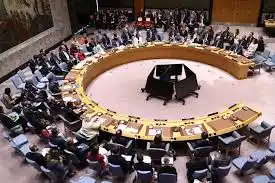
The United Nations Security Council has taken a historic step toward Gaza’s future by approving a U.S.-backed resolution to establish an International Stabilization Force (ISF) in the territory. The resolution, passed on November 17, aims to restore security, oversee reconstruction, and potentially lay the groundwork for a future independent Palestinian state.
A New Diplomatic Horizon for Gaza
The approval follows a fragile truce between Israel and Hamas and is grounded in a U.S.-crafted 20-point peace plan. The resolution provides a two-year mandate for the ISF, which will manage security, demilitarization, and infrastructure rebuilding in Gaza. A key feature is the formation of a transitional governance body, dubbed the “Board of Peace,” which will coordinate humanitarian aid and civil administration.
Mandate and Mission
Under the UN mandate, the ISF will:
- Secure Gaza’s borders to prevent weapons flow in and out.
- Use all necessary measures, including force if required, to enforce security and stabilization.
- Demilitarize Gaza, dismantling military infrastructure of non-state armed groups.
- Train a reconstituted Palestinian police force to manage local law enforcement.
- Facilitate humanitarian aid corridors, coordinating with neighboring Egypt and Israel.
- Oversee phased Israeli troop withdrawals, contingent on demilitarization benchmarks.
Conditional Pathway to Statehood
The resolution does not immediately guarantee Palestinian statehood but offers a conditional framework: progress toward a sovereign Palestinian entity depends on internal reforms within the Palestinian Authority and substantial reconstruction in Gaza. Only after meeting these benchmarks would a credible path to statehood be considered.
Reactions
- Supporters: The U.S. welcomed the adoption as a historic step toward regional stability and reconstruction.
- Arab and Muslim nations, including Egypt, Qatar, Saudi Arabia, Indonesia, Jordan, Turkey, and the UAE, expressed support, urging swift UN implementation.
- Hamas objected strongly, calling the ISF’s disarmament mandate a violation of Palestinian sovereignty.
- Israel welcomed security measures but opposed the language on Palestinian statehood.
- UN Secretary-General António Guterres emphasized that any stabilization plan must support a two-state solution and maintain Gaza-West Bank ties.
Implications and Challenges
The resolution legitimizes a U.S.-led reconstruction and stabilization effort and may encourage troop contributions from countries such as Egypt, Jordan, Indonesia, and Qatar. However, major challenges remain: no country has yet committed troops to the ISF, Hamas continues to resist disarmament, and ambiguity in the statehood pathway could hinder long-term political buy-in.
The UN Security Council’s endorsement of the Gaza stabilization plan marks a significant diplomatic development. By authorizing an international force and creating a transitional governing body, the resolution offers a framework for reconstruction, security, and a conditional pathway to Palestinian self-determination. Its success will depend on cooperation, contributions, and political reforms, making the coming months critical in determining whether this initiative translates into lasting peace for Gaza.