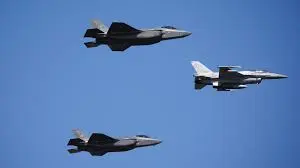
In a significant escalation of regional tensions, Poland and its NATO allies activated military aircraft on Wednesday, November 19, 2025, following a large-scale Russian drone and missile assault on western Ukraine. The strikes, which devastated the city of Ternopil — located about 200 kilometers from the Polish border — left at least 19 people dead and dozens injured. The incident has raised fresh concerns about potential spillover into NATO territory and underscored Europe’s heightened state of alert.
1. Scale and Impact of the Russian Assault
Ukrainian authorities reported that Russia launched an extensive overnight attack involving more than 470 drones and nearly 50 missiles. Ternopil, one of the hardest-hit urban centers, saw the top floors of a nine-story residential building reduced to rubble. Among the 19 fatalities were several children, and at least 66 individuals sustained injuries.
The strikes also damaged key energy infrastructure across seven Ukrainian regions, triggering widespread power outages at a time when temperatures continue to fall. Emergency services worked through the night to rescue trapped residents, stabilize buildings, and restore essential utilities where possible.
2. Polish Military Response and Heightened Security Measures
In direct response to the proximity and scale of the attack, Poland swiftly activated its air-defense readiness protocols. Fighter jets were scrambled, early-warning aircraft were deployed, and ground-based air-defense systems were placed on high alert.
Airports in southeastern Poland, including Rzeszów and Lublin, were temporarily closed due to heightened airspace risks. Polish officials emphasized that the activation of aircraft and radar systems was a “preventive measure” to safeguard national airspace in light of the intense activity near its eastern border.
3. NATO Coordination and Regional Alertness
Poland’s actions were mirrored by heightened readiness across NATO’s eastern flank. Romania also scrambled jets after a Russian drone briefly crossed into its airspace during the assault.
This coordinated response reflects NATO’s increasing concern about Russia’s expanding aerial operations near alliance territory. The incident follows previous drone incursions earlier in the year, when unidentified aerial objects — widely believed to be of Russian origin — violated Polish airspace, prompting joint assessment and monitoring by NATO partners.
4. Growing Security Implications for Europe
The latest assault underscores the growing volatility along NATO’s eastern border. Poland’s leadership has repeatedly warned of the risks posed by escalating Russian drone and missile activity and has committed to an accelerated military modernization program.
This initiative includes strengthening air-defense capabilities, acquiring advanced radar systems, and improving response times to low-flying aerial threats — all measures aimed at preventing potential cross-border incidents that could trigger wider conflict under NATO’s collective defense obligations.
Engagement Summary (Key Points):
- 19 deaths and 66 injuries reported in Ukraine
- Ternopil, a city near Poland’s border, heavily impacted
- More than 470 drones and 48 missiles launched by Russia
- Poland scrambles fighter jets and closes southeastern airports
- NATO allies, including Romania, also activate air-defense responses
Conclusion:
Poland’s rapid deployment of fighter jets in response to Russia’s massive aerial offensive illustrates the growing risks posed by the war in Ukraine to neighboring NATO states. As Russia intensifies its long-range strikes, the likelihood of cross-border incidents increases, compelling NATO members to maintain elevated readiness. The events of November 19 serve as a stark reminder that the conflict’s repercussions extend far beyond Ukraine’s borders and continue to shape Europe’s evolving security landscape.