
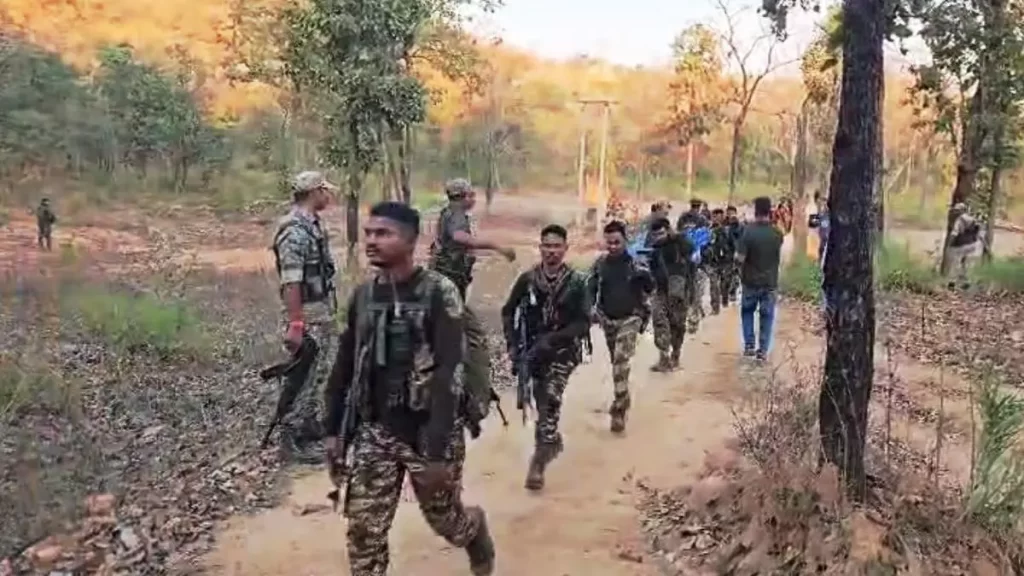
In a substantial blow to Left-Wing Extremism (LWE), security forces killed a total of 13 Maoists in two separate encounters in Andhra Pradesh and Chhattisgarh on November 18 and 19, 2025. Officials described the coordinated actions as a decisive strike that further weakens Maoist operational capability, calling this phase the “weakest period in the movement’s recent history.”
Dual-State Operations Mark a Significant Breakthrough
The first encounter took place on November 18 in the Alluri Sitarama Raju district of Andhra Pradesh, where security personnel engaged an armed Maoist group during a search operation. The exchange of fire resulted in the death of six Maoists. In addition to the neutralisation of key cadres, forces apprehended around 50 individuals suspected of Maoist links and recovered weapons, ammunition, and explosive materials. Officials noted that the intelligence-led operation targeted a group believed to be involved in several violent incidents over recent months.
A day later, seven more Maoists were killed in a separate operation in Chhattisgarh. The encounter occurred in a forested pocket known for sustained insurgent activity. Security forces reported recovering rifles, locally made explosives, and communication devices from the site. The operation was part of an intensified campaign aimed at dismantling residual Maoist strongholds in the state’s interior districts.
A Movement in Decline: Indicators of Weakening LWE Influence
According to security analysts, these back-to-back operations reflect a broader shift in India’s counter-insurgency landscape. Recent assessments have shown a reduction in the number of LWE-affected districts nationwide, indicating the shrinking geographical influence of Maoist groups. Officials note that improved road connectivity, strong intelligence networks, and increased deployment of specialised anti-Maoist units have significantly disrupted insurgent supply lines and communication channels.
Government data over recent years has highlighted a consistent drop in Maoist attacks, casualties, and recruitment. With core leadership divisions, resource constraints, and dwindling cadre morale, experts suggest the insurgency is facing one of its most challenging phases since its peak more than a decade ago.
Future Challenges and the Road Ahead
Despite the recent successes, authorities caution that certain pockets—particularly in Chhattisgarh’s south Bastar region—continue to remain sensitive. Dense forests, difficult terrain, and long-standing socio-economic challenges make these areas vulnerable to Maoist regrouping efforts. Officials emphasise that while coordinated force is essential, long-term stability depends equally on development initiatives, rehabilitation programs for surrendered cadres, and inclusive governance.
Security forces are expected to maintain heightened vigilance in the coming months, as insurgent groups may attempt retaliatory attacks to reassert relevance. However, with sustained pressure and continued reduction in organisational strength, the Maoist insurgency appears to be steadily losing its foothold.
The elimination of 13 Maoists across Andhra Pradesh and Chhattisgarh underscores a turning point in India’s long-running battle against Left-Wing Extremism. The twin operations not only weaken the immediate operational capabilities of the insurgents but also strengthen the narrative that the Maoist movement is in a state of rapid decline. As the government pushes toward its goal of eliminating LWE influence in the near future, the latest encounters stand as a testament to evolving counter-insurgency strategies—and the promise of greater stability in previously affected regions.

