
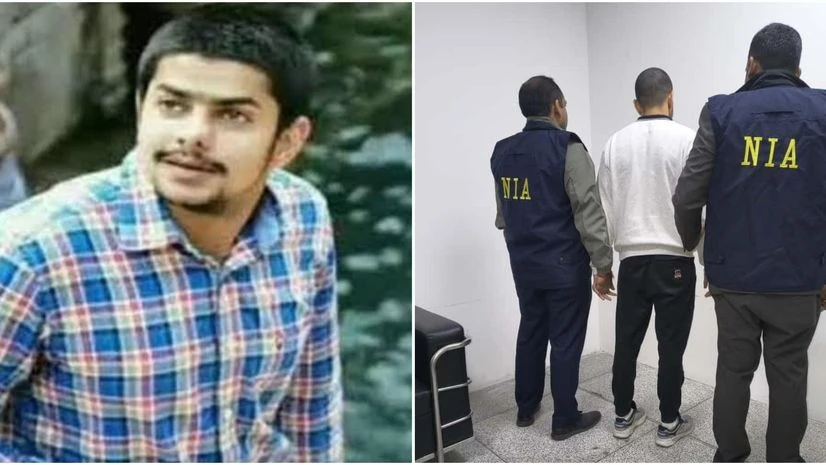
In a major breakthrough for Indian security agencies, fugitive gangster Anmol Bishnoi—the younger brother of notorious crime syndicate leader Lawrence Bishnoi—was arrested by the National Investigation Agency (NIA) in New Delhi after being deported from the United States. The high-profile arrest marks a significant milestone in India’s efforts to dismantle transnational criminal networks involved in targeted killings, extortion, and arms trafficking.
High-Risk Deportation Ends Months-Long Manhunt
Anmol Bishnoi was deported following sustained coordination between Indian enforcement agencies and U.S. authorities. He arrived at Delhi’s Indira Gandhi International Airport on Wednesday morning, where NIA officials immediately took him into custody. According to officials, Bishnoi had been detained in the U.S. for immigration violations and was later identified as a wanted criminal associated with multiple violent crimes in India.
His deportation is expected to strengthen ongoing investigations into several high-profile cases in which he is listed as a prime accused.
Accused in Major High-Profile Murders
Anmol faces serious criminal charges, including involvement in:
- The murder of NCP leader Baba Siddique, who was shot dead outside his son’s office in Mumbai in October 2024.
- The assassination of Punjabi singer Sidhu Moosewala in May 2022, one of India’s most widely publicized killings in recent years.
- The firing incident outside actor Salman Khan’s Mumbai residence in April 2024, intended as an intimidation tactic by the Bishnoi gang.
Authorities have registered 18 criminal cases against him across multiple states. Last year, the NIA added his name to its “most wanted” list and announced a ₹10 lakh reward for information leading to his arrest.
International Crime Network Under Scanner
Investigators believe Anmol acted as the overseas operational head of the Bishnoi syndicate, coordinating extortion, arms procurement, and targeted killings from abroad. His network reportedly spanned regions including West Asia, East Africa, and North America, enabling the gang to evade local crackdowns and access sophisticated resources.
Preliminary intelligence also suggests that members of the Bishnoi gang may have been in contact with extremist elements abroad, particularly those involved in weapon smuggling and terror-linked activities. The NIA is now expected to question Anmol extensively to determine the extent of these international linkages.
Trail of Escape and Global Pursuit
After the Moosewala killing, Anmol allegedly fled India using a forged passport, traveling through Nepal, Dubai, and Kenya before reaching the United States. He was arrested in 2024 for illegal entry and lodged in a U.S. detention facility pending immigration proceedings. Indian authorities, meanwhile, pursued a coordinated legal effort to secure his deportation.
His return to India now paves the way for deeper interrogation and potential revelations regarding the hierarchy, financing, and operational strategy of the Bishnoi gang.
Significant Boost for Law Enforcement
The NIA views Anmol Bishnoi’s capture as a major blow to the network of organized crime operating out of India. Investigators hope his questioning will provide:
- Crucial intelligence on the gang’s cross-border operations
- Insights into the masterminds behind political and celebrity-targeted killings
- Leads on weapon suppliers and foreign handlers connected to the syndicate
The arrest of Anmol Bishnoi marks a decisive step in India’s crackdown on transnational organized crime. As interrogation begins, authorities anticipate critical breakthroughs that could expose deeper criminal conspiracies and help neutralize one of the country’s most dangerous organized crime networks. The coming weeks are expected to be crucial as the NIA pieces together information that may reshape the trajectory of the ongoing investigations.

