
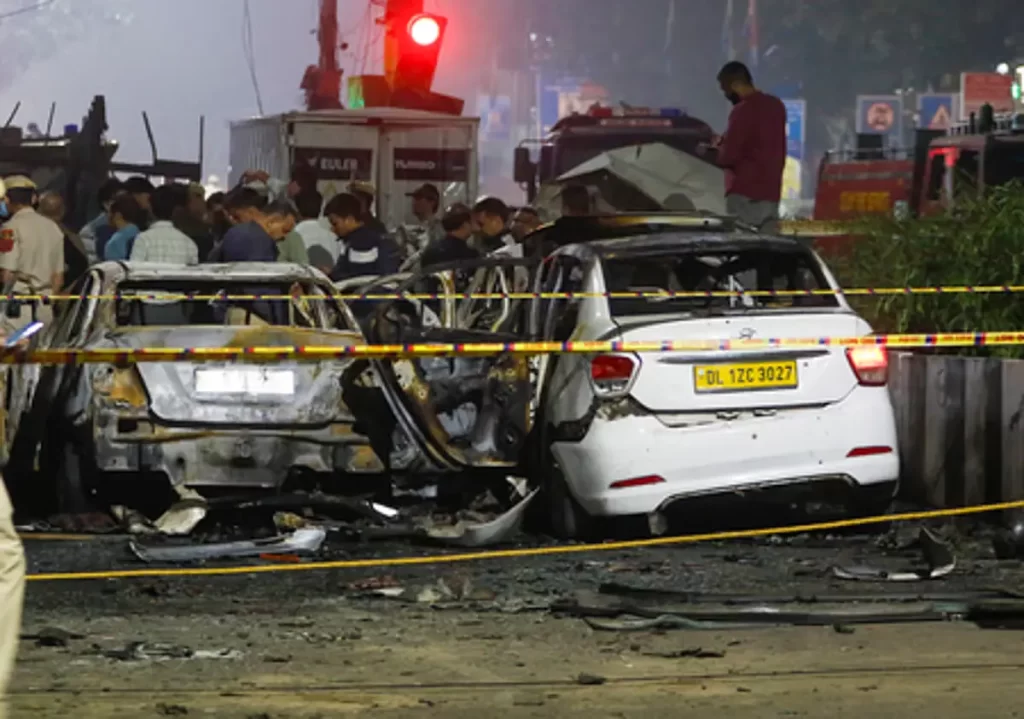
In a significant counterterrorism breakthrough, Indian security agencies have reportedly disrupted an online radicalisation attempt linked to the Jaish-e-Mohammad (JeM) group, as part of an expanding probe into the deadly car blast near Delhi’s Red Fort earlier this month. The revelation has exposed a highly sophisticated “white-collar terror module” involving radicalised professionals, digital covert communication systems, and cross-border coordination.
Professionals Radicalised Through Online Channels
Investigators found that JeM handlers systematically targeted educated individuals—particularly medical professionals—through encrypted digital platforms. One of the primary accused, a female doctor based in Uttar Pradesh, was allegedly groomed through extremist content and emotional manipulation beginning in 2023. She was later introduced to a foreign handler who assigned her tasks ranging from reconnaissance to logistical assistance.
The module also included other medical practitioners who allegedly used their professional networks to identify potential recruits. This structured “women’s wing” operated covertly, blending routine medical work with underground radicalisation activities.
Use of Dead-Drop Emails and Encrypted Apps
A notable discovery in the investigation was the use of a dead-drop email method, a spy-style communication system in which members of the module drafted messages in the “drafts” folder of a shared email account. No messages were ever sent, eliminating an electronic trail. Investigators found coded terminology in these drafts, including references to explosives, operatives, and an operation codenamed “D-6.”
To avoid interception, the operatives also relied on encrypted communication apps and privacy-centric platforms. Officials believe an improvised private server may have been used to share maps, photographs, and location details without leaving traces on conventional networks.
Explosives, Weaponisation and Funding Trail
During simultaneous raids across Delhi, Uttar Pradesh, Haryana, and Jammu & Kashmir, authorities seized nearly 2,900 kg of ammonium-nitrate-based material, alongside timers, rifles, pistols, and other components used in assembling improvised explosive devices. The scale of the material suggests that the group may have planned multiple coordinated strikes beyond the November 10 incident.
A ₹20 lakh hawala-based fund trail has also been uncovered. Approximately ₹3 lakh is suspected to have been used to procure fertilizer for bomb-making. Investigators have also arrested a technical associate who allegedly provided expertise in modifying drones and constructing mini-rockets, raising fears of potential “Hamas-style” aerial attacks.
NIA Takes Over Investigation as Network Depth Expands
The National Investigation Agency (NIA) has constituted a Special Investigation Team to map the entire JeM-linked module. Early findings suggest the group maintained a layered operational structure, featuring ideologues, logistics coordinators, recruiters, and tech-skilled operatives. A forensic audit has also been ordered at a university where several accused worked, to determine whether resources or facilities were misused.
Delhi Police, meanwhile, have registered a fresh FIR citing a deeper conspiracy involving espionage-inspired communication, coordinated reconnaissance missions, and foreign handlers directing operations through encrypted channels.
Broader Implications and Future Concerns
Officials warn that this case highlights a dangerous shift in extremist strategy—one that combines digital radicalisation, professional recruitment, and technologically advanced planning. The use of highly educated individuals, including doctors, underscores a troubling evolution in terror networks seeking operatives capable of blending seamlessly into mainstream society.
Security experts say the foiling of this online radicalisation network is a crucial victory, but caution that increased monitoring of encrypted platforms and professional spaces is essential to prevent similar infiltration attempts.
Prime Minister Narendra Modi has assured the nation that the perpetrators of the Delhi car blast and their network “will face the harshest action,” reaffirming India’s zero-tolerance policy toward terrorism.

