
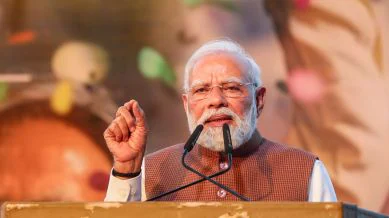
As the world’s eyes turn to Johannesburg from November 21–23, the 20th G20 Leaders’ Summit convenes under South Africa’s presidency, marking a defining moment for emerging-economy leadership and global cooperation. For Prime Minister Narendra Modi, the summit presents both opportunity and challenge: to elevate India’s voice on the global stage, reinforce the agenda of the Global South, and navigate shifting multilateral dynamics. Modi is confirmed to attend and participate in all three sessions of the summit.
Strategic Context and India’s Agenda
The G20 grouping brings together 19 nations plus the European Union, collectively representing approximately 87% of global GDP and 62% of the world’s population. With South Africa holding the presidency, the Johannesburg summit highlights the rising voice of the Global South.
For India, key objectives include:
- Championing inclusive growth and debt relief for developing countries
- Advancing the clean energy transition and sustainable development
- Strengthening supply chains for critical minerals and strategic trade partnerships
Prime Minister Modi’s presence is expected to reinforce India’s leadership role in multilateral diplomacy and signal continuity of India’s strategic priorities at the global level.
Geopolitical Undercurrents and Summit Dynamics
While the framework of the G20 remains intact, the Johannesburg summit is unfolding amid pronounced geopolitical tension. Former U.S. President Donald Trump has announced a boycott of the event, citing objections to South Africa’s domestic policies and rejecting any communique issued without U.S. participation. Other major players, including China and Russia, are signaling scaled-back attendance, reducing expectations for a full leaders’ declaration.
In this context, bilateral meetings and strategic side-dialogues—rather than collective outcomes—are emerging as the summit’s most vital venues. For India, this setting offers space to form partnerships with like-minded states and push its agenda without being locked into an all-encompassing communique.
India-Africa Synergies and Broader Implications
India’s engagement at the summit aligns with its broader Africa strategy. Prime Minister Modi is expected to deepen India-Africa cooperation in sectors such as clean energy, digital infrastructure, and mineral resources.
With the summit hosted in Africa for the first time, the Global South’s voice in global economic governance takes centre stage. India’s active role can amplify this voice, positioning it as a bridge between advanced and developing economies. Key focus areas include Global South leadership, inclusive development, critical minerals supply chains, energy transition financing, and debt sustainability.
Risks and Opportunities for India
India’s key opportunity lies in converting presence into policy impact. Clear, actionable commitments—particularly in green technology, startup ecosystems, and manufacturing—will be crucial. Risks include over-reliance on ambiguous outcomes, being overshadowed by bilateral deals that divert focus, and underestimating backlash from fractured global institutions.
India’s participation in the 20th G20 Leaders’ Summit in Johannesburg underscores its evolving role on the global stage and its ambition to shape the narrative of the Global South. Amid diminished consensus and rising geopolitical fragmentation, India has a window to assert its strategy, strengthen partnerships—especially with Africa—and amplify its voice on climate, trade, and development. While sweeping declarations may be limited, India’s real value lies in leveraging the summit to build credibility, drive initiatives, and shape the future of global economic governance.

