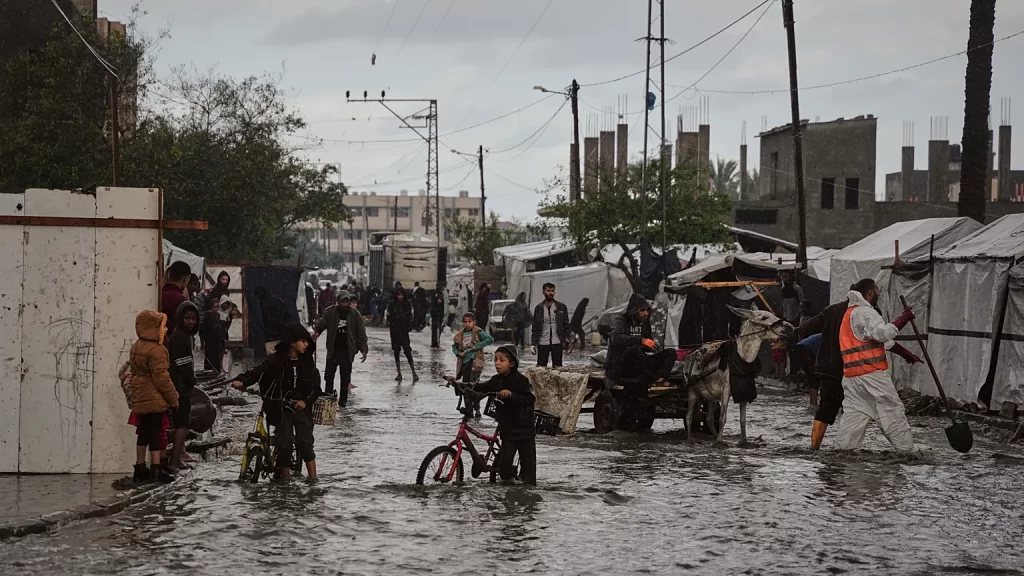
Heavy rains sweeping across the Gaza Strip in recent days have caused severe flooding in makeshift tent camps sheltering displaced Palestinians, deepening an already catastrophic humanitarian emergency. Thousands of fragile tents have been destroyed or rendered uninhabitable, while floodwaters — mixing with raw sewage due to collapsed sanitation infrastructure — have raised serious concerns over a looming health disaster, particularly for children and other vulnerable populations.
Storm Strikes Displaced Communities Hard
The downpour began as winter’s first storm hit Gaza, dumping heavy rain and strong winds across the territory. Within hours, numerous displacement camps were submerged. Regions like Deir el-Balah, central Gaza, and southern zones including Khan Younis and al‑Mawasi experienced the most severe damage, with tents collapsing under the relentless rainfall and gusty winds.
Local authorities report that more than 22,000 tents have been damaged, leaving over 288,000 households without effective shelter from the cold and rain. Early assessments suggest that at least 13,000 households were impacted in the initial wave of rainfall alone, further straining the capacity of humanitarian agencies operating in the region.
Escalating Health Hazards
The destruction of roads, sewage systems, and water networks has turned the rain into a potent threat. Floodwaters in many camps have mixed with raw sewage, producing a toxic environment that poses immediate risks of waterborne diseases such as diarrhea, cholera, and other infections.
Aid organizations and health officials warn that children are particularly vulnerable. Exposure to contaminated water, lack of clean water and sanitation, damp living conditions, and disrupted medical facilities all combine to create a high-risk scenario. Respiratory illnesses are also expected to rise due to prolonged exposure to cold and wet conditions.
Humanitarian Response and Challenges
Relief agencies have mobilized emergency response teams to provide tents, blankets, and essential supplies, but logistical challenges and damaged infrastructure are slowing aid distribution. Local authorities stress that international support is urgently needed to prevent further loss of life and to address both the immediate and long-term needs of displaced populations.
Aid priorities include:
- Provision of emergency shelters and blankets
- Access to safe drinking water and hygiene kits
- Medical support for children and vulnerable groups
- Rapid repair of damaged sanitation and drainage systems
The situation highlights the fragility of Gaza’s humanitarian conditions, where prolonged conflict has already left over a million people displaced. The flooding serves as a stark reminder of how natural disasters can exacerbate pre-existing crises, leaving communities exposed to compounded threats.
Outlook
Officials have warned that more rain is expected over the coming days, raising fears of additional flooding and further displacement. Humanitarian organizations continue to call for urgent global attention and support to prevent a secondary crisis stemming from disease outbreaks and exposure to harsh winter conditions.
The heavy rains in Gaza underline the urgent need for resilient infrastructure, effective emergency planning, and sustained humanitarian aid to protect the lives of those already living in precarious conditions.