
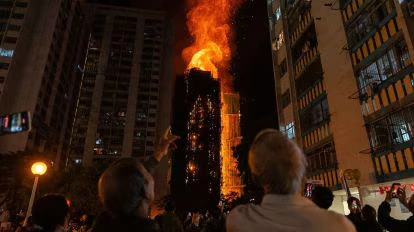
The tragedy at Hong Kong’s Tai Po District deepened, as authorities confirmed 128 people have died in the devastating fire at the Wang Fuk Court residential complex. With around 200 individuals still missing, the city faces its deadliest blaze in decades. The arrest of eight additional persons, including engineers and contractors, on suspicion of corruption and gross negligence has widened the probe into the building’s renovation — raising serious questions about construction safety and regulatory oversight.
Investigation Widens: Arrests Bring Total to 11
The fire initially led to the arrest of three individuals — two directors and an engineering consultant from the construction firm responsible for the renovation. On Friday, the anti-corruption watchdog apprehended eight more people, including scaffolding subcontractors, project managers, and consultants.
Officials allege the renovation works involved the use of unsafe and flammable materials — including plastic foam panels and green mesh wrap — that failed to meet fire-resistance standards, enabling the blaze to spread rapidly across seven of the complex’s eight towers. Meanwhile, fire alarms reportedly failed at key moments, depriving residents of timely warning and severely hindering escape.
Unimaginable Loss: The Scale of the Tragedy
Built in the 1980s, Wang Fuk Court comprised eight 31-storey towers, housing nearly 4,800 residents across almost 2,000 flats. The inferno, which ignited around mid-afternoon, was quickly upgraded to the highest alert level as flames spread upward via bamboo scaffolding engulfed in green mesh and rapidly consumed flammable foam panel coverings.
Rescue teams — including over 2,300 firefighters and supporting personnel — worked relentlessly for roughly 43 hours before declaring the fire extinguished Friday morning. As of the latest tally, 128 bodies have been recovered; authorities warn that the death toll may yet rise when unidentified remains are processed. In addition to human casualties, hundreds of pets were trapped in the blaze; some were rescued or recovered, others remain unaccounted for — underscoring the tremendous human and social cost of the disaster.
Public Outcry: Safety Failures and Calls for Reform
The tragedy has sparked widespread anger across Hong Kong. Many residents — including elderly occupants and migrant domestic workers — had reportedly raised concerns about the flammability of renovation materials and the safety of bamboo scaffolding long before the fire.
Critics argue that the disaster stems not from a natural accident but from systemic negligence, lax enforcement of building codes, and possible corruption. In response, the government has pledged immediate citywide inspections on all housing estates undergoing renovation, with plans to phase out traditional bamboo scaffolding in favour of safer metal frames.
Relief efforts are underway: a substantial fund has been established to deliver financial and logistical assistance to victims, displaced residents, and families of the deceased.
What’s Next: Investigation, Accountability, and Safety Overhaul
As the anti-graft investigation continues, authorities face mounting pressure to ensure accountability extends beyond the immediate perpetrators to systemic regulators, property managers, and contractors. The case at Wang Fuk Court may lead to major reforms in construction oversight, building codes, and renovation practices across the city.
For Hong Kong, the tragedy stands as an urgent warning: rapid urban renewal and renovation must never come at the expense of fundamental safety standards. The residents of Tai Po — and beyond — will be watching closely as the investigation proceeds.

