
Introduction
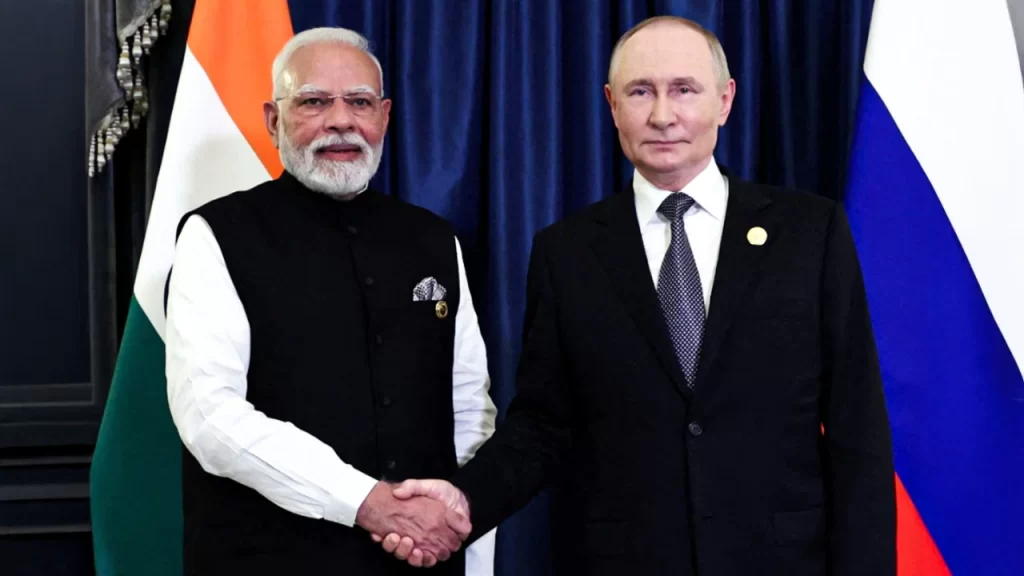
Russian President Vladimir Putin’s two-day visit to India has drawn worldwide attention as New Delhi and Moscow prepare to discuss a wide spectrum of strategic issues. High on the agenda are defence cooperation, trade diversification, and negotiations surrounding the next-generation Su-57 stealth fighter jets. As global geopolitical alignments continue to evolve, this visit is expected to significantly influence the trajectory of the long-standing India–Russia partnership.
Defence Cooperation: Spotlight on the Su-57
Among the major focus areas is India’s potential procurement of the Su-57, Russia’s fifth-generation stealth fighter jet. Discussions are likely to include direct acquisition, technology transfer, and the possibility of licensed production on Indian soil. Officials have indicated that while a formal agreement may not be finalised during this visit, both countries aim to establish a concrete framework for future collaboration.
India’s aerospace manufacturer, Hindustan Aeronautics Limited (HAL), may play a crucial role if joint production moves forward. The proposal aligns with India’s long-term objective of strengthening domestic defence manufacturing while gaining access to advanced combat aircraft capabilities. This cooperation could eventually reduce dependence on external suppliers and accelerate the modernisation of the Indian Air Force.
In addition to the Su-57, both sides are expected to review progress on existing defence projects, including deliveries related to the S-400 air-defence system, joint missile development, and potential future cooperation on advanced systems such as hypersonic platforms. Moscow is reportedly keen on expanding the defence partnership beyond procurement towards integrated manufacturing and long-term logistics assistance.
Trade and Economic Engagement: Aiming for Balance and Growth
Defence cooperation may dominate headlines, but economic expansion remains an equally important objective of Putin’s visit. India and Russia are aiming to rebalance their trade relationship, which has historically relied heavily on energy imports. New Delhi seeks to diversify trade by boosting exports in sectors such as pharmaceuticals, machinery, engineering goods, textiles, and marine products.
A significant development is Russia’s effort to strengthen its financial presence in India, including proposals to facilitate smoother payment mechanisms and reduce reliance on third-party currencies. These steps are expected to encourage more stable trade flows and possibly pave the way for long-term investments across industries.
India also aims to expand access to the Eurasian Economic Union market, viewing it as an opportunity to enhance its export footprint. Both sides are expected to explore new partnerships in nuclear energy, space technologies, digital infrastructure, and mobility cooperation, further widening the spectrum of economic engagement.
Strategic Significance in a Shifting Geopolitical Landscape
This summit carries substantial geopolitical weight. For Russia, deepening ties with India remains crucial as it navigates global pressure and strategic isolation. For India, maintaining a balanced foreign policy—one that strengthens partnerships without compromising autonomy—remains a guiding principle.
Enhanced defence cooperation and expanded trade could further solidify the “Special and Privileged Strategic Partnership” shared by the two nations. The ongoing shifts in global alliances have made it even more important for India to sustain strong engagement with multiple major powers, and Russia remains a central pillar of that strategy.
Conclusion
Vladimir Putin’s visit to India marks a pivotal moment for bilateral relations, with discussions on Su-57 fighter jets, advanced defence systems, and expanded economic cooperation expected to shape future engagements. Whether or not major agreements are formalised immediately, the summit is poised to lay the groundwork for deeper military collaboration, stronger trade mechanisms, and a renewed strategic partnership. The outcomes of these talks will likely influence India’s defence landscape and its broader geopolitical posture for years to come.

