Introduction
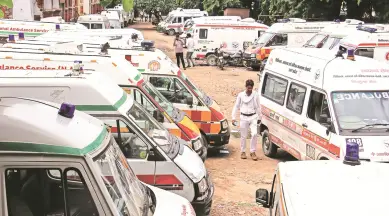
Emergency healthcare services across Assam have been severely disrupted after hundreds of ambulances were pulled off the roads due to an indefinite strike launched by drivers of the 108 Mrityunjoy Ambulance Service. Thousands of residents, particularly in remote regions, have been left vulnerable as the state’s emergency response network struggles to function amid the ongoing protest.
Drivers’ Demands and Reasons Behind the Strike
The protest, which began on December 1, involves nearly 3,000 ambulance drivers who claim they have been subjected to long-term financial and professional neglect. Key demands include the regularisation of employment, improved wages, timely overtime payments, and inclusion in welfare schemes that support housing and social security.
Many drivers allege they have been serving 12-hour shifts for years while being compensated for only 10 hours. Several frontline workers also claim that their overtime dues remain unpaid, despite their crucial role during public health emergencies, including the COVID-19 pandemic. The employees maintain that they are simply asking for basic rights and fair treatment.
Impact on Public Health and Emergency Response
With close to 800 ambulances reportedly off the roads, the strike has triggered a major public safety concern. The 108 ambulance fleet plays an essential role in transporting patients to hospitals, responding to road accidents, assisting during childbirth emergencies, and supporting rural healthcare delivery.
The absence of these services has left hospitals struggling, especially in districts where private or alternative emergency transport is limited. Citizens have expressed anxiety as life-saving medical support now risks being delayed, putting critically ill patients at greater risk.
Government and Operator Response
The state government and the private operator responsible for running the 108 services have labelled the strike as irresponsible, citing the potential danger to public welfare. In response, termination notices were reportedly issued to several striking employees, accusing them of abandoning duty and disrupting essential services.
Efforts have been made by the service operator to restore partial operations by deploying support staff and recruiting temporary personnel. A limited number of ambulances have gradually returned to service, but the overall emergency network remains far from full capacity.
Escalating Tensions and Uncertain Resolution
The termination of employees has intensified the standoff rather than diffusing tensions. The protesting union has maintained that they will not resume duties until their demands are formally recognised and a concrete agreement is reached. With both sides refusing to back down, the deadlock continues to deepen.
Conclusion
The strike by ambulance drivers has exposed significant gaps in Assam’s emergency healthcare infrastructure and longstanding labour grievances within the system. The disruption has underscored the need for urgent dialogue, fair labour practices, and a sustainable framework that ensures both worker welfare and uninterrupted public services. Unless the issue is resolved swiftly, citizens may continue to face grave risks, and the state’s emergency response framework could suffer long-term setbacks.