
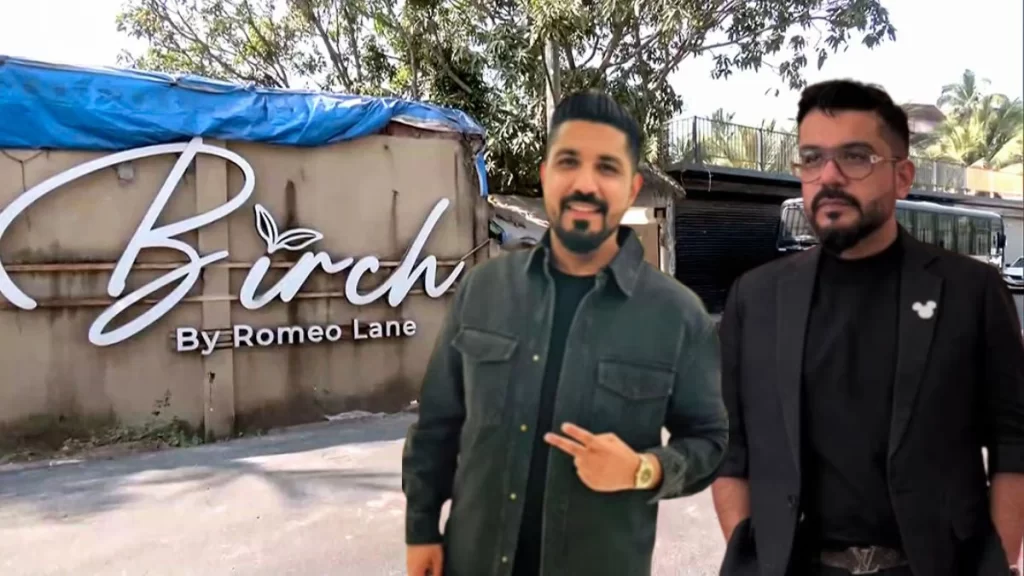
A complex and decades-long legal battle over the land on which the Birch by Romeo Lane nightclub stood has resurfaced following a tragic fire that claimed 25 lives in North Goa earlier this month. Allegations by the original landowner, combined with swift government action and renewed legal scrutiny, have intensified questions about illegal land occupation, unauthorized development, and regulatory oversight in one of Goa’s most contentious property disputes.
The devastating blaze at the Arpora-based nightclub on December 6 has not only raised concerns about safety compliance but has also drawn attention to long-standing claims of illegal construction and procedural lapses. The incident has prompted fresh examination of the land’s ownership, zoning changes, and administrative decisions that allowed the establishment to operate.
Original Landowner Flags Long-Running Dispute
At the center of the controversy is Pradeep Ghadi Amonkar, who asserts that he is the rightful owner of the property. He claims to have purchased the Arpora plots in 1994 and later signed a sale agreement with Surinder Kumar Khosla in 2004 — an agreement that was later withdrawn after full payment was allegedly never made. Despite the unresolved deal, commercial structures were developed on the land and eventually leased to hospitality entrepreneurs, including brothers Saurabh and Gaurav Luthra, owners of Birch by Romeo Lane.
Amonkar has maintained that he has been engaged in a 20-plus-year legal battle to reclaim his property and has filed multiple complaints with the local panchayat regarding unauthorized construction and commercial activity. These complaints, he claims, consistently went unaddressed, allowing the disputed structures to expand over time.
Alleged Zoning Change Raises Fresh Questions
A major point of contention has emerged over the alleged reclassification of the land. Amonkar contends that a portion of his property, originally listed as a salt pan, was changed to settlement zone without his consent or prior notification. This change, he argues, paved the way for commercial development despite ongoing disputes.
The alleged zoning alteration has sparked debate over administrative accountability and transparency within Goa’s land-use and environmental regulation systems. Legal experts note that unauthorized or opaque zoning modifications can significantly disrupt due process, especially when properties fall within environmentally sensitive or coastal areas governed by strict norms.
Government and Legal Response Intensifies
In the aftermath of the nightclub fire, the Goa government ordered the demolition of unauthorized structures linked to the club’s operators and initiated broader inspections targeting illegal developments across coastal belts. Authorities have also intensified efforts to trace the Luthra brothers, who reportedly left the country shortly after the incident. A Blue Corner Notice has been issued to assist international agencies in gathering information on their whereabouts.
Meanwhile, Amonkar and co-complainant Sunil Divkar have petitioned the Bombay High Court to enforce a 2024 demolition order issued by the local panchayat, which had previously declared the structures illegal. The petition seeks strict implementation of the order and calls for accountability for administrative decisions that allowed the structures to continue operating despite regulatory objections.
Key Issues in the Birch by Romeo Lane Controversy
- Long-Standing Land Dispute: More than two decades of unresolved legal battles over ownership.
- Unauthorized Construction: Development continued despite disputed title and regulatory objections.
- Alleged Zoning Manipulation: Land classification reportedly altered without notifying the owner.
- Enforcement Lapses: Panchayat orders stalled; questions raised over compliance and oversight.
- Public Safety Concerns: The tragic fire amplified scrutiny of hospitality industry regulation.

