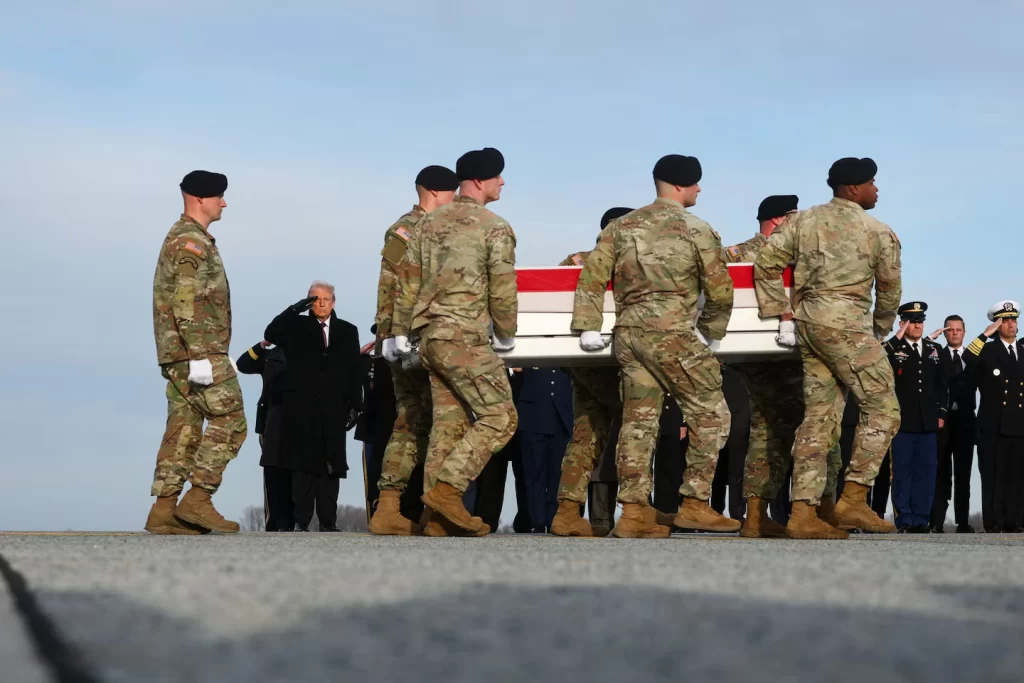
On December 19, 2025, the United States initiated Operation Hawkeye Strike, a large-scale retaliatory air and artillery campaign targeting Islamic State (ISIS) strongholds in central Syria. The operation marks one of the most significant U.S. military actions in the region this year, underscoring Washington’s renewed commitment to counterterrorism amid rising militant activity. The strikes follow intelligence assessments indicating an escalation in ISIS operational planning and threats to regional stability.
Background and Strategic Context
According to U.S. defense officials, Operation Hawkeye Strike was launched in response to coordinated ISIS attacks on allied forces and logistical routes in the region. Central Syria, particularly areas with sparse governance and rugged terrain, has long served as a fallback zone for ISIS remnants seeking to regroup after territorial defeats.
The campaign involved precision U.S. airstrikes, long-range artillery fire, and real-time intelligence coordination with regional partners. Pentagon sources described the mission as “decisive, proportional, and focused on degrading ISIS command-and-control capabilities.”
Key objectives of Operation Hawkeye Strike include:
- Neutralizing ISIS leadership and operational hubs
- Disrupting supply lines and weapons storage facilities
- Preventing cross-border militant movement
- Reinforcing deterrence against future extremist attacks
Execution of the Operation
The U.S. Central Command confirmed that multiple ISIS targets were struck over a 24-hour period, including training camps, mobile command posts, and fortified positions hidden within desert corridors. Advanced surveillance systems and precision-guided munitions were employed to minimize collateral damage, reflecting an emphasis on targeted counterterrorism operations.
Military analysts note that the scale of the strikes signals a shift from containment to active suppression of ISIS resurgence. While ISIS no longer controls territory as it once did, intelligence reports suggest the group has adapted into a decentralized insurgency capable of lethal, coordinated attacks.
Regional and Global Implications
Operation Hawkeye Strike has immediate implications for Middle East security, particularly in Syria’s fragile central regions. By striking ISIS infrastructure, the U.S. aims to prevent the group from exploiting ongoing instability and power vacuums.
The operation also sends a broader geopolitical message. It reinforces U.S. willingness to act unilaterally when threats emerge, even as global attention remains divided among multiple conflict zones. Regional allies have quietly welcomed the action, viewing it as a stabilizing measure against extremist spillover.
However, the escalation carries risks. Sustained military pressure may provoke retaliatory attempts by ISIS or complicate already tense dynamics involving state and non-state actors operating in Syria.
Key Takeaways from Operation Hawkeye Strike
- Largest U.S. retaliatory strike against ISIS in Syria in 2025
- Focused on central Syria’s militant safe havens
- Emphasized precision warfare and intelligence-driven targeting
- Aimed at long-term degradation of ISIS capabilities