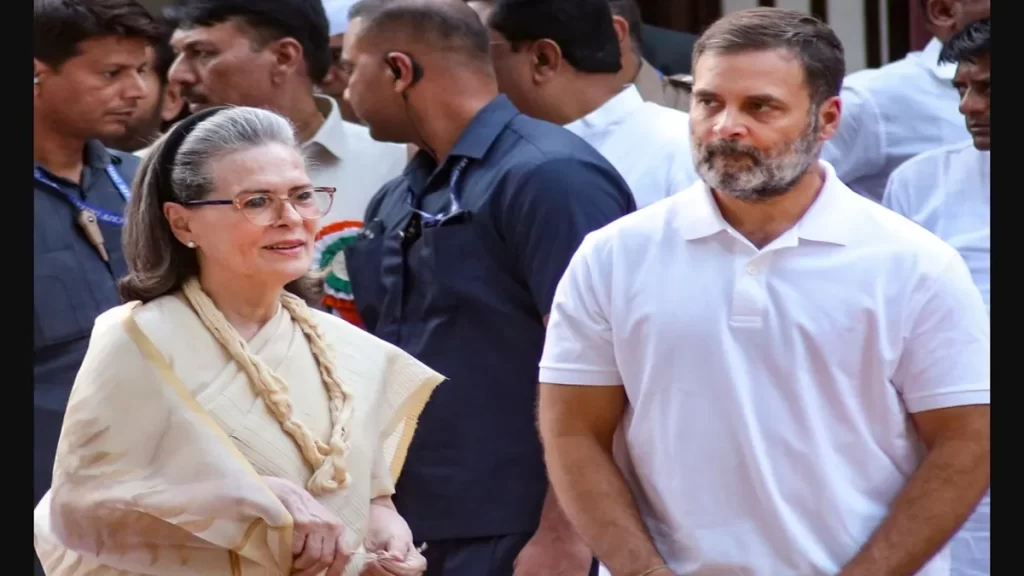
In a significant development in the long-running National Herald money laundering case, the Delhi High Court on Monday issued notices to senior Congress leaders Sonia Gandhi and Rahul Gandhi, along with five other respondents. The move comes after the Enforcement Directorate (ED) filed an appeal challenging a trial court order that had refused to take cognizance of its chargesheet in the matter.
The High Court’s decision to issue notices marks a fresh phase in the high-profile legal battle, which has remained at the center of political and legal debate for years. The case involves allegations of financial irregularities linked to the acquisition and control of assets associated with the now-defunct National Herald newspaper.
Background of the Case
The National Herald case revolves around alleged violations under the Prevention of Money Laundering Act (PMLA). The ED has accused the respondents of orchestrating financial transactions that resulted in the alleged misappropriation of assets originally owned by Associated Journals Limited (AJL), the company that published the National Herald.
Earlier, a trial court had declined to take cognizance of the ED’s chargesheet, citing procedural and legal considerations. Dissatisfied with this ruling, the ED approached the Delhi High Court, arguing that the trial court had erred in its interpretation of the law and evidence presented.
What the High Court’s Notice Means
By issuing notices, the Delhi High Court has sought formal responses from the accused parties. While this does not amount to a determination of guilt or innocence, it indicates that the court finds sufficient grounds to examine the ED’s appeal in detail.
Key aspects under consideration include:
- Whether the trial court was justified in refusing cognizance
- The applicability of PMLA provisions to the alleged transactions
- The sufficiency of material presented by the ED in its chargesheet
The matter is expected to be heard in subsequent hearings, where detailed arguments from both sides will be presented.
Political and Legal Significance
The case carries substantial political implications, given the stature of the individuals involved. Sonia Gandhi, former Congress president, and Rahul Gandhi, a prominent national leader, have consistently maintained that the case is politically motivated. The Congress party has described the ED’s actions as an example of alleged misuse of central agencies.
From a legal standpoint, the case is closely watched for its interpretation of money laundering laws and the threshold required for courts to take cognizance of chargesheets filed by investigative agencies.
Key Developments at a Glance
- Court: Delhi High Court
- Date: December 22, 2025
- Case: National Herald money laundering case
- Agency: Enforcement Directorate
- Respondents: Sonia Gandhi, Rahul Gandhi, and five others
What Lies Ahead
The High Court’s examination of the ED’s appeal could shape the future course of the case. If the court allows the appeal, it may direct the trial court to reconsider the chargesheet, potentially reviving criminal proceedings. Conversely, dismissal of the appeal would reinforce the trial court’s earlier decision.
As the legal process unfolds, the National Herald case is likely to remain a focal point of national attention, intersecting law, politics, and questions surrounding the enforcement of financial crime legislation in India.