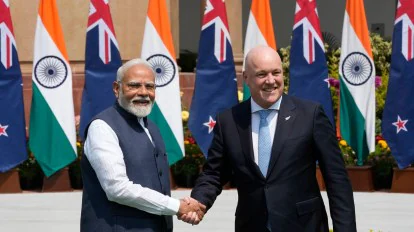
In a significant boost to global trade cooperation, Prime Minister Narendra Modi and New Zealand Prime Minister Christopher Luxon on Monday announced the successful conclusion of a landmark India–New Zealand Free Trade Agreement (FTA). Finalised in a record nine months after negotiations commenced in March 2025, the pact is being hailed as a major milestone in strengthening economic ties between the two nations, with an ambitious target to double bilateral trade within five years.
A Strategic Breakthrough in Record Time
The swift conclusion of the FTA underscores the growing strategic alignment between India and New Zealand amid shifting global trade dynamics. Officials from both sides described the agreement as comprehensive, balanced, and forward-looking, covering goods, services, investment, digital trade, and sustainable development.
Currently, bilateral trade between India and New Zealand stands at a modest level compared to each country’s global trade footprint. The new FTA aims to unlock untapped potential by reducing tariffs, easing regulatory barriers, and enhancing market access for businesses on both sides.
Key Sectors Set to Benefit
The India–New Zealand FTA is expected to deliver tangible gains across multiple high-impact sectors, driving economic growth and job creation.
Major focus areas include:
- Agriculture and Dairy Trade: Improved access for Indian agricultural products and New Zealand’s dairy exports, while ensuring safeguards for domestic farmers.
- IT and Digital Services: Expanded opportunities for Indian IT firms and startups in New Zealand’s growing digital economy.
- Education and Skilled Mobility: Enhanced collaboration in higher education, research, and smoother mobility pathways for skilled professionals and students.
- Manufacturing and MSMEs: Reduced tariffs on textiles, pharmaceuticals, engineering goods, and processed foods, benefiting small and medium enterprises.
Trade analysts believe the agreement will also strengthen supply chain resilience and encourage cross-border investments, particularly in clean energy, logistics, and advanced manufacturing.
Alignment with India’s Global Trade Strategy
The agreement fits squarely within India’s broader push to expand its global trade footprint through high-quality trade agreements. Over the past few years, India has pursued FTAs with key partners to boost exports, attract foreign investment, and integrate more deeply into global value chains.
For New Zealand, the pact offers greater access to one of the world’s fastest-growing major economies, reinforcing its Indo-Pacific economic engagement strategy.
Economic and Geopolitical Significance
Beyond trade figures, the FTA carries wider geopolitical importance. It reflects deepening trust between the two democracies and signals a shared commitment to rules-based trade, economic openness, and sustainable growth. The agreement is also expected to enhance cooperation in climate action, innovation, and people-to-people ties.
Looking Ahead
With negotiations concluded, the focus now shifts to implementation and ratification. Both governments have expressed confidence that early and effective execution will be crucial to achieving the ambitious trade targets.
As global economies navigate uncertainty, the India–New Zealand Free Trade Agreement stands out as a timely and strategic move, positioning both countries for stronger economic integration, diversified trade partnerships, and long-term shared prosperity.