
In one of the most dramatic escalations in months, Russia’s large‑scale drone and missile barrage targeting western Ukrainian energy infrastructure has triggered emergency military responses beyond Ukraine’s borders, including the deployment of Polish fighter jets and heightened NATO vigilance.
The assault, characterized by a massive offensive of drones and missiles, inflicted widespread damage on Ukraine’s power grid, prompted emergency power outages and claimed civilian lives, while also forcing neighboring Poland to raise its air defenses as a preventive measure to secure its airspace and national security.
Massive Russian Drone Assault Strikes at Ukraine’s Energy Backbone
At dawn on Tuesday, Russian forces launched a sustained aerial offensive, deploying an estimated over 650 drones and dozens of missiles across at least 13 Ukrainian regions, with primary impact zones in the western oblasts near the Polish border. Residential areas and key energy facilities — including thermal power plants and electricity substations — were hit, leaving millions without heat or power in freezing winter conditions.
Ukrainian authorities confirmed multiple civilian casualties, including a young child, underscoring the human toll of infrastructure assaults that are increasingly designed to disrupt everyday life as well as strategic capabilities.
President Volodymyr Zelenskyy condemned the attacks as deliberate attempts to destabilize Ukraine ahead of the winter holidays and reiterated Kyiv’s calls for enhanced air defense systems from Western allies.
Poland’s Response: Fighter Jets Scrambled, NATO on High Alert
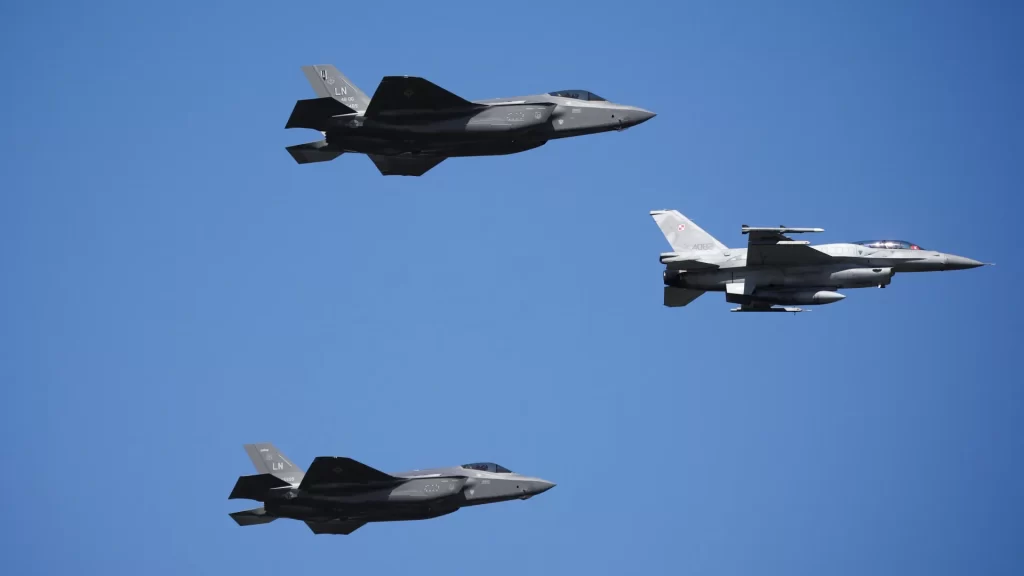
As air threats intensified near its territory, Poland’s Armed Forces deployed fighter jets and allied aircraft today, scrambling aircraft on alert to protect Polish airspace and reassure the public of national defense readiness. Radar and ground‑based air‑defense systems were also placed on heightened alert status.
The Polish command described these actions as precautionary rather than indicative of direct strikes on Polish soil, emphasizing that current measures are designed to deter potential spillover from the ongoing conflict and safeguard border regions.
This move comes amid growing concern in Warsaw and NATO capitals about the war’s unpredictable dynamics after multiple instances of Russian drones breaching NATO airspace in the past year, prompting both diplomatic protests and defensive action.
Strategic Implications for NATO and European Security
Poland’s decision to scramble jets — a visible sign of alliance readiness — reflects broader anxieties within NATO regarding the conflict’s spillover potential into neighboring territories. Analysts note that while Russia’s current attacks are concentrated within Ukrainian borders, proximity to NATO states like Poland places allied air defenses on alert and adds a layer of collective security pressure.
Military experts stress that such defensive actions are strategic deterrence, not offensive escalation, aimed at maintaining regional stability and NATO’s Article 5 commitments. They also highlight that coordination between NATO air policing missions and national air forces remains critical amid an increasingly complex battlefield environment.
Humanitarian and Infrastructure Fallout
Beyond military responses, the aftermath has deepened the humanitarian crisis in Ukraine. Winter temperatures combined with extended blackouts have strained civil services and relief operations, while energy restoration efforts are hampered by damaged infrastructure and ongoing security risks.
Authorities in Kyiv have called for accelerated international support, including advanced air‑defense systems and energy sector investments to bolster resilience. The continued targeting of critical infrastructure marks a concerning pattern in Russia’s campaign strategy and intensifies calls for stronger deterrence measures from the West.
Outlook: Conflict, Diplomacy, and Regional Stability
As Russia’s offensive continues without evident de‑escalation, diplomatic efforts for ceasefires and peace negotiations proceed in parallel yet yield limited progress. The escalation has underscored the persistent volatility of the Russia‑Ukraine conflict and its broader ramifications for European security.
Poland’s response — deploying fighter jets and heightening airspace vigilance — illustrates the tangible ways in which the war reverberates beyond Ukraine’s borders, reinforcing that regional stability remains inextricably tied to the evolving battlefield dynamics and the strategic calculations of NATO allies.

