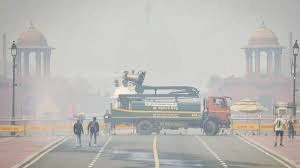
The worsening Delhi pollution crisis has once again drawn sharp judicial and political attention, as the Delhi High Court issued a strong ultimatum to the government—either ensure clean air in the national capital or consider reducing GST on air purifiers from 18% to 5%. The remarks come amid alarming air quality levels and growing health concerns, further underscored by Union Minister Nitin Gadkari’s statement that he develops infections after staying just two days in Delhi.
A Judicial Wake-Up Call on Air Quality
During a recent hearing on air pollution, the Delhi High Court expressed serious concern over the government’s inability to control toxic air levels, especially during peak pollution months. The court noted that when citizens are forced to rely on air purifiers for basic breathing safety, such devices can no longer be treated as luxury goods.
The suggestion to lower GST on air purifiers reflects the court’s broader message: clean air is a fundamental right, not a privilege. The bench questioned why citizens should pay high indirect taxes to protect themselves from an environmental crisis that demands systemic policy action.
Political Voices Echo Public Health Concerns
Adding weight to the issue, Union Minister Nitin Gadkari openly acknowledged the health impact of Delhi’s air pollution, stating that he suffers from infections after just a short stay in the capital. His remarks resonate with millions of residents who experience respiratory illnesses, eye irritation, and reduced immunity due to prolonged exposure to polluted air.
Health experts have long warned that air pollution in Delhi is not just an environmental issue but a public health emergency, contributing to asthma, cardiovascular diseases, and reduced life expectancy.
Why GST on Air Purifiers Is Under Scrutiny
Currently, air purifiers fall under the 18% GST slab, the same category as many non-essential consumer goods. However, with rising pollution levels, demand for air purifiers has surged across households, schools, hospitals, and offices.
Key arguments for GST reduction include:
- Air purifiers are increasingly a health necessity, not a luxury
- Lower GST would improve affordability for middle- and lower-income families
- Reduced tax could encourage wider adoption, especially for children and the elderly
- It aligns with the government’s stated focus on preventive healthcare
Snapshot: Air Pollution and Public Impact in Delhi
| Aspect | Current Situation |
|---|---|
| Air Quality Index (AQI) | Frequently in “Very Poor” to “Severe” category |
| Health Impact | Rise in respiratory infections, asthma cases |
| GST on Air Purifiers | 18% (under debate for reduction to 5%) |
| Judicial Stand | Clean air or tax relief demanded |
The Road Ahead
The Delhi High Court’s ultimatum signals increasing impatience with incremental measures and temporary fixes. While tax relief on air purifiers may offer short-term relief, experts stress that it cannot replace long-term structural solutions such as controlling vehicular emissions, managing construction dust, regulating industrial pollution, and improving public transport.