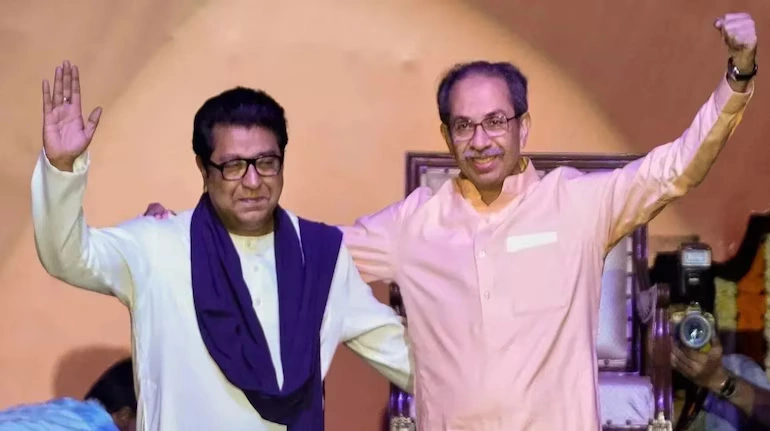
In a historic political development on December 24, 2025, estranged cousins Uddhav Thackeray and Raj Thackeray officially announced an alliance between the Shiv Sena (Uddhav Balasaheb Thackeray faction) and the Maharashtra Navnirman Sena (MNS) for the upcoming Brihanmumbai Municipal Corporation (BMC) elections and other municipal polls across Maharashtra. The announcement marks a significant turning point in state politics, potentially reshaping Mumbai’s civic and electoral landscape ahead of the crucial local body elections.
The reunion of the Thackeray cousins comes after nearly two decades of political estrangement following Raj Thackeray’s exit from the Shiv Sena in 2005 and the subsequent formation of the MNS. Their decision to join forces has been widely interpreted as a strategic move to consolidate Marathi votes and present a united front against dominant political rivals in Maharashtra, particularly the ruling Mahayuti alliance.
A Strategic Alliance with High Political Stakes
The BMC, Asia’s richest municipal corporation, has long been a stronghold of the Shiv Sena. However, political realignments, internal splits, and changing voter dynamics in recent years have made the upcoming civic polls highly competitive. The Shiv Sena (UBT), led by former Chief Minister Uddhav Thackeray, has been seeking to regain lost ground after the party split in 2022, while the MNS has been attempting to revive its political relevance in urban Maharashtra.
Key objectives of the Shiv Sena–MNS alliance include:
- Consolidation of Marathi Manoos votes in Mumbai and key urban centers
- Countering the electoral strength of the BJP-led Mahayuti bloc
- Strengthening grassroots presence in municipal corporations and councils
- Reclaiming political narrative around regional identity and governance
Political analysts believe the alliance could significantly impact seat-sharing equations and voter polarization, particularly in Mumbai, Thane, Pune, and Nashik.
Implications for the BMC and Local Governance
The Brihanmumbai Municipal Corporation elections are expected to be one of the most closely watched civic contests in recent history. Control of the BMC not only provides political influence but also access to substantial administrative and financial resources. The Uddhav–Raj Thackeray alliance is being viewed as a calculated attempt to restore the Thackeray brand’s dominance in Mumbai’s civic politics.
Observers note that while ideological similarities between Shiv Sena (UBT) and MNS—especially on regional pride and Marathi identity—make the alliance feasible, challenges remain in coordinating leadership roles, candidate selection, and campaign messaging.
Political Reactions and Future Outlook
The announcement has triggered strong reactions across Maharashtra’s political spectrum. Supporters have welcomed the reunion as an emotional and strategic milestone, while critics have questioned its long-term sustainability. Nonetheless, the alliance has undeniably altered the pre-poll narrative and injected new momentum into the opposition space ahead of the municipal elections.
As Maharashtra heads toward a decisive phase in local body politics, the Shiv Sena (UBT)–MNS alliance is poised to be a defining factor. Whether this reunion translates into electoral success will depend on ground-level coordination, voter response, and the alliance’s ability to present a cohesive vision for urban governance.
What remains clear is that the Thackeray cousins’ reunion has redrawn political battle lines, making the upcoming BMC and municipal polls a high-stakes contest with far-reaching implications for Maharashtra’s political future.