
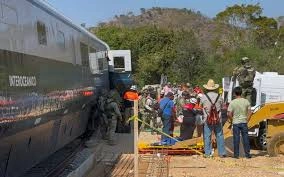
At least 13 people lost their lives and 98 others were injured after an interoceanic passenger train derailed in Mexico’s southern state of Oaxaca on Sunday, December 28, 2025. The tragic Mexico train derailment has triggered a large-scale emergency response and raised renewed concerns over railway safety in Mexico, particularly along key infrastructure corridors.
Deadly Accident on a Strategic Rail Route
According to preliminary reports, the interoceanic train was traveling along a vital route connecting the Pacific and Atlantic trade corridors when multiple coaches derailed near a semi-rural stretch of track in Oaxaca. Several passenger compartments overturned, trapping travelers inside and causing widespread panic among those on board.
Emergency services, including state police, fire brigades, paramedics, and the National Guard, were rushed to the site. Rescue teams worked for hours to evacuate injured passengers and recover victims from the wreckage. Many of the injured were transported to nearby hospitals, with several reported to be in critical condition.
Casualties and Emergency Response at a Glance
- Fatalities: 13 confirmed deaths
- Injured: 98 passengers
- Location: Oaxaca, southern Mexico
- Train Type: Interoceanic passenger train
- Date: Sunday, December 28, 2025
Authorities temporarily suspended rail services along the affected route to facilitate rescue operations and initiate safety inspections.
Investigation Underway into Cause of Derailment
Officials from Mexico’s transport and infrastructure agencies have launched a formal investigation to determine the cause of the Oaxaca train accident. Early assessments suggest that track conditions, mechanical failure, or excessive speed may have contributed, though authorities have not ruled out environmental factors.
The interoceanic rail corridor is considered a flagship infrastructure project designed to boost regional development, trade, and passenger connectivity. This incident has intensified scrutiny of maintenance protocols, signaling systems, and emergency preparedness along the route.
A senior transport official stated that a comprehensive technical audit would be conducted, covering rail tracks, train equipment, and operational procedures to prevent similar incidents in the future.
Renewed Focus on Railway Safety in Mexico
The interoceanic train derailment has reignited public debate over rail safety standards across the country. Passenger advocacy groups have called for stricter oversight, regular safety audits, and improved passenger protection measures.
Key safety concerns highlighted include:
- Track maintenance and inspection frequency
- Modernization of signaling and braking systems
- Emergency response readiness on long-distance routes
- Passenger safety training and onboard communication systems
Broader Implications and Way Forward
As Mexico continues to expand and modernize its rail infrastructure, the Oaxaca tragedy underscores the importance of balancing rapid development with rigorous safety enforcement. Ensuring the reliability of strategic transport corridors is critical not only for passenger confidence but also for national economic stability.
The government is expected to release a detailed investigation report in the coming weeks. Until then, the nation mourns the victims of one of the deadliest train accidents in Mexico in recent years, while families await answers and accountability.
The incident serves as a stark reminder that infrastructure progress must be matched with uncompromising safety standards to protect lives and sustain public trust.

