
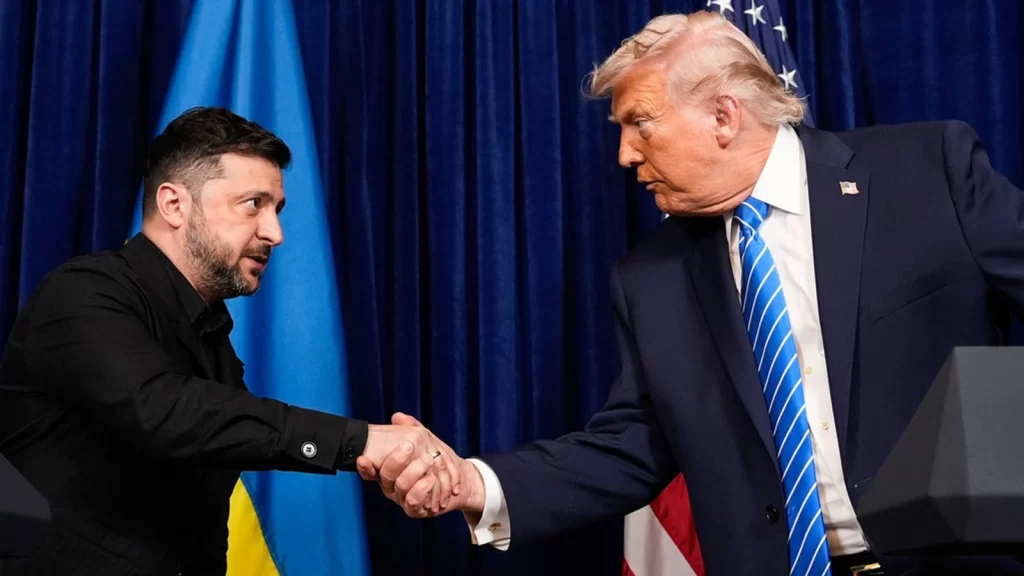
President-elect Donald Trump and Ukrainian President Volodymyr Zelenskyy held more than three hours of high-level peace talks at Mar-a-Lago on December 28, 2025, marking one of the most consequential diplomatic engagements since the start of the Russia–Ukraine war. Both leaders described the meeting as “excellent” and “productive,” raising global expectations that a comprehensive Ukraine peace framework may be nearing completion, even as several critical disputes remain unresolved.
High-Stakes Diplomacy at a Critical Moment
The meeting comes at a pivotal time for the Ukraine conflict, which has reshaped global security dynamics, strained international alliances, and triggered prolonged economic uncertainty. With Donald Trump preparing to assume office, the Mar-a-Lago talks were closely watched by policymakers, markets, and international observers seeking clarity on the future direction of US foreign policy toward Ukraine and Russia.
According to official statements, the discussions focused on ceasefire mechanisms, territorial integrity, security guarantees, and post-war reconstruction. While no formal agreement was announced, both sides emphasized that “substantial progress” had been made toward aligning positions on a broader peace roadmap.
Key Outcomes from the Trump–Zelenskyy Meeting
Although details remain confidential, sources familiar with the talks highlighted several core themes that dominated the discussions:
- Ceasefire Framework: Exploration of phased ceasefire options tied to verification mechanisms
- Security Assurances: Long-term guarantees for Ukraine’s sovereignty and defense capabilities
- Territorial Disputes: Ongoing disagreements over contested regions, described as the most sensitive issue
- Reconstruction and Aid: Post-war rebuilding plans involving international financial and institutional support
These elements form the backbone of what officials described as a “nearly complete” peace framework, though final consensus will require further negotiations with multiple stakeholders.
Strategic Implications for US Foreign Policy
The Mar-a-Lago peace talks underscore Donald Trump’s intent to play a direct, personal role in reshaping the Ukraine peace process. During the meeting, Trump reportedly reiterated his position that prolonged conflict benefits no party and stressed the urgency of reaching a negotiated settlement that balances security, stability, and economic recovery.
For Ukraine, Zelenskyy’s engagement with the president-elect reflects a pragmatic approach to safeguarding national interests amid shifting political realities in Washington. Analysts note that maintaining strong bilateral ties with the United States remains critical for Ukraine’s diplomatic leverage and defense posture.
Global Reactions and Market Attention
The announcement of “productive” talks triggered cautious optimism across diplomatic circles, with several governments signaling support for continued dialogue. Financial markets and energy analysts also monitored the developments closely, as any credible movement toward peace in Ukraine could have far-reaching implications for global energy prices, defense spending, and supply chain stability.
What Lies Ahead
Despite the positive tone, officials on both sides acknowledged that significant challenges remain. Finalizing a peace agreement will require addressing unresolved territorial questions, securing international buy-in, and ensuring enforceable guarantees that prevent future escalation.
As negotiations continue, the Trump–Zelenskyy meeting at Mar-a-Lago may be remembered as a turning point in the Ukraine peace talks—one that brought the prospect of ending a prolonged conflict closer to reality, while underscoring the complexity of translating diplomatic momentum into lasting peace.

