
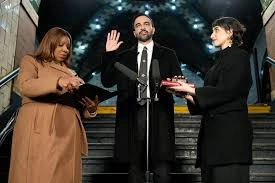
In a historic moment that reshaped the city’s political narrative, Zohran Mamdani was sworn in as the 112th Mayor of New York City shortly after midnight on January 1, 2026. The low-key yet symbolically powerful ceremony marked a series of unprecedented milestones and signaled a transformative chapter for the nation’s largest metropolitan city.
The oath of office was administered by New York Attorney General Letitia James at the decommissioned Old City Hall subway station, a location chosen to underscore Mamdani’s campaign emphasis on public infrastructure, accessibility, and working-class priorities. Placing his hand on a Qur’an, Mamdani became the first Muslim mayor of New York City, a moment widely viewed as a reflection of the city’s cultural and religious diversity.
Breaking Barriers in City Leadership
At 34 years old, Mamdani is among the youngest mayors in New York City history. His inauguration also marked several historic firsts, as he became the first South Asian, first African-born, and first openly democratic socialist to assume the city’s top executive office. His rise from a Queens-based state assembly member to mayor highlights a broader shift in voter sentiment toward progressive leadership and grassroots political movements.
The midnight swearing-in ceremony was intentionally modest, reinforcing Mamdani’s message of governance rooted in everyday New Yorkers’ lived realities rather than political spectacle. The venue itself—an architectural relic of the city’s transit system—symbolized renewal, public investment, and institutional reform.
A Progressive Agenda Focused on Affordability
Mamdani enters office with a strong mandate centered on affordability, housing security, and public transportation reform—key issues that dominated the 2025 New York City mayoral election. Throughout his campaign, he emphasized policies aimed at easing the city’s rising cost of living and strengthening social safety nets.
Key proposals highlighted during his campaign include:
- Free citywide bus service to improve mobility and reduce commuting costs
- Universal childcare programs for working families
- Rent stabilization and freezes for regulated housing units
- City-run grocery initiatives to combat food insecurity
Supporters argue these policies could redefine urban governance by prioritizing equity and essential services. Critics, however, caution that implementation will require navigating budgetary constraints and cooperation with state-level authorities.
Public Inauguration and Early Signals
A larger public inauguration ceremony was scheduled later on New Year’s Day at City Hall, expected to draw political leaders, labor representatives, and community organizers. In his first administrative steps, Mamdani began assembling a leadership team aligned with his policy priorities, including early appointments focused on transportation and urban planning.
A New Chapter for New York City
Zohran Mamdani assumes office at a pivotal moment, as New York City confronts economic uncertainty, housing pressures, and demands for more inclusive governance. His historic inauguration reflects not only a personal achievement but a broader evolution in the city’s political identity.
As the 112th Mayor of New York City, Mamdani’s leadership will be closely watched for its potential to redefine progressive governance in one of the world’s most influential cities.

