
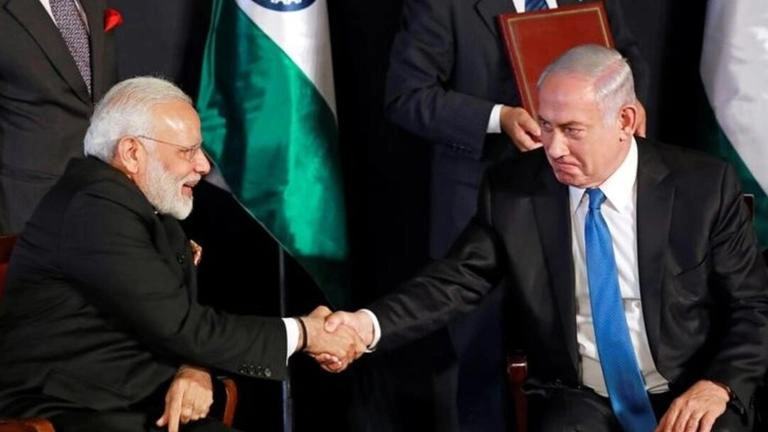
In a significant early diplomatic engagement of the new year, Prime Minister Narendra Modi received a direct telephone call from Israeli Prime Minister Benjamin Netanyahu on 7 January 2026 — marking the first high‑level exchange between the two leaders in 2026. The conversation underlined a shared commitment to deepening the India‑Israel strategic partnership, advancing peace efforts in West Asia, and reinforcing a zero‑tolerance stance on terrorism, according to official statements from both capitals.
The nearly hour‑long telephonic dialogue, described as warm and forward‑looking, saw both Modi and Netanyahu exchange New Year greetings and outline priorities for bilateral cooperation in the year ahead — from security collaboration to regional peace planning. It comes amid ongoing global geopolitical turbulence, with India maintaining active diplomatic outreach across West Asia and beyond.
Strategic Partnership and Shared Priorities
According to statements issued by the Prime Minister’s Office, the two leaders “discussed ways to further strengthen the India‑Israel Strategic Partnership” — a framework that has steadily expanded in recent years across defence, technology, agriculture, and intelligence cooperation. Modi described Netanyahu as a “friend” in a social media post following the call, highlighting the personal rapport that underpins the growing diplomatic relationship.
From Jerusalem, Prime Minister Netanyahu reiterated this sentiment, thanking Modi for the conversation and expressing that Israel “values the deep partnership with India and our shared determination to defeat terrorism.” The Israeli leader also conveyed best wishes to the people of India, signaling continued goodwill between the two democracies.
As a reflection of enduring trust, both leaders agreed to remain in close contact throughout 2026, with Netanyahu expressing his hope of an in‑person meeting with Modi in the near future to advance discussions.
Gaza Peace Plan and Regional Security Dialogue
A key topic of conversation was the Gaza Peace Plan, a diplomatic framework aimed at ending the long‑running conflict between Israel and Hamas that has destabilised West Asia for years. Netanyahu briefed Modi on the current status and implementation of the plan, while the Indian prime minister reaffirmed India’s consistent support for efforts toward a “just and durable peace” in the region.
The leaders also exchanged views on the broader regional situation in West Asia — a volatile strategic theatre facing overlapping tensions involving Iran, ongoing humanitarian concerns in Gaza, and global security implications. Both emphasised the importance of peace, stability and diplomatic dialogue as essential components to mitigating conflict and preventing escalation.
Reaffirming a Unified Stand on Terrorism
A central element of the call was a reaffirmed resolve to combat terrorism. Modi and Netanyahu echoed a zero‑tolerance approach toward terrorism in all its forms and manifestations, with both leaders underlining the need for enhanced cooperation to counter violent extremism and transnational terror threats. This shared stance reinforces a key pillar of the India‑Israel partnership and aligns with both nations’ national security priorities.
The call also highlighted the importance both leaders place on strengthened cooperation in intelligence sharing, defence collaboration, and strategic alignment in an increasingly complex global environment.
Looking Ahead: A Forward‑Focused Agenda
As India and Israel embark on what officials describe as a “forward‑looking vision” for bilateral engagement in 2026, the January 7 call sets a diplomatic tone that emphasises partnership, peace, and security. With shared democratic values and deep mutual trust at its core, this early‑year conversation reinforces the trajectory of a strategic alliance that is expanding both in scope and impact.

