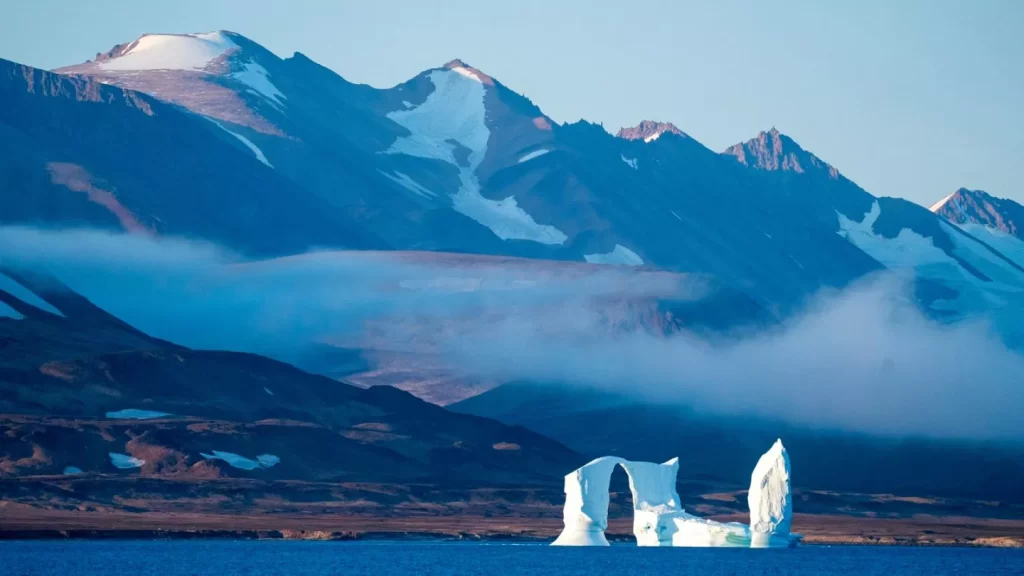
Greenland is in the headlines all around the world because it has a lot of natural riches that haven’t been used yet, it’s in a highly significant geopolitical location, and climate change is making things worse there. As the Arctic ice melts, this self-governing Danish territory becomes an important part of new economic and security potential.
There are many useful objects buried in the ice on Earth. Greenland is more than 2.1 million square kilometres big, and around 80% of that is covered by an ice sheet that is about 1.5 kilometres thick. There are a lot of minerals down there, including rare earth elements that are very vital for the military, electronics, and renewable energy technology. Kvanefjeld and other large areas outside of China have some of the biggest rare earth reserves. This deposit could fulfil 11% of the world’s needs for parts that make cell phones, electric cars, and wind turbines work.
Every year, 270 billion tonnes of ice melts. This makes it easier to get uranium, iron ore, niobium, gold, and zinc for jet engines. After discoveries were made in 2010, mining exploration grew. This provided Greenland a chance to break China’s grasp on rare earths as the need for green technologies develops.
There is a lot of energy in oil and gas.
Surveys reveal that the Arctic waters in the northeast alone have up to 50 billion barrels of oil equivalent, which is the same amount as the North Sea reserves.
People still want these assets because the energy market is changing all around the world. For example, Europe is trying to diversify after the situation in Ukraine. Extraction might make billions of dollars for the 56,000 people who live in Greenland, where the GDP per person is about $50,000.
Things are becoming worse because Russia is sending nuclear submarines to the Arctic by 2025 and bulking up its military there. China’s spending on infrastructure in the “near-Arctic” before 2021 also makes things more tense. The U.S. and Denmark made deals that put an end to these actions. The Northern Sea Route, which is free of ice, will make trade between Asia and Europe 40% faster.
Climate change is bad for all sides.
The glaciers in Greenland are melting twice as quickly as the average for the rest of the world. This could cause the sea level to increase by 7 meters, which would put cities all across the world in danger. Inuit hunters are losing the regions where they used to hunt because polar bears are dying out and fish are moving north. Fishing accounts for more than 90% of exports, hence this has an effect on the economy.
Tourism is beneficial for the economy since it adds 10% to GDP, but fjords that are simple to get to ruin nature for good. The UN and IPCC can use data from NASA and EU stations about losses up to 2025 to assist them figure out what to do with this climate sentinel.
Opportunities for Change in the Economy
The ocean is getting warmer, which makes it hard to fish. This might mean that mining will add three times as much to GDP by 2035 and cut youth unemployment. The changes to Nuuk’s harbour make it possible for big ships to dock. This means that the city is ready to trade according to rules that specify 60% of the profits must stay in the local economy and the trade must be long-lasting.
Inuit-led training makes sure that sales money can be utilised to pay for independence from Denmark’s $500 million in subsidies, which saves them from getting locked in resource curse traps.
Indigenous People and Sovereignty Leaders of the Inuit, including Premier Múte Egede, advocate “Greenland first” and don’t want to sell everything. They would prefer collaborate with people who are honest. People that pursue cultural things like shamanism and kayaking are less likely to take advantage of other people right away.
Polls show that 60% of individuals desire to be on their own, and resources will assist them do so in the future.
Keeping the world safe and looking at it
The mining law from 2021 specifies that no waste should be released during mining and that biodiversity offsets should be applied. It also stipulates that initiatives that make a lot of pollution can’t happen. The Arctic Council’s monitoring makes things clearer, and activists want “just transitions” that mix Inuit knowledge with initiatives that use wind and hydrogen.
Relationships around the world that are changing the future
In 2025, the US, Denmark, and Greenland will form three-sided partnerships to donate $100 million to renovate airports. EU money should help with the changes. Canada and China work together to keep the Arctic in order and running.
Greenland’s strategic value: its resources, its location in the world, and the risks of climate change