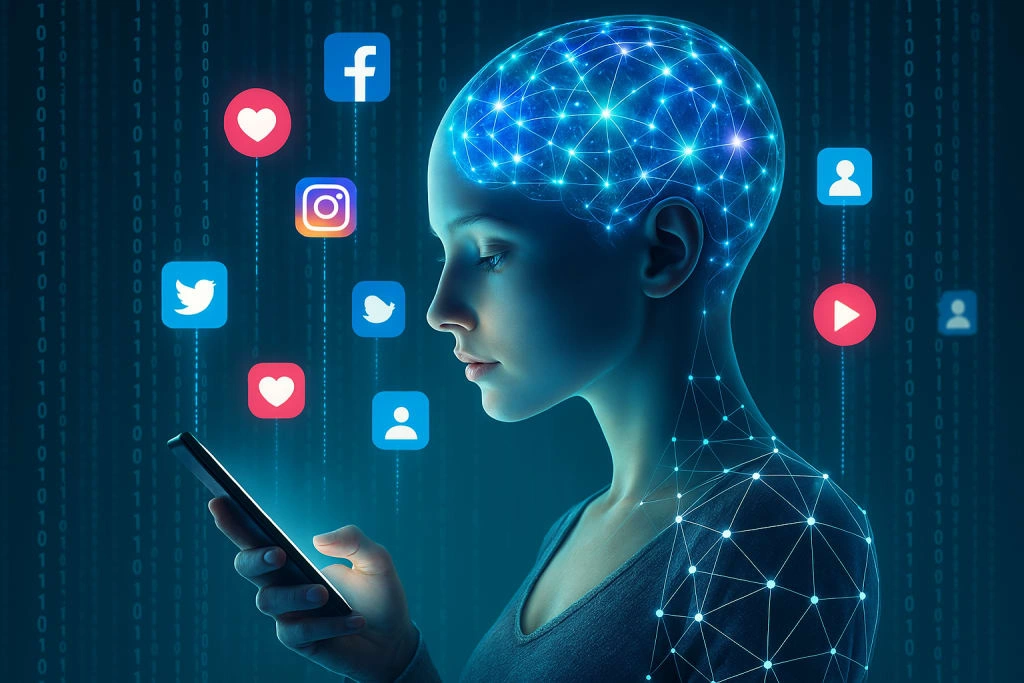
People talk about social issues, acquire their points of view, and think about things in a whole new way thanks to social media. This is one of the largest changes in the digital age. Every day, billions of people across the world look at carefully crafted feeds. A complex mix of algorithms, behavioral psychology, and data-driven information distribution changes how individuals think, makes their opinions better, and changes how they see the world over time. This manner of influencing individuals is always there, even when they’re just looking around the web. It turns social media from a medium for people to talk to each other into powerful instruments for altering people’s opinions that function just as well as big businesses.
The Algorithmic Echo Chamber: How Personalization Can Make You Feel Like You’re the Only One Who Feels That
The best feature of social media is that you can suggest stuff. It’s a difficult math method that seeks to keep people interested by offering them information that is similar to what they have enjoyed or done in the past. These algorithms look at a variety of different aspects, such how often users interact with material, their browsing histories, their network connections, and even how long they spend looking at different types of content. You get a very tailored information environment that always displays you things that support your present thinking at the top of the list and hides things that go against them.
University and technology ethics groups have determined that consumers get content that shows various points of view roughly 60% less often than they would if they were just getting random information. “Filter bubbles” or “echo chambers” are what researchers call the way algorithms sort information. People in these settings can only perceive things that fit with what they already think. The psychological effect is strong: seeing the same point of view over and over again makes you more sure of your own opinions and less aware of alternative points of view.
The plan is based on ideas from the science of learning through reinforcement. Algorithms think that people who appreciate, share, comment on, or watch something for a long time are trustworthy. Then they show you more of the same thing. The feedback loop gets stronger with time, which implies that people see less and less information. This is easy to see in political content. Studies show that politically active users on major platforms get content that supports their political beliefs about 75% of the time.
The Psychology of Social Validation and Affirming Beliefs
Social media also uses basic psychological processes and filtering algorithms that have a huge effect on how people form and keep their beliefs. People can obtain social support, a sense of belonging, and recognition of their status on these sites through things like follower counts, likes, shares, and comments. These steps change ambiguous social approval into genuine feedback, which makes people more likely to do what they want and watch what they want.
Neuroscientific research demonstrates that achieving social acceptance through platform engagement triggers dopamine release in brain reward regions, leading to neurochemical reinforcement comparable to other gratifying activities. This hormonal reaction makes people crave more praise, so they offer their friends something they know they’ll like. People like to tell their friends and relatives about things they like. This makes the group’s consensus stronger and less probable that someone will disagree with them.
The idea of social proof makes things worse. People in their network talk about something a lot, and soon other people believe it. People often believe lies right away. People believe it not because it’s true, but because so many other people do. Studies on the spread of misleading information show that lies often spread six times faster than realities. This is partly because algorithms appreciate new information that makes people feel strong emotions, and they disseminate it quickly.
Microtargeting and making persuasion more personal
With advanced data analytics, it’s now possible to send messages to select groups of people that are meant to change their ideas and actions with a level of accuracy that has never been seen before. Social media platforms collect a lot of information on its users, such as their age, gender, race, political beliefs, shopping patterns, and interests. This information lets content creators, advertisers, and political strategists convey very targeted messages based on people’s weaknesses and psychological profiles.
Originally, these microtargeting techniques were employed in political campaigns. They used psychographic segmentation to send different messages to different groups of people who might vote. They didn’t always mean what they said in the texts. Experts have observed that during significant elections, campaigns occasionally transmitted the identical message to separate groups of people at the same time. Each group got the right message for them. It’s impossible to find a collection of facts that everyone can agree on since the information environment is so messed up. This is really necessary for a discussion that is truly democratic.
Companies utilize these similar strategies, but the impacts transcend beyond how people act as customers and into their beliefs in general. Companies usually use a mix of emotional appeals and scientific-sounding language to entice consumers who are anxious about their health to buy health products. People who read this kind of personalized information all the time may influence how they feel about health, science, and how much they trust institutions, even if the statements aren’t true.
The Growth of Content That Makes You Feel and Divides
People prefer posts on social media that make them feel something. That’s why they want more people to talk about their work. Whistleblower claims and regulatory investigations have proven that big internet companies’ own research shows that algorithms always provide consumers stuff that makes them really angry, scared, or furious. These feelings are detrimental for society, but they help algorithms because they make more people want to connect with them than with things that are lovely or neutral.
This way of making emotions stronger has a major effect on public debate because it makes people who are controversial get more attention and others who are moderate get less. Researchers looked into how political information spreads and discovered that posts that make people angry garnered almost twice as many responses as posts that talk about key policy concerns. People who learn about politics on social media see points of view that go too far to one side. This gives them the wrong idea about how public opinion spreads and how political strife works.
People communicate knowledge in a very different way now that social media is around. It has made people like journalists, scientists, and teachers who keep the peace less essential. More and more, people are getting news from independent content sources and social networks.
For instance, it puts professional news next to unproven rumors, peer-reviewed scientific discoveries next to conspiracy theories, and expert analysis next to amateur opinion. When there aren’t any visible signals of authority, more and more people are using social validation cues and endorsements from their own networks to figure out if something is real. Fake news can be just as good as real news if a lot of people pay attention to it. This takes away any benefits that experts might have.
People of different ages give very different answers when asked where they acquire their news. For instance, younger people trust social media stars more than they do well-known news organizations or scientific institutions. People have been adopting platforms where being authentic, helpful, and enjoyable gives you power instead of degrees, strict regulations, or links to institutions. This change in trust shows that. People care more about what their friends know than what experts know. This is easy to find, but it could not be right. This is bad news for how individuals will learn and make decisions in the long run.