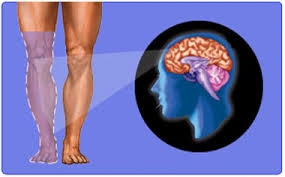
Researchers are finding out that pain isn’t always a clear evidence of bodily harm. This is a big shift in how we view medicine. It seems that the brain can make pain signals on its own, like in cases of phantom limb pain and other long-term pain issues. People have traditionally considered that pain solely comes from injury to tissue, but this finding goes against that. It lets new treatments focus on the nervous system instead of the body. This dilemma is considerably worse because millions of people throughout the world suffer with chronic pain even if they don’t have any evident injuries. It combines neuroscience, psychology, and advocacy for patients. People are searching for terms like “phantom limb pain,” “chronic pain disorders,” and “neuropathic pain mechanisms.” This shows how important it is to tell others and make care better.
The Science of Pain
People used to think that pain was a mechanical process. When you are hurt, nerves transmit information to the brain to protect itself. But contemporary neuroscience shows that things are more complicated than that. The somatosensory cortex, anterior cingulate cortex, and insula are parts of the brain that could be able to process pain on their own. This process, which is also known as “central sensitization,” lets the brain make pain signals stronger or even create them.
Consider pain in a phantom limb. Ambroise Paré wrote about it for the first time in the 16th century, but since World War II, when amputees stated they felt tremendous pain in their missing limbs, it has been studied a lot. Patients say that their limbs that were severed years ago hurt in ways that are sharp, cramping, or stabbing. Neuroimaging studies, such as functional MRI, illustrate that the brain’s picture of the body—the homunculus in the primary somatosensory cortex—does not erase the representation of the amputated limb. Instead, adjacent areas invade, which causes a “remapping” that makes the pain feel real. The Amputee Coalition says that up to 80% of amputees have phantom limb pain, and 60% of them have it all the time.
This is how chronic pain disorders are different from amputation. The Centers for Disease Control and Prevention say that fibromyalgia affects roughly 4 million people in the United States. It hurts a lot in the muscles and bones, yet there is no swelling or damage to the structure. Complex regional pain syndrome (CRPS) is another condition that can emerge after a small injury. However, scans demonstrate that there is no current damage, only nerves that are too sensitive and a brain that is too active.
Phantom Limb Pain: A Look at Pain That Comes from the Brain
Phantom limb pain is a fantastic example of how the brain may cause pain even when there is no injury. Patients often characterize the phantom limb as profoundly real, capable of eliciting strong spasms or unbearable itching. Ronald Melzack’s neuromatrix hypothesis posits the presence of a “body schema” within the brain, a decentralized network that generates sensory experiences independently of the body. Clinical studies show that staring at a reflection of the healthy leg makes the brain “unclench” the phantom, which lessens pain in 60–70% of cases. This is why mirror treatment works.
Touching the face of someone who has lost an arm can make the phantom hand feel things, according to experiments by experts like V.S. Ramachandran, a well-known neuroscientist. This is due of cortical remapping, which happens when the brain’s sensory map displays that the face area and the hand area are near to each other. A 2023 study in the journal Pain looked at 500 patients and showed that utilizing virtual reality mirroring early on cut the number of phantom pain cases by 45%. There has been a lot of conversation about “pain without injury” since these changes were made to veteran care, and searches for “phantom limb pain treatment” have gone up a lot.
There is more than simply stories that prove the problem is real. The National Institutes of Health says that 1.6 million Americans have lost a limb. A lot of them have phantom feelings that keep them up at night and make their mental health worse. 30 to 50 percent of persons with depression also have it, which makes the pain worse by making the emotional pain circuits stronger.
Chronic Pain Disorders: When Your Brain Goes Crazy
The CDC claims that chronic pain disorders are an even greater problem, impacting more than 50 million individuals in the U.S. That’s more than all the cases of diabetes, heart disease, and cancer put together. “Neuropathic pain mechanisms” are what these conditions live on. They happen when nerves that are hurt or out of control fire in a way that doesn’t make sense, and the brain keeps sending the signal.
Irritable bowel syndrome (IBS) is an example. It affects 10–15% of people around the world. Patients feel pain in their organs without any lesions or blockages, and neuroimaging shows that areas that control pain are more active. Migraines are a different type of chronic pain condition that don’t hurt blood vessels. Functional MRI shows cortical spreading depression, which is a wave of neuronal excitation that creates pain that throbs.
The essential thing is central sensitization. Long-term potentiation, which is comparable to how memories are formed, strengthens synaptic connections when pain signals are sent over and over. A meta-analysis in The Lancet Neurology reviewed 100 studies and found that 85% of chronic pain patients result from brain plasticity rather than ongoing injury. Women do 70% of the work, which is probably because hormones change the circuits that generate pain.
Important numbers about how often chronic pain happens:
– The World Health Organization says that 20% of people around the world have chronic pain.
– The Institute of Medicine claims that the U.S. loses $560 to $635 billion a year because of missed work and health care.
– Fibromyalgia affects 2–4% of people, and even when lab tests come back normal, the average pain level on visual analog scales is 6 out of 10.
– The chance of getting CRPS after a fracture is 1–2%, but the pain never goes away if it isn’t treated.
– These data indicate why “chronic pain disorders” are popular subjects on health forums: people want to know that they’re not crazy.
Neurological Mechanisms: Learning about the Brain’s Pain Factory
The brain’s pain matrix takes in sensory, emotional, and cognitive information. Nociceptors detect peril, although the brain determines the presence of pain. Glial cells, which aid the brain’s immune system, release inflammatory cytokines that make neurons more sensitive when there is no injury. Neurotransmitters, including glutamate, flood synapses; yet, descending pathways from the brainstem do not efficiently inhibit impulses.
This is what fMRI and PET scans show. In 2024, Johns Hopkins did a research that looked at fibromyalgia patients using imaging. It showed that the insula was 30% more active during activities that caused pain, which is similar to how the brain reacts to harm without really damaging the tissue. A study in Nature Reviews Neuroscience found that endogenous opioids, which are the body’s natural painkillers, go down in those with chronic diseases. This is why regular painkillers don’t work for some people.
Mental factors make this even worse. When you catastrophize, or make threats seem worse than they are, it makes pain worse by stimulating the amygdala. Cognitive behavioral therapy (CBT) fights it off, and studies that randomly assign people to different groups suggest that it can lessen symptoms by 30%. Mindfulness meditation also soothes the anterior cingulate, which helps you feel better without medicines.
New treatments that focus on the brain
Medicines that focus on the brain are needed to change the way things are done. Gabapentinoids are medications that alleviate neuropathic pain.They help with phantom limb pain in half of the cases. Infusions of ketamine reset neuronal circuits, which gives those with CRPS comfort that lasts for months.
The best options are the ones that don’t hurt. Transcranial magnetic stimulation (TMS) changes how the brain’s cortex is mapped. In a European research with 100 patients, it reduced phantom pain by 40%. Spinal cord stimulation implants stop signals, and they work 60% of the time for long-term conditions.
AI-based neurofeedback is a new kind of technology that shows people how to modify their brain waves. A pilot trial at Stanford found that pain went down by 55%. Nerve growth factor inhibitors and other regenerative techniques lower sensitivity.
Experts argue that care should involve experts from a variety of areas. The American Chronic Pain Association states that the best strategy to treat long-term pain is to use medicine, treatment, and lifestyle modifications together. For instance, exercising can produce endorphins, which can cut pain by 25%.
Effects on the economy and society
When patients are in agony but don’t have any injuries, healthcare systems have a hard time. In 2025, the ICMR did a poll and found that 20% of people in India have long-term discomfort. This makes it harder for cities like Pune to get what they need. One reason why there is a global opioid problem is that people think that pain that comes from the brain is mechanical.
Stories from patients make the facts more real. Veterans experiencing phantom limb pain say they feel alone, and groups that support them seek changes to the law, such making the VA bigger. Untreated pain can hurt your mental health and raise your chance of suicide.
How the Brain Makes Phantom Limb and Chronic Pain: Pain Without Injury—A New Look at Medical Science