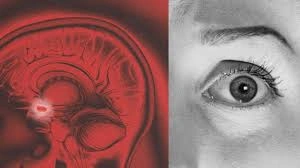
In the high-stakes arena of human decision-making, one deep truth comes to light: emotions are more powerful than logic. This isn’t just a conjecture; it’s a basic principle in biology. The amygdala, which is an old alarm mechanism in the brain, goes off a few milliseconds before the prefrontal cortex can think about it. Think about what might happen if a car slammed on the brakes when it saw a kid running into traffic. First, fear increases, and then analysis. This split-second primacy of emotional processing influences everything, from the choices we make every day to international events, markets, politics, and even our personal relationships. As researchers investigate the intricacies of the brain’s circuitry, the ramifications extend into psychology, marketing, and artificial intelligence, contesting the Enlightenment notion of unadulterated reason. Knowing why the amygdala reacts to emotional inputs milliseconds before the rational prefrontal brain does can help you learn how to control yourself better, communicate better, and harness this evolutionary quirk to move forward.
How Speed Works in the Brain’s Emotional Fast Lane
This is because of the brain’s dual-track processing system, which has been around for millions of years of evolution. The amygdala, which looks like an almond and is deep in the temporal lobes, protects the brain from threats and rewards. When faced with stimuli, whether a snarling dog or a loved one’s grin, it causes an instantaneous release of chemicals like adrenaline and cortisol, getting the body ready to fight, run away, or stay still.
Neuroimaging studies, including functional MRI scans, consistently reveal the speed disparity. Emotional signals go to the amygdala in as little as 12 milliseconds, which is faster than the thalamic pathway, which takes longer to convey signals to the cortex. The prefrontal cortex, on the other hand, is in charge of executive functions like planning and halting. It takes roughly 200 to 500 milliseconds to turn on. This temporal lag explains things like road rage or buying goods on a whim: emotions are processed faster than logic, which affects behavior before reason comes in.
Think about Joseph LeDoux’s idea of the high-road and low-road theory. The “low road” is a direct neural shortcut from the thalamus to the amygdala that allows you swiftly and approximately estimate risk. The “high road,” which runs through the cortex, delivers a more in-depth assessment, but it takes longer. This building saved our forefathers’ lives while they were being pursued, but now it causes everything from outrage on social media to swift verdicts in court.
Important Neural Pathways at Work
The Thalamo-Amygdala Pathway quickly processes raw sensory data, which is great for threats that are happening right now.
Cortical Route: Uses sensory cortices to do in-depth processing, which lets logical overrides happen.
When the amygdala is active, it sends signals back to the cortex, which makes feelings stronger and makes it harder to think rationally.
This arrangement explains why the amygdala responds to emotional inputs milliseconds prior to the rational prefrontal cortex, establishing emotion as the brain’s primary guidance.
The Evolutionary Origins of Emotions Over Reason
Survival demanded speed, not thought. In the savannas of ancient Africa, not acting swiftly could mean death. All animals have an amygdala, which evolved to be a very fast detector of emotionally charged signals, such threatening faces, fast movements, or possible mates. Fossil evidence and comparative anatomy suggest that this system existed long before the neocortex, which is bigger in humans.
Modern evidence backs up this story. A study from 2019 published in Nature Neuroscience showed people scary eyes next to neutral faces. EEG measurements showed that the amygdala was activated in less than 20 milliseconds, before the person was aware of it. People reported they “felt” anxious before they could figure out why. This is an example of emotional primacy at the subconscious level.
This evolutionary legacy persists in contemporary times. “Fear of missing out” (FOMO) is what makes stock traders nervous, which makes markets unstable. Bids based on emotions go up before bids based on rationality fall down. Politicians are good at this because they employ fear-based language, like in campaigns that use people’s fears about immigration to make them more fearful than policy debates.
Issues with mental and physical health care
In medicine, this dynamic complicates therapy. Phobias persist because the amygdala first overrides cognitive therapy; exposure therapy operates by gradually restructuring these fast pathways. The World Health Organization says that anxiety disorders affect 284 million individuals around the world. These disorders are usually caused by amygdalas that are too active taking over control of the prefrontal cortex.
Mindfulness meditation and other therapies improve the connections between the prefrontal brain and the amygdala, which makes it harder for emotions to take over. A meta-analysis published in JAMA Psychiatry (2022) showed that symptoms were 25% less severe after eight weeks. This shows that neuroplasticity can make things more sensible. People who don’t want to get vaccinated also don’t trust the statistics that say it’s safe. But focused instruction boosts adherence by 25%.
Politics and Changes in Society
People’s feelings are the most important thing in elections. The “Take Back Control” slogan for Brexit played on people’s anxieties of losing control, and polls showed that emotional ads made 15% of individuals change their minds. Algorithms on social media make people more angry. The amygdala reacts to emotional impulses milliseconds before the reasoning prefrontal brain. This makes echo chambers. A 2024 Pew Research poll found that 40% of people who spread false information did so out of anger. Eighteen percent of people who buy products on impulse at the checkout wish they hadn’t later. Simple 24-hour cooling-off measures can help with this.
These examples show how emotional speed can change a lot of things, like marketing, where it can boost sales by 30%, and politics, where it can change votes by 15%.
Bridging the Gap: How to Teach Your Brain to Be Balanced
Can we outsmart our own brains? Neuroscientists say yes, but only if you practice on purpose.
Cognitive Behavioral Therapy (CBT) helps you change how you think about things that make you feel bad. It helps about 60% of persons with depression. Biofeedback devices let users see what their amygdala is doing in real time and teach them how to turn on prefrontal dampeners. Transcranial magnetic stimulation (TMS) is a new technology that goes straight to the amygdala and lowers overactivity in PTSD sufferers by 35%, according to VA studies.
Headspace and other apps employ gamified mindfulness to help millions of users who report they are less reactive. Gallup data shows that organizations who offer “emotional intelligence” training modules report a 20% boost in productivity.
But there are still issues. AI systems that try to make decisions like people usually don’t work because they place logic before feelings. For example, self-driving cars have problems figuring out what a pedestrian wants. Using models based on the amygdala could revolutionize robots for good.
Moral Problems in an Emotionally Driven World
Using feelings as weapons instead of logic makes things worse. Deepfakes employ facial cues of fear to change people’s views before they even think about them. Regulators want schools to teach “emotional literacy” to help people become more resilient in the prefrontal cortex.
In Thinking, Fast and Slow, philosophers such as Daniel Kahneman discuss the biases inherent in System 1 (fast and emotional) and System 2 (slow and logical). Policymakers need to come up with morally sound nudges, such making organ donation the default choice.
Last Thoughts
The amygdala, which controls emotions, reacts to emotional stimuli a few milliseconds before the rational prefrontal brain does. This is a way for us to stay alive in a world that is hard to understand. This cerebral reality has a significant effect on everything, from voting to boardrooms. Statistics like 70% of purchases being impacted by emotions (Harvard Business Review) make it even stronger. The main point is? Awareness enables intervention. We can bring our hearts and minds together with treatment, technology, and training.
By 2030, brain-computer interfaces may be improved, and we may be able to directly adjust the speed of the amygdala. This could help us make better decisions. Until then, understanding this truth helps us make better choices, changing our inherent desire to grow into intentional progress. Society is at a crossroads: either give in to your feelings or learn how to regulate them.
The Amygdala’s Quick Impact on Human Decisions: How Emotions Beat Logic