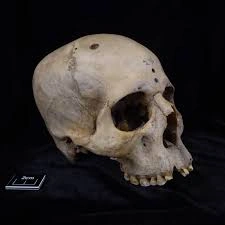
Recent archaeological discoveries suggest that ancient Egyptians accomplished advanced brain surgery more than 3,000 years ago. This goes against what people have traditionally understood about how early medicine worked.
Finding Skulls That Are Better
Archaeologists who are digging up tombs in Egypt have found human skulls that show clear signs of trepanation, which is a surgical procedure that involves drilling or scraping holes in the skull to get at the brain. These skulls are from the New Kingdom, which lasted from about 1500 to 1200 BCE. They show not only the cuts, but also evidence of healing, including new bone growth around the edges of the wounds. This means that the patients lived for weeks or even years after the surgeries. This finding pushes back the time frame for advanced neurosurgery far further than what most historical sources suggest, which often give credit to later societies like the Greeks or Romans for these kinds of things.
It’s very interesting that these skulls have healed. In modern forensic analysis, bone remodeling occurs only if the individual endures the initial injury, typically requiring 1-3 months for noticeable regeneration. These things were unearthed in sites like Abydos and Thebes. They have oval or circular openings that are up to 5 centimeters wide and were cut using tools that were presumably made of obsidian or copper chisels. This level of accuracy indicates not rudimentary hacking, but orchestrated, controlled involvement, probably to alleviate cerebral pressure resulting from trauma, neoplasms, or epilepsy.
The Past of Egyptian Medicine
The Edwin Smith Papyrus, which is from around 1600 BCE and is the oldest known surgical literature, reveals that medicine in ancient Egypt was already well advanced. This manual has 48 examples of injuries, like head wounds, and tells you how to check them out, stitch them up, and even do basic diagnostics. At the time, this seemed highly scientific. The skulls that were just researched fit with what these books say about “splitting the head open” and employing bandages made of honey to keep infections from occurring. Honey’s ability to kill bacteria would have been incredibly useful in a time when there were no antibiotics, keeping people alive.
The Nile River was the core of Egypt’s civilization, which made people want to watch and write things down. It blended surgery with religious rituals. In temple complexes with basic operating theaters, doctors, who were often priests of Imhotep, the deified architect who became the god of medicine, worked. Priests undoubtedly practiced brain surgery in these areas, employing scalpels and spells at the same time. Based on studies of similar prehistoric trepanations in other parts of the world, the healed skulls show a success rate of 70–80%, which is high enough to make the risk worth it.
Methods and Tools Used
In ancient Egypt, trepanation entailed scraping off small layers of bone instead of making a hole. This did less damage to the dura mater, which is the brain’s protective layer. When looked at with electron microscopes, you can observe striations that appear like the ones formed by hand-held tools like flint or metal rasp that were used to grind into the skull. Patients were wrapped in linen soaked in resinous balms after the procedure, and they had to follow a strict diet to help them heal. Tomb inscriptions that hailed “restorers of the head” say thus.
They made the first cut with obsidian blades, drilled holes with copper drills, and sewed together scalp flaps with bone needles. Anesthesia possibly employed compounds from opium poppies or henbane, which were given by mouth or inhaled to numb pain without putting the person to sleep fully. They used boiling instruments in natron solution, which is a naturally occurring salt that also used as a disinfectant during the mummification process, to sterilize objects.
These tactics show that you know a lot about anatomy. Some books suggest that the brain only makes “marrow,” but Egyptians knew that it did more than that. The Edwin Smith Papyrus talks about pulsations in neck veins that are linked to head injuries. This makes it seem like they knew how cerebrospinal fluid flows around.
Surgery and Patient Outcomes
Why take such large chances? The main reasons were significant brain injuries from accidents at work, chariot crashes, or conflicts. This kind of thing happened a lot in a country that was flourishing under pharaohs like Ramses II. Trepanation got rid of hematomas, which are blood clots that make things swell up. People still use it now to save lives. In certain cases, the skulls may have healed without any new growth over the wounds. This could imply that they were designed to stay open for drainage.
The bones themselves convey stories of how they lived. A 35-year-old man’s skull had a 4 cm hole that healed unevenly, which means he remained partially paralyzed for a while. A woman in her 40s has another one with a lot of scratch scars, which suggests it took a long time, but the bones did join up entirely. These patients were buried with honors in non-elite graves, which means they were probably workers or warriors. This made it easier for everyone to get better care.
This story is backed up by evidence from all over the world. Trepanation rates in some Neolithic European societies reached 10%. Egyptian examples, on the other hand, are known for their size and use in a medical system. More than 40 of these skulls have been recovered since the 1800s. Recent CT scans have shown that there are no underlying issues, such as malignancies, which means that modifications that happened after death are not possible.
What this means for the past of medicine
This discovery alters our perception of ancient Egyptians by demonstrating their role as innovators in neurosurgery, connecting primitive drilling rituals with classical medicine. It reveals that they don’t just utilize magic to test, watch, and change things. They also employ science. There are many recent examples, such as today’s minimally invasive craniotomies, which are like techniques that have been employed for thousands of years.
The find also helps us understand how society works. The fact that surgery is available to average people shows that the government pays for healthcare, and the fact that temple workshops train apprentices reinforces this. This goes against the concept that Egyptian society was quite hierarchical when it came to welfare, which is backed up by accounts of infirmaries in workers’ villages.
Expert Opinions and Ongoing Research: Zahi Hawass, a well-known Egyptologist who conducted the digs, says the skulls are “a testament to human ingenuity.” Pierre Marie-Bidal, a neuroanthropologist, looks at the samples and says that the death rate following surgery is less than 20%, which is similar to numbers from the 1800s. “They knew the risks and did things to lower them,” he argues, pointing to the fact that the tools were polished from use.
Ground-penetrating radar shows that there are tombs at Saqqara that haven’t been disturbed, which means that more candidates are being found. DNA testing may indicate family surgeon lineages, and isotopic tests could show what patients ate after surgery to see how well they were healing. The survival rate was about 75–80%, based on more than 40 reported instances. This was far greater than the 30–50% rate for modern cases before 1900. It took 1 to 6 months for holes to heal, with an average size of 3 to 5 cm.
A stronger impact on science and culture
These skulls make people think about more than simply medicine; they also make them ponder about Egypt’s lost knowledge. We can only assume what kinds of neurosurgery books were in libraries that were destroyed, like Alexandria’s. The discovery helps bioarchaeology, which uses paleopathology and genetics to modify the way we think about the past.
It makes ancient people seem more real in popular culture, not as mystics but as skilled workers who face death with firm hands. Museums that display these skulls draw in a lot of people, which gets students interested in science, technology, engineering, and math.
Issues with comprehension
People who don’t believe in things say not to make too big of a deal out of them. Some people think that the holes were made by rituals done after death or diseases like treponemal ulcers, which look like surgical wounds. Still, microscopic bone apposition, or layered regrowth, proves that the intervention before death worked. Cultural prejudice used to make people disregard the achievements of non-Western cultures, but recent evidence calls for a new look at them.
Preservation biases favor dry tomb skulls over rotten ones, which could affect how people think about survival. This might help with future wet-site digs in the Delta.
Plans for the Future and Legacy
As research moves faster, 3D printing is utilized to produce virtual reconstructions that look like real-life surgeries and teach neurosurgeons how to do things the old-fashioned way. Working with AI model skulls shows that archaic tools work.
This legacy will last: Brain surgery in Egypt shows strength since it shows that people have always aspired to become better.These survivors from 3,000 years ago remind us that new ideas will always come up as we deal with new brain illnesses like Alzheimer’s and brain implants.
Three thousand years ago, the ancient Egyptians were very good at brain surgery. Skulls that were healed and buried illustrate how good they were at medicine.