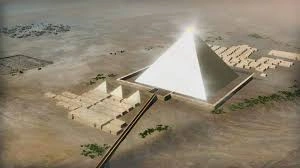
One of the Seven Wonders of the Ancient World was the Great Pyramid of Giza. In Egypt, it used to shine in the sun. The smooth white limestone shell worked like a big mirror and bounced light off of it. This great new idea turned the structure into a beacon that could be seen from miles away. It was a sign of the Pharaohs’ hopes and the best engineering of the past. Recent academic talks and archaeological finds continue to fascinate the public, shedding light on how this lost grandeur changed people’s ideas about power and eternity.
When the pyramid was built
The Great Pyramid is the biggest of the pyramids in Giza. The pyramid was built during the reign of Pharaoh Khufu, who ruled from 2580 to 2560 BCE. It was 146.6 meters tall and made out of over 2.3 million pieces of granite and limestone, each weighing between 2.5 and 15 tons. The pyramid’s core was made of limestone from the Giza plateau, and the outside was made of beautiful Tura limestone from the other side of the Nile River. People liked this stuff since it was clean and slick. It was brought by boat and carefully cut into stones with sharp edges to construct a casing.
The polishing on these casing stones was so good that they fit together with gaps that were smaller than the width of a hair. They were around 1.5 meters tall and 2.5 meters wide. A Greek historian named Herodotus wrote about the pyramid in the 5th century BCE. He said it was made of “shining stone,” which led people to think it was a mythological construction that came from the gods. The limestone was white and shone because it had a lot of calcium carbonate in it. This was most clear at sunrise and nightfall, when the pyramid seemed like it was on fire. The Great Pyramid of Giza was so bright that ancient travelers could see it from a great way away.
The limestone casing is a sign of power and a technical marvel.
The smooth white limestone casing was important for more than just its looks. It largely stopped the wind, sand, and erosion from getting to the pyramid’s core, which kept the building strong for thousands of years. Experts think that the casing was originally roughly 22 acres wide and weighed 16,000 tons. The pyramid seemed more like a sign of the sun because it was so bright. This fit with what the ancient Egyptians understood about Ra, the sun god, and the pharaoh’s trip to the afterlife. The case’s perfect engineering illustrates how skilled ancient Egyptian builders were. They could make a finish that was just as nice as the way we polish things now.
There is archaeological proof that this is true. The stones that are still at the top and bottom of the pyramid show how perfectly they fit together. The top block is still at an angle of 51 degrees and 52 minutes. John Greaves and other explorers in the 1800s found polished pieces that still looked fine after thousands of years. People started taking off the casing a long time ago, and earthquakes and people speeding up the process made it happen. But part of it was used to create structures in medieval Cairo, including mosques. The polished Tura limestone on the original casing was one of the most important parts because it made it more reflective. The joints were so tight that they didn’t need mortar, and the sloped surfaces made it look like it was stepped from far away. It would take 20,000 to 40,000 workers 20 to 30 years to finish. This engineering achievement shows how effectively the Old Kingdom was put together. They used ramps, levers, and maybe even sledges that were greased with water to move the blocks.
What happens and why when you take off the cover
The Sphinx earthquake in 1303 shook the casing stones loose, which made the beautiful outside of the pyramid mostly disappear. After then, Arab kings had to build things and meticulously quarried the blocks that had fallen. 14th-century documents say that Caliph Al-Aziz Uthman planned to destroy the whole pyramid, but he could only remove a small part of it since it would have taken too much work. In the 1800s, explorers like Howard Vyse reported about the destruction. The top 27 meters were still covered, but the remainder of the building was in pieces.
Today, less than 1% of the pyramid is still standing, and it has changed shape to the jagged one we know. This loss not only made it look less desirable, but it also hurried up the process of erosion. Without the protective coating, wind and tourists have left deep scars on the stone. Muon tomography and thermal imaging photos from today show hidden rooms and prove that the casing used to be even. These technologies show where the casing was employed to keep the structure dry and stop it from deteriorating from the inside. The Great Pyramid of Giza is weak now that the smooth white limestone has been removed. This has led to continuous arguments about how to keep it safe.
Importance in Ancient Egyptian Religion and Culture
In Egyptian cosmology, the pyramid was a method to get to the afterlife. Its dazzling shell was like the benben stone, which was a pile of stories about how the world came to be. The Pyramid Texts, which were written on subsequent pyramids, use depictions of the sun. This makes it look like Khufu’s monument was made to catch and reflect Ra’s light forever. Priests probably did ceremonies at its base, where the mirror effect generated a divine halo that made the pharaoh look like a god-king. The brilliance of the case went beyond Egypt. Legends about the “shining mountain” spread along trade routes and gave rise to Greek and Roman stories.
Strabo, a geographer from the first century, was amazed by how shiny it was and said it looked like polished Parian marble. People all over the world are still interested in this, which has led to speculations that range from aliens being involved to missing technology. But traditional archaeology says that people did it. The limestone casing of the Great Pyramid of Giza appeared like a mirror and was a potent religious and cultural symbol that connected earthly power with divine power.
Efforts to rediscover and restore in modern times
Flinders Petrie’s surveys, which were great at measuring pieces of casing, sparked the archaeological revivals of the 1800s. Mark Lehner, an Egyptologist, looked at the Giza plateau in the 20th century and used computer modeling to recreate the pyramid’s original design. These pictures show a pyramid that was so bright that it outshone the temples around it. They make me think of how beautiful and perfect the white limestone was. People still don’t agree on how to fix it. Some people think that replacing the casing stones with fake limestone would bring back the shine and boost tourism.
Egypt’s Ministry of Antiquities tried using lasers to clean original bricks in the 2020s. For a short while, this made them shine again. UNESCO is anxious about how lawful the project is and how much it would cost, which is expected to be roughly $1 billion. This makes things move more slowly. Supporters say it would honor cultural history, while critics are fearful that it would turn into a business. Recent tests that use both LiDAR and drone pictures show quarry marks that match Tura sources. This proves that the casing is the same all the way around, putting to rest worries about bad work. These artifacts show that people are still trying to get the Great Pyramid’s mirror-like shine back.
A investigation of the limestone’s characteristics in a lab
Geochemical examinations on pieces of case show that they are 99% pure calcite, which is why they shine. Tura limestone was better for polishing mirrors than core stone because it was all the same. UV spectroscopy shows natural fluorescence, which alters the colors of the sunset from white to gold. Tests of durability show that the case protects the contents by making them look like they’ve been outside for 4,500 years. Robot probes that assess the humidity within the building show that the area under the first layer is still dry, while the area outside is suddenly moist. These results show why the smooth white limestone was used to create the great Pyramid of Giza: it looks great and lasts a long time.
A worldwide interest and a role in pop culture history
There are a lot of tales in the press about how the pyramid lost its shine. Movies like “The Mummy” make it look shinier for effect, but documentaries like Nova’s “Pyramids: The Inside Story” use CGI to demonstrate how it really looked. The #GizaShine challenges on social media are very popular. They get millions of views and combine learning with guessing. Every year, 14 million people go to Giza, and many of them are looking for the magical gleam in pictures. For instance, Google Arts & Culture’s virtual reality tours rebuild the entire edifice and show visitors how beautiful it was in the past. This pop cultural legacy preserves the memory of the pyramid’s mirror-like surface alive in people’s minds today.
Right now, there are problems with preservation.
Acid rain and very high humidity can wear down unprotected stone by 0.5 mm every year, which makes matters even more dangerous. Pollution from Cairo’s burgeoning cities is making the remains darker. People who care about the environment say that restoration should only go as far as cleaning that doesn’t hurt the environment. It’s easier to keep an eye on things when other countries help, like Japan’s 3D scanning technology. UNESCO and private donors give money to these projects, but it’s hard to prepare for the future due of political instability. Because of these worries, it’s even more important to protect the rest of the Great Pyramid’s original casing.
Future Prospects and Controversies in Academia
New concepts that came out of 2024 include using hydraulic lifters to put in casings. Genetic testing on worker mummies suggest that they were well-fed and skilled, which is not what most people imagine about slave labor. People are still talking about re-casing. A group that is looking to the future has asked for section of the pyramid to be rebuilt to make a hybrid authentic-modern monument. As technology gets stronger, AI reconstructions might be able to add shine to things without damaging them. Some of the pieces had light pink veins, which suggests that the color of the shell isn’t always the same. These discussions will provide us new information about how the magnificent white limestone outside was made.
Wider Effects on World Heritage
The story of the Great Pyramid goes beyond Egypt; it shows how easy it is for people to lose hope. The disappearing limestone casing is a reminder that even things that last forever will eventually go away. That’s why we need to protect the more than 1,000 pyramids around the world that are in danger of the same thing happening to them. From Mayan lidar maps to Nubian digs, Giza’s mirror past beckons us to explore it. Bringing back its brilliance, even in a symbolic way, might change what it means to be amazed and raise money for places that are in risk. The Great Pyramid has been around for so long that this mystery makes it more than just a stone; it also shows how amazed we all are.
The Great Pyramid of Giza: Restoring the Lost Glory of Its Limestone Casing That Looks Like a Mirror