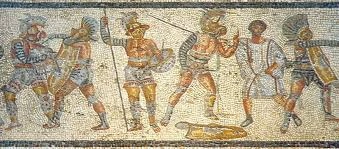
Recent scientific discoveries have transformed what people believed they knew about the lives of Roman gladiators for hundreds of years. Isotope tests on bones found in graves show that the people who lived there mostly ate plants, including beans and barley, and not meat. This discovery transforms how we think about these strong warriors since it shows that they ate plants to be strong and live.
How headlines change the way we write about the past
The news from isotope analysis has caused a stir in archaeology and history. The study looked examined bones that were recovered in gladiator burial sites in Ephesus, which is today in Turkey. It displays some rather odd ways of eating. Movies and legends have made gladiators famous for their meat-heavy meals, although they largely ate plants. Barley grains and legumes made up most of their meals.
This finding goes against the idea that gladiators were always hungry for meat and needed animal nourishment to be good fighters. Instead, they ate cheap vegetables that gave them energy, which gave them the calories they needed to train hard. People used to think “barley men,” or hordearii, was just slang, but today it has a scientific meaning because it is so closely tied to their major food.
Experts think that this primarily vegetarian diet probably helped them stay strong. Grains gave you energy, while beans supplied you protein without too much fat. This enabled you store fat to defend your essential organs during conflicts.
Isotope Analysis: The Science That Made the Discovery Possible
Isotope study examines the chemical residues in bones to precisely determine historical dietary habits. Carbon and nitrogen stable isotopes present in dental enamel and bone collagen can tell you what you eat. Carbon isotopes reveal the distinction between plants employing different photosynthetic processes, specifically C3 (e.g., barley, wheat) and C4 (e.g., millets). Plants that eat animal proteins and plants that eat plant proteins have different levels of nitrogen.
Karl Grossschmidt, an Austrian archaeologist, and his team did key work that found exceptionally high strontium-to-calcium ratios in samples from 22 gladiators buried at Ephesus. This means that the diets are high in plants. Most of the time, their carbon profiles were based on barley, a hard grain that was widespread in the Roman Empire. Nitrogen levels were low, which meant that these people didn’t eat much meat. In contrast, Roman aristocracy had bones that showed they ate a lot of meat.
This method has been tried in a few places, such York in England, where similar results were seen. The study showed that gladiators generally ate plants, not meat. This goes against the belief that they ate a lot of beef or venison every day. This level of accuracy comes from comparing the bones of gladiators to those of regular Romans and slaves. The gladiators’ bones demonstrate that they ate very different things than the Romans and slaves.
Isotope studies have shown that the best dietary markers are low Carbon-13 (δ13C) values that show C3 plants like barley, Nitrogen-15 (δ15N) levels that are closer to herbivores than carnivores (which means plant-based protein), and high Strontium/Calcium ratios that fit vegetarian profiles perfectly. These indicators reveal that bones preserve their isotopic ratios for decades, which means they show long-term habits instead than short-term meals.
Plans for gladiators to train and eat
Gladiators trained six days a week for six hours a day, just like athletes do today. On purpose, their masters, the lanistae, made sure they mostly ate vegetarian cuisine. Puls, or barley porridge, together with beans and minerals from ash, gave them 5,000 to 7,000 calories a day, which they needed to heal their muscles and get energy.
People who ate mostly plants got a layer of fat under their skin called “pila fat,” which protected them in the arena. This fat kept them safe from sword blows, which made them less likely to get harmed. This gave them an advantage over slimmer opponents. There are historical works that confirm this that talk about gladiators by the Roman doctor Galen. He added they “sang when they were hit” because their bodies were soft.
This diet was better with supplements. For instance, burnt wood ash contributed calcium, which made bones stronger and helped blood coagulate. This is why gladiators had big skulls and powerful skeletons that could handle trauma. Their nutrition was not inadequate; in fact, it was adapted to the arena’s intensity.
Taking on myths and pop culture from Hollywood
Movies like Gladiator (2000) portray soldiers eating roasted meats around campfires, which backs up the idea that eating meat is good. But isotopic evidence provides a different story: gladiators were herbivores who ate barley and lived because the empire had too much grain. This transformation makes us think about Roman society again, where the rich ate meat and the poor ate plants.
People don’t know as much as scientists do. There were a lot of headlines about gladiator diets in the news at the time, and research from 2025 to 2026 that used better spectrometry to look at Ephesus data made them even more famous. The media labeled it “The vegetarian gladiator revolution,” and it got people interested in historical diets.
This finding is in line with the trend of athletes eating more plant-based diets. Vegan strongmen like Patrik Baboumian are like gladiators, illustrating that plants can provide you the strength you need to do your best. It explains how myths last until science comes along and proves them wrong with hard evidence.
Graves as archaeological evidence
In 2007, archaeologists found Ephesus’ gladiator graveyard, where they found more than 60 bones with clear signs of injury. Some of the injuries were healed broken bones, traces of decapitation, and strigils (oil scrapers) found in tombs. Isotope tests on these remains proved that they were all vegetarians, even though they hailed from diverse areas, such Syria, Thrace, and Gaul.
The same thing happened at Roman sites in London and the necropolis in Ankara. There were always more plant-based signs on the bones than fish or goats. They never had the pork or beef that “meat-slayers” might expect. Grave goods like barley offerings promote this culturally.
These places, which date back to the 2nd and 3rd century AD, exhibit different aspects of gladiator life. They buried this evidence in community plots that were paid for with money from the ludus (training school). There are still regular digs happening on today, and the ones in Philippi in 2026 will utilize improved isotope methods to learn more.
Health Effects and Similarities in the Present
The bones of gladiators reveal that they were healthy even though they battled. They didn’t have arthritis, and their teeth were robust since they ate plants that were heavy in minerals. Eating too much meat can cause gout, but the diets of the upper-class Romans preserved them from developing it. Isotope data reveals that being a vegetarian may have helped conquerors live longer, which is why they were so popular.
This is currently a part of sports nutrition. Endurance athletes eat a lot of carbs and plants, which is comparable to how hordearii meals are made. The Journal of Archaeological Science (2025 update) argues that similar diets help people heal faster and stay injury-free, which is something that has been recognized for a long time.
Ethical farming: In ancient Rome, gladiators were given more grains than animals, which was a good way to deal with shortages across the empire. This efficiency kept thousands of fighters going every year.
The cultural and social effects on Roman society
Gladiators were a symbol of the many things that were wrong with Rome. They were famous slaves, and death shows were a way to have fun. Their vegetarian diet showed that they were humble, which was different from the rich meals that the patricians had. Emperors like Commodus fought them, maybe to get better at fighting.
Fans wrote graffiti in Pompeii that named hordearii and linked barley to bravery. This way of eating changed how people thought: soldiers ate plants and free folks ate meat. Isotope study shows societal stratification through food isotopes.
According to little bone evidence from Britain, women gladiators, or gladiatrices, undoubtedly accomplished the same thing. The discovery promotes inclusivity in gladiatorial studies.
Instructions for Future Research
Isotope projects right now are focused on Italian ludus sites like Pompeii. Advanced proteomics will identify specific proteins and provide precise information of their corresponding grains. Putting together climatic data might indicate how things shift from one season to the next, which would add to the mostly vegetarian story.
Isotope research of the diets of ancient gladiators revealed that they largely ate plants, which is not what people have always thought.