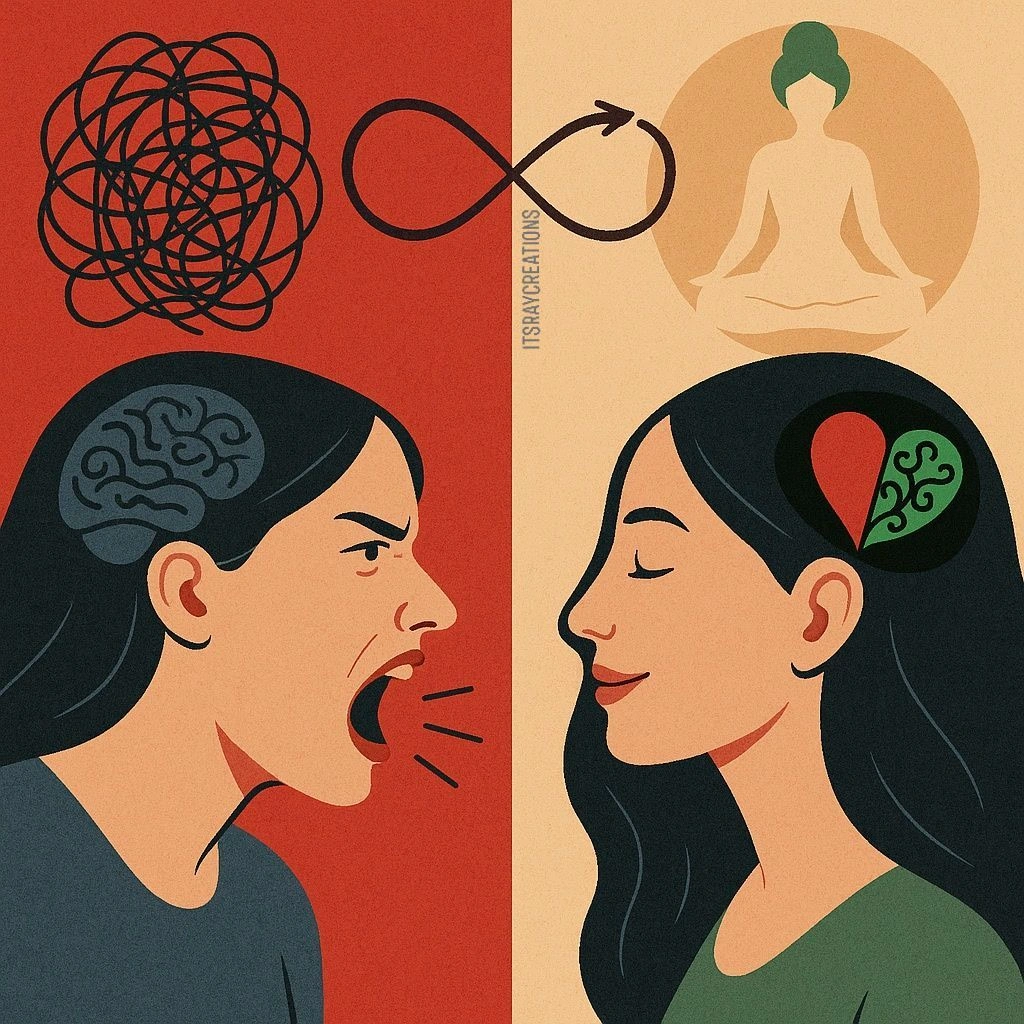
Our brains sometimes make decisions seconds before we do, which makes us question if we actually have free will and can control ourselves. This phenomena, based on decades of brain research, shows how unconscious processes control our daily choices, from simple tasks to more complicated ones.
The Neuroscience Behind Unconscious Choices
Scientists have been trying to figure out how long it takes the brain to make decisions for a long time. In the 1980s, Benjamin Libet did groundbreaking research that first pointed to this divide. Libet used an EEG to watch how people’s brains worked while they moved their wrists. He found a “readiness potential,” which is a little electrical surge that happens up to 0.5 seconds before people say they are conscious of their intent.
This research builds on what has already been done. Functional MRI scans reveal activation in the prefrontal and parietal regions of the brain prior to an individual’s conscious awareness of their goal. For example, scientists could tell what people would choose up to seven seconds ahead of time by looking at fMRI patterns while they were making abstract judgments, like whether to hit the left or right button. These studies suggest that neuronal commitments transpire without our conscious knowledge, which subsequently becomes evident.
This thing that happens before we know about it isn’t just moving our bodies. It has moral problems and perceptual judgments, which indicates that the brain copies outcomes in a hidden “workspace” before they become conscious.
Important tests that assist us learn more about the phenomena
A number of important experiments have measured this hidden lead time.
Libet’s Original Paradigm: Participants indicated the precise moment of “will” using a rapidly spinning clock hand. The chance to be ready came up 350 to 500 milliseconds before this, which made many wonder about veto power—could we still change our minds at the last minute?
Soon et al. (2008): A well-known study in Nature used brain scans to find out what people were truly trying to do up to 10 seconds before they performed it. They had to choose between two options. The accuracy was 60%, which is a lot better than what would happen by chance. This demonstrates that cerebral signals can forecast judgments that do not involve movement.
Fried et al. (2011) performed single-neuron recordings from epileptic patients, demonstrating that individual neurons “decided” 1.5 seconds before to awareness, but groups synced far earlier. This detailed knowledge changed the focus from big brain waves to cellular foresight.
These tests used accurate timing tools and self-reports, but critics point up problems with reporting delays and biases in how the results are interpreted. The fundamental point is even greater because this can happen in many places: the brain makes decisions without us knowing it.
Neural Mechanisms at Work
What makes this computation happen before we know it? The default mode network (DMN) in your brain is very important when you daydream. The DMN mixes memories, sentiments, and predictions to affect choices before people pay attention to them. Dopamine circuits make rewards more likely to happen, while the basal ganglia use habit loops to select through possibilities.
Think about how the process works in steps:
The occipital and temporal lobes start to operate together when they obtain sensory input.
The prefrontal brain uses working memory buffers to think about the good and bad sides of things.
The anterior cingulate recognizes problems and advises the brain to fix them.
The motor regions get ready to move, and consciousness adds a story about who did it.
This cascade happens in milliseconds to seconds, and you can’t see it from the inside. Evolutionary psychologists say that it helped our ancestors save energy by making decisions about how to stay alive every day, including fleeing away from danger.
Brain-computer interfaces are useful in real life because they can tell what someone wants to do 1 to 7 seconds earlier. This lets millions of people around the world move again. Neuromarketing can tell with 80% accuracy what people will buy. This increases the return on ads, but it also poses ethical issues. Addiction therapy focuses on these basal ganglia loops, and neurofeedback may lower the rate of relapse by 30%. Lie detection techniques can discern signs of conflict before verbal communication, with a reliability of up to 70% in forensic contexts.
Consequences for the Discourse on Free Will
This research stimulates serious philosophical discussions. Is genuine free will merely an illusion when choices are made unconsciously? Daniel Dennett and other philosophers think that unconscious processes are part of who we are. Compatibilism posits that determinism and agency can coexist. On the other hand, neuroscientist Sam Harris thinks it shows that libertarian free will doesn’t exist. He believes that decisions come from situations that we can’t influence.
It brings up very hard legal questions. Judges use intent to figure out if someone is guilty. If our brains make decisions without us knowing it, is it possible for us to conduct “unconscious crimes”? Some ethicists suggest that instead of punishing people, we should work on building their character and stopping bad things from happening.
It changes how we think about self-control in our everyday lives. Diets don’t work because people have neurological biases that make them want to consume things that make them feel good. Neuromodulation therapies, like transcranial magnetic stimulation (TMS), may aid patients in their attempts to discontinue substance usage by focusing on hidden brain pathways.
Uses in tech and medicine
The newest technology is all about figuring out how people make choices without thinking about them. Neuralink and other brain-computer interfaces (BCIs) can read brain signals to figure out what someone wants to do. This lets those who can’t move their bodies “decide” where the pointer will go before they know it. Early tests suggest that it is very good at guessing reaches.
This is also a way to advertise. Neuromarketing scans can show you what people really want from a business, even before they say it. People are starting to care more about morals. Should marketing use hidden biases?
It changes psychopathology in a medical setting. Slow pre-conscious reward signals are linked to depression, and therapies like CBT change these signals by becoming acclimated to them. Drugs might make veto windows bigger in the future.
There are still arguments and criticism going on. Not everyone agrees. Adina Roskies and other skeptics say that “preparedness potential” means more attention, not a promise to make a choice. A meta-analysis revealed negligible impact sizes, indicating that we should use caution in drawing significant conclusions from them.
Methodological issues endure: self-reports fluctuate by 200ms, and free-choice paradigms may induce artificiality. Quantum indeterminacy theories assert the existence of genuine randomness at cerebral synapses, enabling flexibility in volition.
Replication crises in psychology enhance skepticism; nonetheless, fundamental findings endure across extensive cohorts. Future optogenetics, which includes turning off neurons while making judgments, could help settle arguments by showing cause and effect.
Effects on society as a whole
This is basically machine learning in the age of AI: neural nets “decide” outputs from hidden layers, just way our brains do. Computers lose privacy when they exploit data trails to guess what people will do. For example, predictive police might warn persons who are likely to commit a crime to be careful.
Teaching metacognition could change education by making people more aware of what they know and don’t know. Mindfulness methods have shown promise in the past, with EEG research showing that they can slow down reactions by 100–300 ms.
It makes people wonder how smart voters are when it comes to politics. Campaigns frame topics in a way that affects how we think, and knowing this helps us use the media better.
Expert insights from top scholars
Dr. Patrick Haggard, who took over for Libet, says, “Consciousness says no but rarely yes.” It’s more of an editor than a writer. His lab’s research on temporal binding, which looks at motions as self-timed, supports this.
David Chalmers, a philosopher of consciousness, contends, “Unconscious decisions do not diminish qualia-rich experience; instead, they augment the enigma.” It remains essential to achieve equilibrium between neurobiology and phenomenology.
Brain’s Hidden Decisions: Our Unconscious Mind Makes Choices Before We Know It