Threats are getting worse.
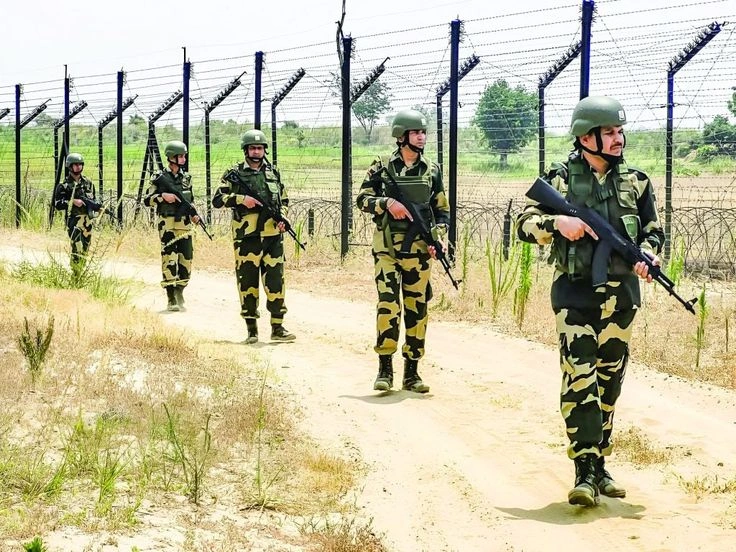
India’s intelligence agencies, including as the Research and Analysis Wing (RAW) and the Intelligence Bureau (IB), have told police in major cities like Mumbai, Delhi, Bengaluru, Chennai, and Hyderabad to be on the lookout. There is good intelligence behind these warnings about prospective low-level attacks on busy public spaces, transit hubs, and places of worship. The warnings come at a time when the two countries are on edge, especially along the Line of Control (LoC) with Pakistan and in Jammu and Kashmir, where there are internal insurgencies.
It’s apparent that proxy terrorist groups want to cause trouble at crowded events like public meetings and festivals. People from different countries might be able to help them. Experts in security say that risks like this have changed over time. To stay hidden and do the maximum damage, they use more and more lone-wolf tactics and improvised explosive devices (IEDs). Agencies are using this proactive technique to stop any calamity from happening, based on what they learned from strikes like the 2008 Mumbai attacks and the 2019 Pulwama bombing.
In the previous two months, the same kind of information sharing has stopped plans like breaking up sleeper units in northern states. The new set of notifications suggests that more users are accessing messages sent through apps that encrypt them. It looks like those who are connected to Lashkar-e-Taiba (LeT) and Jaish-e-Mohammed (JeM) are working together to create plans.
What the government and other groups are doing to help
The Ministry of Home Affairs (MHA) has told police chiefs and chief secretaries to create full strategies to fight terrorism in response to the notifications. This includes:
The Central Armed Police Forces (CAPF), which includes CRPF and NSG commandos, are sending more personnel to areas that are easier to attack to make the edges safer.
The Union Home Minister, Amit Shah, called an emergency meeting with top security officials to make it clear that terrorism would not be tolerated. Maharashtra and Karnataka are two states that have said they will do practice drills and not let drones fly near airports for a short time. The National Investigation Agency (NIA) is now in charge of looking into connections between countries because it was able to split up modules after 26/11.
In 2026, the budget for keeping the peace in the country went boosted by 15%. They spent the money to make the cyber-intelligence and forensics departments better. This shows how important it is for President Donald Trump’s government to engage with other countries to stop terrorism. The U.S. is giving India more intelligence about dangers in South Asia.
A professional looks at plans and problems
Security experts say that both normal and hybrid assaults are hazardous. “Urban India’s growth has outpaced security infrastructure,” says Rajiv Mathur, who used to be the head of the IB. “Markets and subway systems that are always full are still weak spots that need predictive policing instead of reactive measures.”
The Observer Research Foundation and other think tanks talk about how stories about terrorists around the world could contribute to radicalization pipelines. The Institute for Defence Studies and Analyses (IDSA) did a research in 2025 that showed that 40% of prison staff become more extreme online, generally on sites that don’t check for bad content.
To put an end to this:
Community Engagement: The “MaKaushalya” project in Maharashtra trains young people how to be volunteers who keep an eye on things.
Strengthening the Border: Putting up barriers along the India-Pakistan border faster and keeping an eye on rivers in the northeast.
International Cooperation: Working with QUAD partners on exercises that focus on marine domain awareness to protect against threats from the water.
People think that quantum-secure communications and other future technologies will be better than encrypted terror chat, even though they aren’t used much in tier-2 cities right now.
How it changes people’s lives and the economy
The notifications do more than simply protect people. The stock market went down a little, but military stocks went up a lot because investors thought there would be more orders. Tourism boards in cities that were hit say that bookings are down 10–15%, which is what happened after the Pulwama disaster.
People on social media are both scared and strong.
Schools and institutions in Delhi-NCR have told people not to believe any charges, and malls are checking bags very carefully.
It’s really important to maintain things normal because big cities make about 60% of India’s GDP. The Confederation of Indian Industry (CII) supports public-private collaborations that minimize risk, like using AI to scan the edges of business districts.
Indian security personnel are on high alert since there are terrorist threats in important cities.