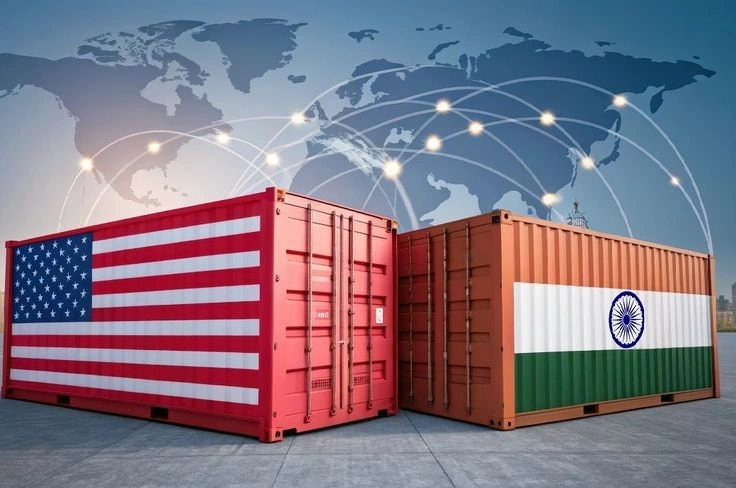
The history of the tariff cuts
The Indian government has decreased import duties on some commodities for a brief time. These things are vital for production and supply chains, such as raw materials, machines, and consumer goods. These programs, which start right away and last for six months (with the option to extend them), are meant to help lower tariffs on commodities like chemicals, electronics parts, and farm inputs that have been high in the past several years. Officials believe this is a “strategic recalibration” to deal with rising prices and supply issues. It is based on India’s Atmanirbhar Bharat plan, which intends to make the country more self-sufficient after the pandemic.
India has changed rates in the past, but this change is unusual in size and timing. In 2025, similar measures helped stabilize sectors including vehicles and renewables, which led to a 7.2% growth rate in GDP. These changes put India in a favorable spot now that tensions are building over global trade, especially since Donald Trump was re-elected as President of the United States and his administration’s strict tariff policy.
Important goods that are affected and why they are important for the economy
There are 150 Harmonized System (HS) codes that now have cheaper tariffs. Taxes have gone decreased from 10–20% to as low as 5% for categories that have a big effect. Taxes on electronics and semiconductors, such as display panels and integrated circuits, will go down by 15%. This helps Apple make iPhones in Chennai and India reach its goal of sending $100 billion worth of electronics to other countries by 2027.
Economists say that these changes will save importers $5 to $7 billion a year, which will provide small and medium-sized businesses more money. Dr. Arvind Subramanian, a former Chief Economic Adviser, says, “This is a practical response to global instability.” He says that lower tariffs help businesses compete without hurting the economy.
Changes in world trade and problems at home are the main elements that make this happen.
India’s manner of doing things comes at a time when protectionism is becoming more common around the world. In February 2026, President Trump raised tariffs on steel, aluminum, and tech imports from Asia by up to 25%. This could hurt $50 billion worth of Indian exports to the U.S. India shows that it is willing to speak about agreements by decreasing its own tariffs ahead of time. The Minister of Commerce, Piyush Goyal, said at a news conference, “Temporary tariff cuts will boost trade, protect us from shocks from outside, and help Make in India.”
Inflation was 5.8% and the rupee was getting weaker (85.5 to the USD), therefore something had to be done at home. Fighting in the Red Sea has made it tougher to deliver goods to market, which has raised the cost of inputs by 12–15%. This has an effect on exporters. The goal of these reduction is to keep costs the same. For example, if parts from other nations are cheaper, the price of smartphones might go down by 8%. This would be good for customers in an industry that is expected to sell 1 billion units by 2030.
It’s also important to follow the rules of the WTO. India’s average price of 17%, which is one of the highest in the world, has come under fire. This temporary project is in line with the WTO’s Trade Facilitation Agreement and will help India move up from 63rd place in the Ease of Doing Business ranking.
Answers from the experts and the industry
The move has been praised by business groups. The Confederation of Indian Industry (CII) predicts that exports in the impacted industries will go up by 10% to 12%, whereas the Federation of Indian Chambers of Commerce and Industry (FICCI) wants other items to stay the same. Big IT companies like Foxconn and Samsung will make money, which will hasten up localization. “This opens the door to $20 billion in investments,” said the head of trade at KPMG India.
Some people, meanwhile, say that we shouldn’t depend too much on imports. Swadeshi Jagran Manch said that hurting local firms is a bad idea, similar like the 2023 toy tariff reversal that saved 200,000 jobs. Ila Patnaik and other economists say that monitoring is important: “Short-term relief must go hand in hand with skill upgrades to avoid Dutch disease.”
Small and medium-sized businesses (SMEs), which account for 45% of exports, are hopeful. “Duties were killing us; this gives us hope for growth,” said a company owner in Nagpur. These kinds of stories show how important the people at the bottom are in places like Maharashtra, which has a lot of manufacturing.
More effects on the economy
These lower tariffs to help business will have an effect on all of India’s $3.9 trillion economy. In the medium term, they might add 0.5% to GDP through multiplier effects, with every $1 in imports resulting in $1.8 in output. Last year, the value of exports was $450 billion. They should be worth $1 trillion by 2030. In markets where there is a lot of competition, like the EU and ASEAN, reduced costs help profitability.
It’s very important to keep inflation in check. If the RBI cuts back on agricultural inputs, it might lower the food CPI by 1–2 points, which would help it reach its 4% aim. India could become a tariff-free zone because of tensions between the U.S. and China. This could lead to a 15% boost in foreign direct investment (FDI) from its current level of $85 billion in 2025.
This makes Quad relationships better when it comes to world politics. The U.S. tariffs are affecting China, and India is becoming a new supply chain hub. Last year, there were $30 billion in friendshoring transactions.
Things are still not quite right. The budget deficit is getting worse due of the loss of income, which is anticipated to be ₹40,000 crore. This is 5.1% of the GDP. As the chances of customs evasion rise, ICEGATE needs to be updated so that everything can be tracked online.
Opportunities: a stronger supply chain, more competition, and 2 million new jobs are expected.
Risks: Too many imports could undermine local businesses, and if they stay too long, they could hurt the economy.
Ways to lessen the damage: audits of performance and longer deadlines for some areas.
Study of the Global Context and Comparison
Tariff acts are like chess moves in trade disputes around the world. After Trump failed in the U.S. Supreme Court over uniform tariffs, India cut its charges to 10%. This is similar to what Vietnam did in 2024 to increase exports. The EU’s Carbon Border Adjustment Mechanism makes things harder for India, but India can still follow the standards because it can acquire green tech for less.
India plans to boost commerce by 8% by lowering the prices of 150 commodities by 10% to 15%. The US taxes commodities that originate from Asia at 25%, which makes it harder for China to export. Vietnam’s 5% cuts led to a 20% increase in foreign direct investment. In reaction, China boosts prices and sends supply to India. This is good for India since it breaks up the order for commerce with other countries.
India Cuts Tariffs on Important Imports: A Brave Move to Boost Trade and Economic Growth