The Crash Timeline and the First Reaction
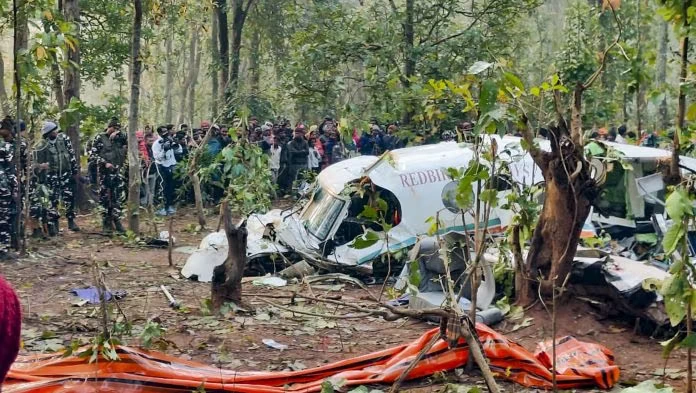
The Beechcraft C90, which is registered as VT-AJV and run by Redbird Airways Pvt Ltd in Delhi, left Birsa Munda Airport in Ranchi at 7:11 PM IST. It was going to New Delhi with someone who had been burned and needed medical help right away. At 7:34 PM, just 23 minutes into the voyage, the plane lost radar and contact with Kolkata Air Traffic Control, which is about 100 nautical miles southeast of Varanasi.
The jet crashed in a very wooded location close to Simaria in the Kasaria Panchayat of Chatra district. It was harder to get therapy because the place was far away and not very nice. Local leaders, such as Keerthishree G, the Deputy Commissioner of Chatra, and Sumit Kumar, the Superintendent of Police, reported that all seven passengers died. The body parts were located and sent for an autopsy around 10:20 PM. The Aircraft Accident Investigation Bureau (AAIB) despatched a team to examine into the disaster. They wanted to find the black box and look into things like requests to change the weather when it was particularly awful.
The safety of India’s air ambulance service
The air ambulance sector in India is growing a lot. It was worth $569.39 million in 2024 and is anticipated to be worth $1,449.45 million by 2033, with a 10.90% CAGR. This is because there are more difficulties, more people going to other countries for medical care, and the necessity to be able to get items from far away. But most accidents happen with flying schools and operators that don’t have a set schedule. The AAIB looked at 102 crashes that occured between 2012 and 2025. An NSOP was the most common type of crash, and it peaked in 2022.
People making mistakes, such pilots not following conventional operating protocols, flying at night in severe weather, or not having enough experience, cause 60% of accidents. This is like what happened before this terrible thing happened. Since the 1960s, the Beechcraft C90 has been a dependable twin-engine turboprop. People have gotten into difficulty all across the world because they ran out of gas or didn’t talk to each other correctly. But right now in India, the only problems are with the operators.
The AAIB investigated into 102 accidents that occured in India from 2012 to 2025. Most of these were caused by operators who didn’t show there on time. Seven flying training schools crashed in 2022, making it the worst year for mishaps. People were responsible for about 60% of small plane crashes. The market for air ambulances is predicted to rise by 10.90% every year until 2033.
The DGCA checked NSOP for safety after the LearJet crash in January 2026 that killed Ajit Pawar, the Deputy Chief Minister of Maharashtra.
Weather Protocols: It’s believed that pilots asked for changes, but losing touch might make it hard to get fuel or operate the plane.
Terrain Hazards: Chatra’s forests made it harder to get about, just like how wrecks happen all the time in the distance.
Regulatory Gaps: NSOPs don’t have to follow the same tight laws as airlines, so they need to have the same set of rules for how to do things.
It is being looked into to find out who is to blame.
The DGCA confirmed the details of the crash, and the AAIB is in charge of checking into the black box data, maintenance logs, and pilot logs. The first things that caught our attention were the weather when we left, how hard it was to talk to each other, and whether or not the plane could fly. The inspection of Redbird’s fleet is getting more thorough, which means that operations might have to cease until the results are in.
Civil Aviation Minister K. Rammohan Naidu’s ongoing NSOP study promises “thorough corrective steps,” even if some people want weather radars to be required and crew members to have greater training.
What needs to change in the country and how it will affect things
This air ambulance crash has ramifications that reach beyond Jharkhand and make people wonder how safe India’s growing medical evacuation system is, which helps millions of people. Families like Sanjay Kumar’s are affected both emotionally and financially, which makes these kinds of programs even more important.
India is striving to make healthcare fairer through aviation, but this loss indicates that probes need to stop reacting and start doing something.
India has to make the skies safer so that flying ambulances can help instead of hurt. This is a way to remember people who have died. This terrible occurrence makes people more aware of how important it is to make medical skies safer.
In Jharkhand’s Chatra area, an air ambulance crashes, killing seven people. People all throughout the country are talking about how safe it is to fly.