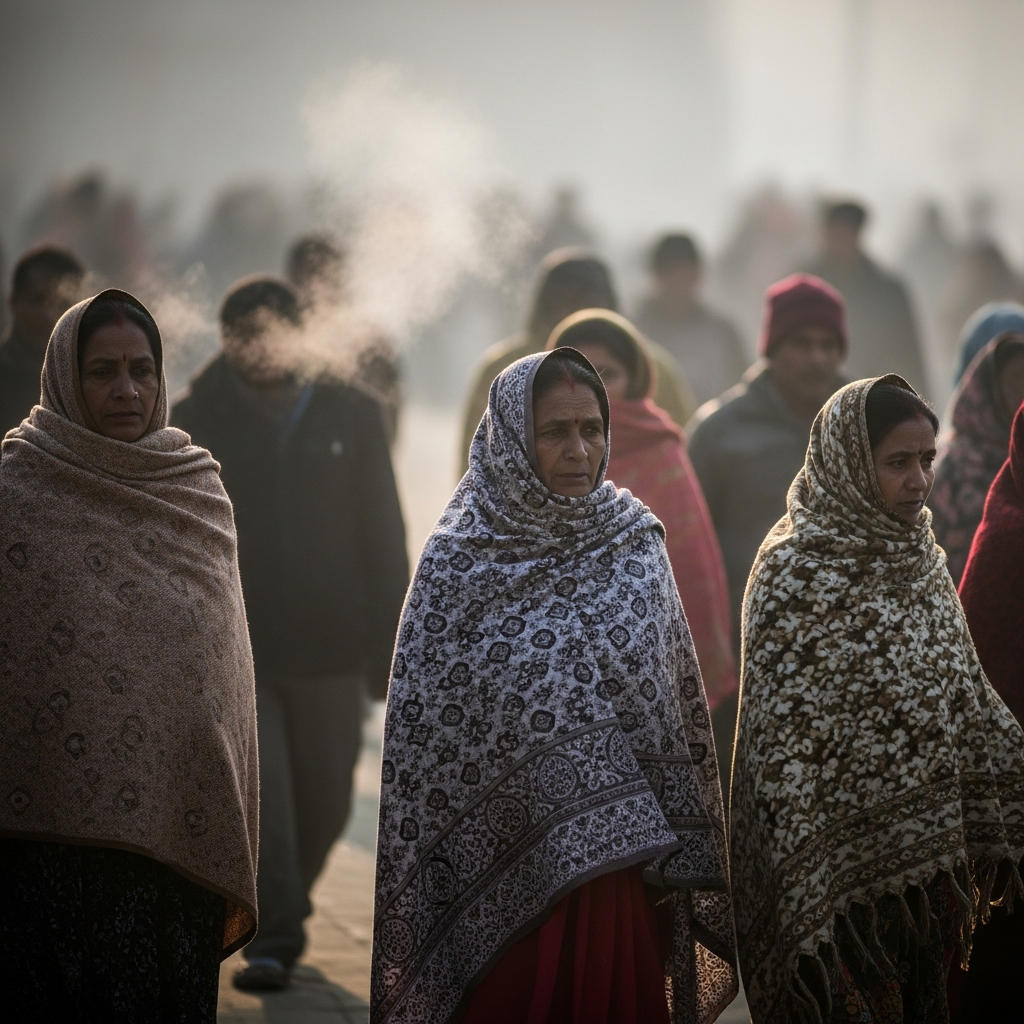
A western disturbance nobody quite prepared for has rolled across Delhi and the northern plains, bringing rain, thunderstorms, and a temperature drop that feels less like spring and more like January making an unscheduled return visit.
Somewhere between the last week of February and the first days of March, North India had made peace with the idea of summer. The ceiling fans were back on. The light cotton kurtas had been pulled to the front of the wardrobe. Street vendors were already pushing carts of raw mangoes and sugarcane juice. Spring, brief and beautiful as it always is in the northern plains, seemed to be giving way to the heat on schedule.
And then the clouds arrived. Then the rain. Then — in a development that caught millions of people genuinely off guard — the cold came back. As of this week, Delhi weather has taken a turn that meteorologists had been tracking but that ordinary residents across the capital and surrounding states are still adjusting to: a sharp, unseasonal drop in temperature driven by a western disturbance that has refused to behave like a typical March visitor.
What Is a Western Disturbance — and Why Does It Matter?
For those unfamiliar with the term, a western disturbance is an extratropical weather system that originates over the Mediterranean Sea and travels eastward, picking up moisture as it passes over the Caspian and Arabian Seas before eventually reaching the Indian subcontinent. These systems are actually vital for North India’s winter wheat crop, providing the rain and snowfall that agriculture in the region depends on through the cold months. They typically weaken and become less frequent as winter eases into spring.
What makes the current system unusual is both its intensity and its timing. A strong western disturbance arriving in mid-to-late March — when temperatures in Delhi should comfortably be climbing toward the mid-30s Celsius — is not unheard of, but it is uncommon enough to be disruptive. This one has brought with it sustained rainfall, thunderstorms across multiple states, gusty winds, and a temperature dip significant enough for the India Meteorological Department to issue formal alerts.
IMD Alerts and What They Mean for Residents
The India Meteorological Department has issued weather alerts for several states across the north, including Delhi, Haryana, Punjab, Uttar Pradesh, Himachal Pradesh, and Uttarakhand. The IMD alert warnings range from yellow to orange in the most affected districts, indicating that residents should expect continued spells of rain, possible hailstorms, and strong surface winds over the coming days. Higher elevations in Himachal and Uttarakhand are seeing fresh snowfall — a genuinely unusual sight this late in the season.
For most urban residents in Delhi and the surrounding NCR region, the IMD alerts have translated into fairly practical disruptions: waterlogged roads during peak commute hours, delayed flights at Indira Gandhi International Airport, school timing adjustments in some districts, and the particular frustration of an outdoor event — a wedding, a sports tournament, a trade fair — being upended by weather that was not in any forecast a week ago. Farmers in Haryana and western Uttar Pradesh are watching their standing wheat crop carefully, since unseasonal rain and hail at this stage of the harvest cycle can cause significant crop damage.
Life Under the Unexpected Rain
There is something simultaneously inconvenient and strangely pleasant about March rainfall in India, particularly if you are not a farmer worried about your crop or a commuter stuck in a traffic jam that the waterlogging has made twice as long. The air, which in Delhi begins to carry the early edge of summer dust by this time of year, smells scrubbed clean. The city, usually hazy and dry by March, has the washed, slightly cooler quality of a February evening. People who have already stored their sweaters are hunting through cupboards to find them again.
At markets and street corners, the weather has been the dominant conversation. Auto-rickshaw drivers are complaining about the drop in passengers — most people, when surprised by rain without an umbrella, simply wait it out somewhere rather than brave the open-sided vehicles. Tea stall owners, on the other hand, are having one of their better weeks. Chai, always popular, becomes almost obligatory when the temperature drops unexpectedly in a season when no one was planning for it.
The Bigger Picture: Climate Change and Shifting Seasons
Individual weather events are not, on their own, proof of broader climate trends. Meteorologists are careful to make this point, and it is worth repeating. A strong western disturbance in March is unusual, but it has happened before. What is more significant — and what climate scientists tracking rainfall India has been receiving over the past decade are increasingly flagging — is the pattern of increasing weather variability across the subcontinent.
Winters that linger longer than expected. Pre-monsoon storms that arrive weeks early or weeks late. Heat waves that begin in March when they used to start in May. Monsoon seasons that deliver months of rainfall in concentrated bursts rather than the sustained, steady precipitation that agriculture and water systems were built around. Taken together, these shifts paint a picture of a climate system under stress — one where the familiar seasonal rhythms that generations of Indians have organized their lives around are becoming progressively less reliable.
Climate change does not cause any single storm. But it does create the conditions under which extreme and unusual weather events — like a fierce western disturbance sweeping through Delhi in the third week of March — become more frequent, more intense, and harder to predict. That is what makes the current episode worth paying attention to beyond the inconvenience of a wet commute or a cancelled picnic.
When Will the Sun Return?
According to the IMD, the western disturbance is expected to weaken and move eastward over the next several days, after which temperatures across North India should begin recovering toward seasonal norms. For Delhi, that means the mercury climbing back toward the low-to-mid 30s within the week, and the familiar, if oppressive, business of a North Indian pre-summer reasserting itself. The woolens will go back into storage. The ceiling fans will come back on.
But the brief cold snap leaves behind something worth thinking about. Weather, in India as everywhere, has always been a force that shapes daily life in ways that no app notification or advisory quite prepares you for. This week, in the middle of a month that was supposed to be the comfortable bridge between winter and summer, North India got a reminder of that — delivered with rain, thunder, and the kind of chill that makes you grateful, however briefly, for the sweater you almost gave away.