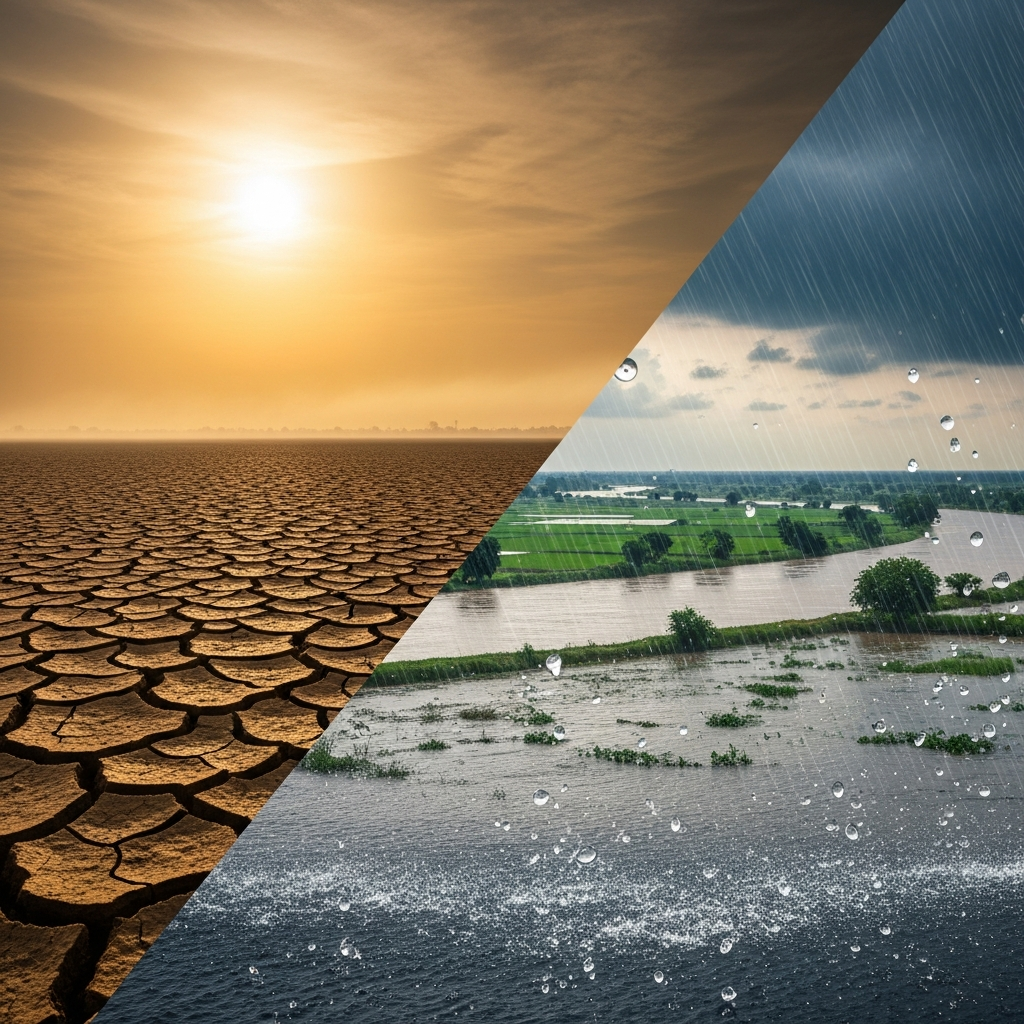
From scorching afternoons in Pune to sudden rain alerts across the state, Maharashtra is living through weather that no longer follows the rules.
Step outside in Pune at noon these days and the air hits you like an open oven door. The city — famous for its supposedly pleasant climate, the kind that once made it a retirement haven and a student favourite — is gasping. Temperatures hovering around 40°C have turned afternoon streets into ghost roads, with vendors packing up early, construction workers retreating to whatever shade they can find, and school children being waved home before the worst of the heat sets in.
Then, almost without warning, the sky darkens. Rain alerts follow. The whiplash is disorienting — not just for the people living through it, but for the meteorologists trying to explain it.
This is the new rhythm of Maharashtra weather: extreme heat, followed swiftly by unseasonal rain, with very little of the gradual seasonal transition that older residents remember. It’s a pattern that the India Meteorological Department — the IMD — has been tracking with growing concern, issuing a steady stream of public advisories urging citizens to protect themselves from heat-related illness while simultaneously warning of wet and stormy conditions in other parts of the state.
“People ask me when the weather will go back to normal. I’ve stopped knowing how to answer that.”
For farmers in Maharashtra’s interior districts — the Marathwada belt, Vidarbha, parts of western Maharashtra — the volatility is not an inconvenience. It is a crisis. Crops planted on the assumption of one weather pattern are being damaged by another. A sudden spell of intense heat at the wrong stage of a crop’s growth can wipe out weeks of work. An unexpected rain alert followed by actual downpour on harvested grain can be equally devastating. Agriculture, already stretched thin by years of erratic monsoons, is being pushed further to the edge.
“We used to know the weather,” one farmer from the Solapur district told a local NGO worker recently. “We didn’t need apps. We read the wind, the sky, the colour of the evening. Now none of that works.” It’s a quiet, human way of saying something that climate scientists have been shouting in research papers for years: the old knowledge is losing its reliability, and nothing sufficient has come to replace it.
The heatwave in India, taken as a broader phenomenon, is not new. Parts of Rajasthan, Madhya Pradesh, and Telangana have suffered extreme heat events for years. But what is shifting — and what makes the current situation in Maharashtra particularly striking — is the speed and unpredictability of change within a single season, sometimes within a single week. The IMD has had to issue both orange heat alerts and rain alerts for different districts of the same state simultaneously, a logistical and communicative challenge that reflects just how fragmented the weather picture has become.
Health systems are feeling the pressure too. Government hospitals in Pune and Nashik have reported a rise in patients presenting with heat exhaustion and dehydration — predominantly daily wage workers, the elderly, and young children who have no option to stay indoors. Doctors have taken to social media to share reminders about oral rehydration, avoiding direct sun between 11 am and 4 pm, and watching for symptoms of heat stroke in vulnerable family members. The IMD’s advisories carry similar warnings, distributed through local government channels — but reaching the most exposed populations remains a stubborn challenge.
And then there is the rain. The rain alert notifications that have been lighting up phones across Maharashtra in recent weeks are not the familiar pre-monsoon signals that people have grown up understanding. These are sharp, sometimes violent weather events — localised thunderstorms, gusty winds, hail in some areas — that arrive out of sequence and leave behind flooded roads, damaged crops, and confused insurance claims. The monsoon proper is still weeks away. Yet the rain is already here, making its own rules.
Experts point to climate change as the binding thread connecting all of this. The broad warming of the Indian subcontinent, the disruption of traditional wind and pressure patterns, the increasing frequency of extreme events — these are not isolated phenomena but part of a larger, documented shift in how the region’s climate behaves. Maharashtra, with its vast geographic diversity stretching from the Western Ghats to semi-arid Vidarbha, is particularly exposed to these shifts. Each microclimate within the state is being stressed in its own way, even as the overall trend points in one sobering direction: more heat, more volatility, less predictability.
“People ask me when the weather will go back to normal,” one Pune-based meteorologist said recently, in a remark that has since been widely shared online. “I’ve stopped knowing how to answer that.”
It is a sentence worth sitting with. Not because it is hopeless, but because it honestly names what many in Maharashtra are quietly feeling — a creeping sense that the climate they grew up inside is being rewritten, season by season, degree by degree. Adaptation is possible. Communities are already finding ways to cope, from adjusting crop calendars to building cooler homes. But adaptation takes time, resources, and planning — all of which require acknowledging, clearly and without delay, that what Maharashtra is living through is not an anomaly. It is a signal.
The question is whether enough people in a position to act are listening.
Too Hot, Then Too Wet: Maharashtra’s Weather Has Stopped Making Sense.