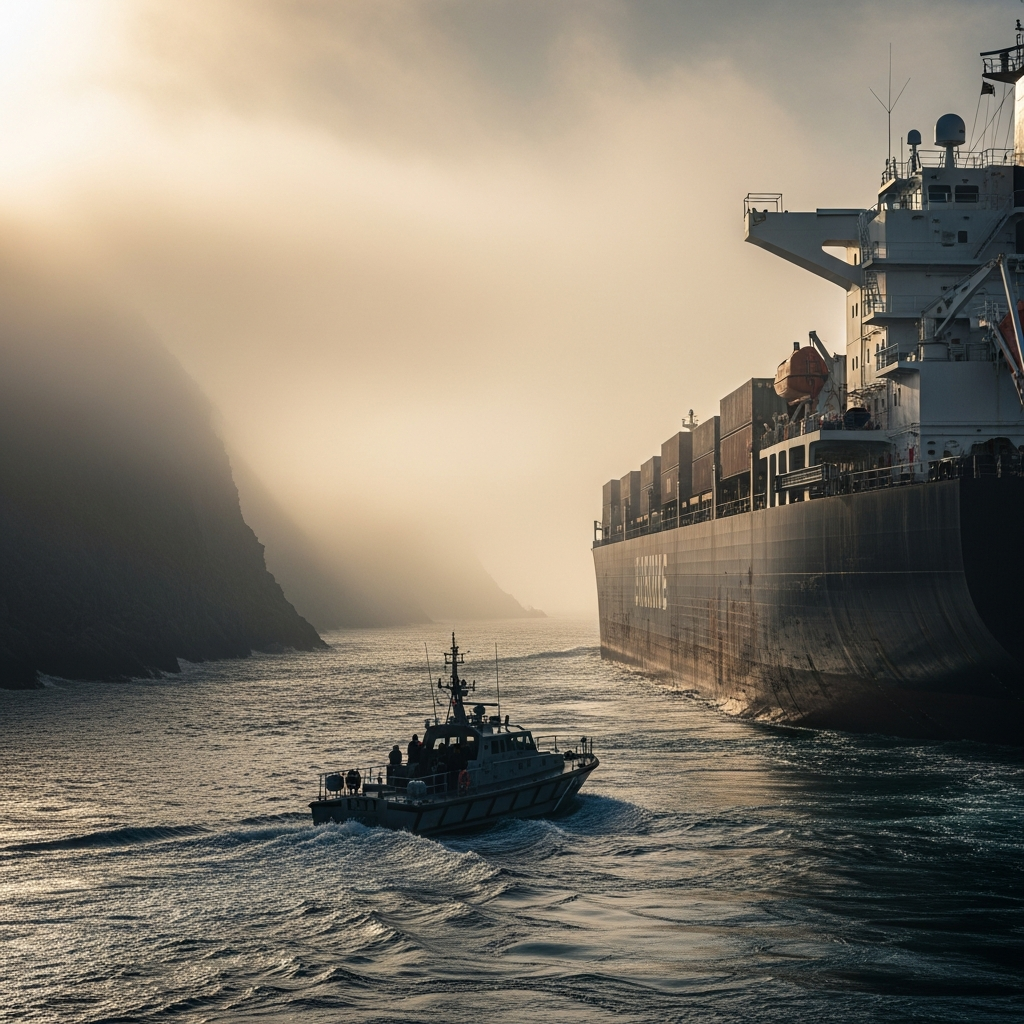
As geopolitical tensions in the Middle East spill onto the open water, the global economy is quietly bracing for the consequences.
There is a particular kind of dread that settles over a ship captain when the radio crackles with a warning that wasn’t there the day before. In the Persian Gulf, that feeling has become routine. Commercial vessels that once transited these waters with little more than weather concerns are now navigating a very different kind of storm — one born not of clouds, but of geopolitics.
Over the past several months, a series of attacks on commercial ships in and around the Persian Gulf has turned one of the world’s most critical maritime corridors into a flashpoint. The incidents — some involving drones, others believed to involve limpet mines — have struck tankers, cargo carriers, and container ships alike. No single actor has claimed full responsibility for all of them, and that ambiguity is, in many ways, the point. Uncertainty is its own weapon.
“It’s not just about individual ships anymore. It’s about whether global supply chains can absorb this kind of sustained pressure.”
At the heart of the shipping crisis is a simple geographic reality: there is no easy way around the Persian Gulf. Nearly 20 percent of the world’s oil passes through the Strait of Hormuz — the narrow chokepoint at the mouth of the Gulf — each year. That figure represents not just barrels of crude, but the economic lifeblood of dozens of countries that depend on stable oil supply to keep their factories running, their commuters moving, and their grocery shelves stocked. When that corridor is threatened, the ripple effects are immediate and global.
The Middle East conflict dynamics driving these tensions are complex and layered. Escalating pressure between regional powers — compounded by the involvement of non-state actors and the competing interests of outside nations — has created a combustible environment. Governments in Europe, Asia, and North America are watching closely, urging restraint in official statements while quietly scrambling to boost naval surveillance and protect their interests. Several countries have deployed additional warships to the region; others are sharing intelligence with allies in real time.
For the shipping industry, however, diplomacy moves too slowly. Decisions about routing, cargo, and crew safety have to be made now — often hours ahead of a voyage, sometimes mid-route. Shipping companies are increasingly paying the price in the form of skyrocketing war-risk insurance premiums. What once cost a routine line item on a cargo manifest has, in some cases, tripled or quadrupled. Some insurers have quietly begun excluding certain Gulf routes from standard coverage altogether, forcing carriers to seek specialized policies at steep cost — or take the risk uninsured.
That cost doesn’t stay at sea. It flows directly into global trade, embedded in the price of everything from electronics to food. Fuel-dependent economies — which is to say, nearly all of them — are especially exposed. Analysts warn that if instability in the Gulf persists or worsens, inflation pressures could reignite in regions that had only recently begun to recover from post-pandemic price surges. For countries in South Asia, Southeast Asia, and parts of Africa that rely heavily on affordable fuel imports, the stakes are particularly acute.
“It’s not just about individual ships anymore,” one senior maritime analyst told this reporter. “It’s about whether global supply chains can absorb this kind of sustained pressure.” The short answer, most experts suggest, is: not indefinitely.
Maritime security experts note that the situation in the Gulf is not without precedent. During the so-called Tanker War of the 1980s, commercial shipping in the region came under sustained attack as part of the broader Iran-Iraq conflict. That episode eventually prompted the United States and other nations to escort civilian vessels through dangerous waters — a practice that may again become necessary. History, it seems, has a way of repeating itself in these narrow straits.
What’s different today is the scale of global interdependence. In the 1980s, regional disruptions could be absorbed or rerouted with far less global consequence. Today, supply chains are tighter, margins thinner, and the tolerance for disruption far lower. A delay of even a few weeks in oil or cargo delivery can cascade across industries — from automakers waiting on parts, to retailers unable to stock shelves, to power utilities managing fuel reserves to the day.
For now, sailors are adapting. Some vessels are traveling in loose convoys. Others are altering their routes, adding days and cost to journeys that once ran like clockwork. Crew members — the quiet backbone of global commerce — are doing their jobs under conditions that no labor contract was written to anticipate.
The world depends on the sea more than it likes to admit. And right now, the sea is giving back a little of that vulnerability. Whether diplomats can resolve what has spilled into these waters before the economic damage becomes irreversible is the question that shipping executives, energy ministers, and ordinary consumers are all, in their own ways, waiting to have answered.
The World’s Most Dangerous Commute: Inside the Persian Gulf Shipping Crisis.