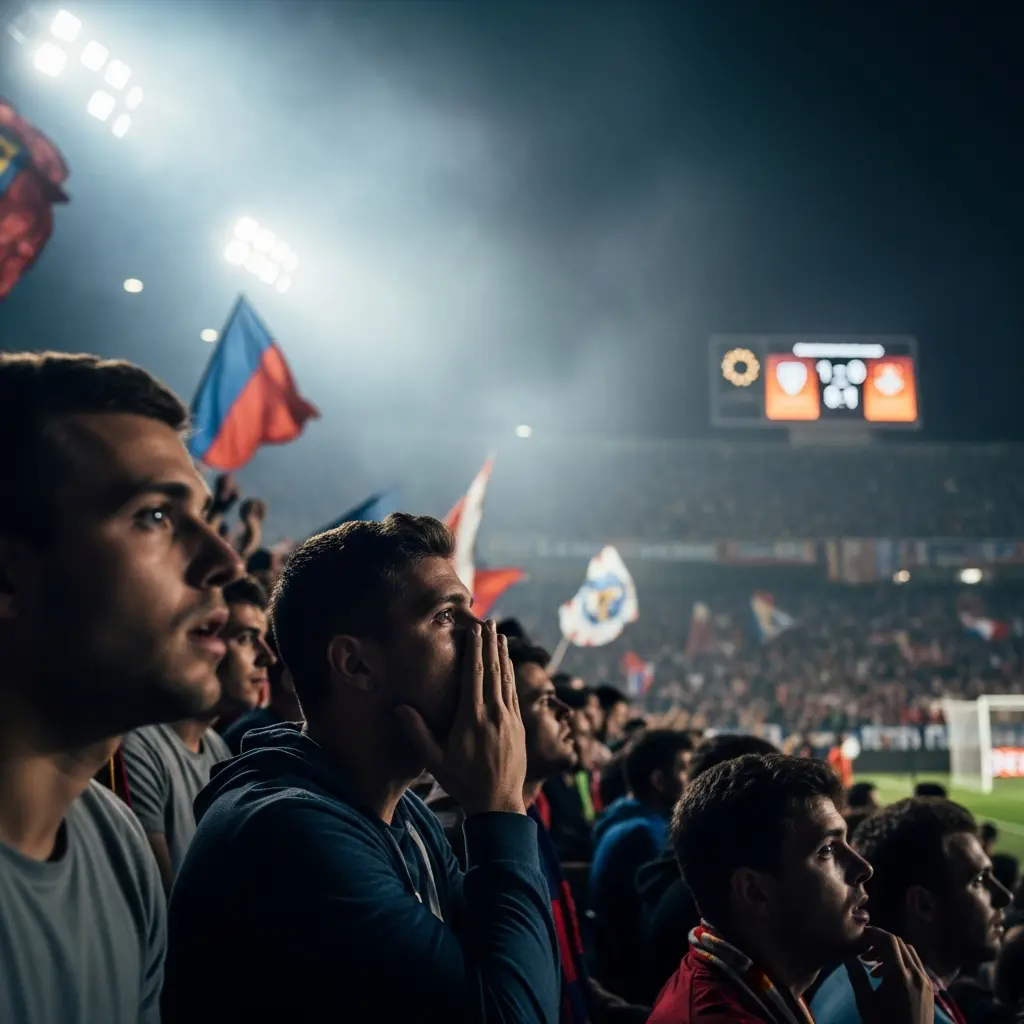
There is a particular kind of tension that only football can produce. It is not the sharp, sudden anxiety of a penalty shootout or the chaos of a last-minute goal — though those moments have their own electric charge. It is something slower and more relentless: the weekly grind of a title race, where every point feels like it carries the weight of an entire season, and where the table tells a story that changes every Saturday and Sunday. Across Europe right now, that story is being written in real time — and it is captivating fans in stadiums, living rooms, and sports bars from London to Lagos.
England: The Gunners Won’t Let Go
The Premier League has produced some of its most gripping football in recent memory, and right now it belongs to Arsenal. With 70 points from 31 games — 21 wins, 7 draws, and just 3 defeats — Mikel Arteta’s side have constructed a campaign that is disciplined, relentless, and genuinely beautiful to watch. Nine points separate them from second-placed Manchester City, who sit on 61 points, and that gap tells only part of the story. Arsenal have had the kind of quiet consistency that title-winning teams are built on: they do not always dazzle, but they almost never crack.
Manchester City, for their part, are not mathematically out of it, and fans who have watched them grind out unlikely league wins under Pep Guardiola in previous seasons know better than to write them off. But the gap is real, and it is growing. Behind them, Manchester United (55 points) and Aston Villa (54 points) are fighting hard for Champions League spots, which is a competition of its own — lower-stakes in the title sense, but loaded with financial and reputational consequences for the clubs involved.
At the bottom, Wolverhampton Wanderers are in serious trouble with just 17 points, and Burnley (20 points) are not far behind. For those clubs, every fixture is a small survival mission — the desperation as intense, in its own way, as anything happening at the top.
Spain: Barcelona and Madrid, As It Was Always Meant to Be
La Liga has given fans exactly what they secretly always wanted: a two-horse race between FC Barcelona and Real Madrid, with enough of a gap from the rest of the field to make it a genuine duel rather than a crowded sprint. Barcelona lead the table with 73 points — 24 wins, just 4 defeats, and an almost implausibly tight 1 draw — and they look like a team that has rediscovered its identity. Madrid trail with 69 points, meaning four points separate the two giants with several matchdays still to play.
This is the kind of football sports competition that transcends the sport itself. It is cultural, historical, political in its own strange way. When Barcelona and Real Madrid are battling for the title in March and April, the entire global football community tunes in. Villarreal (58 points) and Atletico Madrid (57 points) have done admirably to keep pace higher up the table, but the reality is that the title is almost certainly heading to one of two clubs — and the question of which one is keeping millions of fans awake at night.
Germany: Bayern Munich, Relentless as Ever
If you want a masterclass in sustained excellence, look no further than Bayern Munich. Sitting atop the Bundesliga with 70 points — and an extraordinary record of 22 wins, only 1 loss, and 4 draws — Bayern are not just leading the German league, they are making it look almost unfair. Only one defeat all season. In a competition as demanding as the Bundesliga, that is a number that borders on the absurd.
Borussia Dortmund (61 points) are keeping things respectable in second place, and there’s a reasonable argument that their season has been quietly impressive. But the gulf between first and second — nine points — mirrors what we see in England, and speaks to something familiar in German football: Bayern’s structural advantages in recruitment and resources make sustained competition at the very top extraordinarily difficult for anyone else. Stuttgart (53 points) and RB Leipzig (50 points) round out a competitive top four, but the title conversation in Germany is essentially a monologue.
What Makes This Season Feel Different
Football analytics, global broadcasting deals, and social media have changed what it means to follow a football club. Fans worldwide — many of whom have never set foot in Europe — are now embedded in these title races in ways that were unimaginable twenty years ago. A supporter in Mumbai tracks Arsenal’s xG statistics the morning after a match. A teenager in São Paulo argues about Bayern’s pressing structure on YouTube. The European leagues are no longer regional competitions with a global audience — they are genuinely global products with deeply local souls.
That tension is part of what makes this moment in the football calendar so absorbing. The clubs are ancient institutions shaped by city identities, local histories, and generational loyalties. But the fans watching them are everywhere, and the drama — whether it is Arsenal protecting a nine-point lead or Barcelona and Madrid trading blows at the summit — belongs to all of them.
There are weeks left to play. Points can be dropped. Injuries happen. Form deserts teams without warning. That is the thing about a football season — it is never really over until it is over. And right now, across England, Spain, and Germany, it is very much alive.