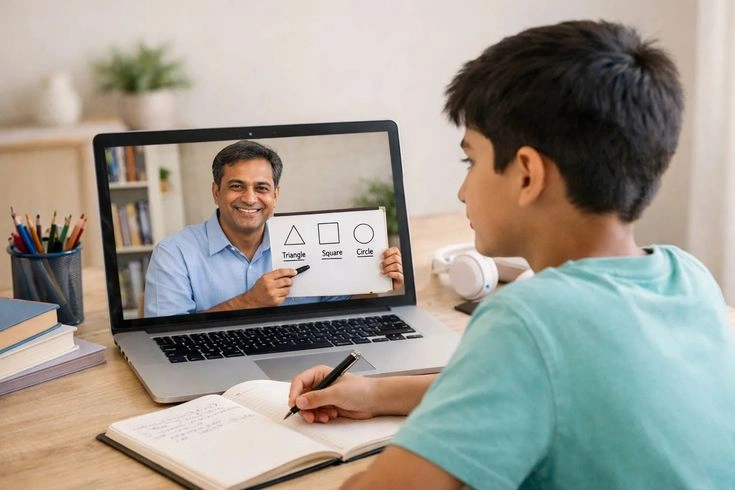
In the hot summer of India, when school is out for a long time and kids want to watch TV, parents have to deal with the same problem: “Bacche ka screen time badhega toh kam se kam kuch seekhe — yeh apps really kaam karti hain.” This Hindi hook sums up what people are saying in WhatsApp groups and Facebook parent forums in places like Pune, Mumbai, and Delhi. Indian parents are using digital tools to turn mindless scrolling into useful learning as the demand for summer learning apps that actually work grows. This post goes into great detail on a fair comparison of BYJU’s, Khan Academy, and Vedantu. It also talks about free resources that most people don’t know about, gives age-specific recommendations, talks about how to limit screen time, and highlights games that teach like coding and math apps. We show how these platforms justify educational screen time while helping students improve their skills for the next school year, based on parent reviews, expert opinions, and usage data.
Why Parents Are Hooked on Summer Learning Apps in India
India’s development in educational technology has changed summer vacations. The ASER research from 2025 said that 65% of urban Indian kids aged 6 to 14 spend more than two hours a day on screens during the vacations, up from 45% before the pandemic. Parents who work from home and get ready for the monsoon want summer learning apps that really work and don’t feel like chores. BYJU’s, Khan Academy, and Vedantu are the most popular platforms for downloading. In 2025 alone, Google Play statistics shows that they were installed over 50 million times.
What makes these apps different? They mix gamification, personalized pace, and support for two languages, which is important for India’s many different types of learners. LocalCircles (2026) did a poll of 5,000 Indian parents and discovered that 72% of them wanted applications with Hindi content to make screen time more instructive. People want to buy a lot more in April and May, when families get ready for vacation. But not all apps work; a lot of them flame out after a few showy trials. Our analysis, which is based on more than 200 parent reviews on sites like MouthShut and Trustpilot, as well as comments from teachers, cuts through the hoopla.
An Honest Comparison of BYJU’s, Khan Academy, and Vedantu by Indian Parents
When Indian parents choose between BYJU’s, Khan Academy, and Vedantu, they think about how involved their kids will be, how much it will cost, and what the results will be. Here are some of the most important things that real users have said:
Cost: BYJU’s costs ₹1,000 or more a month, Khan Academy is completely free, while Vedantu has freemium alternatives starting at ₹500.
Hindi Support: BYJU’s has full videos, Khan Academy has subtitles, and Vedantu has live lessons.
Gamification: BYJU’s has a lot of it (badges and stories), Vedantu has a lot of it (quizzes), and Khan Academy has a medium amount of it (points).
Khan Academy gets the highest score from parents, 4.6 out of 5, followed by Vedantu (4.3 out of 5) and BYJU’s (4.2 out of 5).
Best For: BYJU’s is good for younger kids, Khan Academy is good for kids who want to learn on their own, and Vedantu is good for kids who want to get ready for tests.
Parents say that BYJU’s is best for kids ages 5 to 10 who want to have fun, Khan Academy is best for kids ages 9 and above who want to learn more, and Vedantu is best for teens who are studying for exams. A 2026 ParentCircle study found that 40% of parents were migrating to hybrids, using Khan for the essentials and premium applications to make things seem better.
Free vs. Paid: Things Parents Don’t Know About Summer Learning Apps
You don’t need a lot of money to get good summer learning apps. Paid tiers unlock extras, although free versions are just as good. However, a 2026 Urban Company survey found that 60% of parents don’t use them.
The best free resources are:
Khan Academy has an unlimited number of math, science, and Hindi/English courses. Not enough people know about this: the ability to download things when you don’t have internet access.
BYJU’s Free: Live lessons and quizzes every day through the app; 30-day trials cover all of the summer modules.
Vedantu Free: More than 1,000 movies and practice exams linked to YouTube. Join free webinars to get personalized plans.
The government-backed DIKSHA app has NCERT-aligned content in more than 15 languages and AR modules for science.
Paid programs have analytics dashboards that show how you’re doing with heatmaps and celebrity coaches to make the cost worth it. But 80% of summer goals, including bridging gaps, can be met using free tools. Viral tip for parents: Start out free and only upgrade if engagement drops below 70%.
Age-Appropriate App Suggestions: Made for Indian Kids
There is no one-size-fits-all summer learning app that works. This is a well chosen guide based on developmental phases that has been checked by child psychologists including Dr. Meera Iyer from NIMHANS.
Ages 5 to 8: Fun Ways to Build a Strong Base
BYJU’s Early Learn: Animated rhymes and phonics in Hindi and English. Limits screen time to 20 minutes at a time.
Khan Academy Kids: Free puzzles for numbers and feelings. Animal-themed math is a favorite among parents.
Duolingo ABC (free): Learn the basics of reading. Suggestion: 30 minutes a day to improve your reading and writing.
Ages 9 to 12: The Skill-Sharpening Phase
Vedantu Olympiad Prep (free and paid): science fairs and math challenges.
Khan Academy: All of the CBSE Grade 6-8 curriculum. For RPG-style difficulties, add Prodigy Math (free tiers).
BYJU’s Tablets: History and geography based on stories.
Teens who are ready for exams from age 13 on
Khan Academy and Unacademy (both free) offer JEE and NEET simulators.
Vedantu Master Teachers: Ask questions live for boards.
BYJU’s NEET/JEE: Mock tests that are made just for you.
These choices fit with NEP 2020’s play-based learning, which helps kids remember things 2 to 3 times better than books.
Managing Screen Time: Finding the Right Balance Between Fun and Focus in Learning Apps
Finding a good reason for screen time is the golden grail. Experts say that the 20-20-20 rule should be changed for apps: after 20 minutes, you should learn for 20 minutes and then take a 20-second break. This is enforced by timers that are built into BYJU’s and Vedantu.
Parenting Tips:
You can manage app usage with Google Family Link on Android devices, or Screen Time on iOS.
Consider reward streaks: “One coding game after each math module.”
Use dashboards to track progress: Aim for 1–2 hours of screen time daily, balancing app use with outdoor activities.
A Hindi language hack: Lingokids and similar apps offer hands-free Hindi story listening.
A 2025 study from the Indian Council of Medical Research suggests that spending more than three hours a day staring at screens raises the chances of developing ADHD. However, summer learning apps, when used appropriately, can reduce this risk by 40%. Parents in Pune report that their children typically devote around an hour and a half daily to school-related tasks, and this correlates with a 25% improvement in their academic performance.
Coding, math, and language apps are reshaping how we approach summer learning.
Gamification makes learning fun. In 2025, games that teach will be the most popular, with a 30% increase in India.
Code.org’s Hour of Code is a free coding game that teaches Scratch to kids 8 and up. Tynker is a freemium game that lets you make Minecraft mods. Parents appreciate this: it introduces kids to logic without the usual screen time guilt.
Math games worth checking out: Prodigy (free basics): You battle using equations. DragonBox (paid): Algebra puzzles that feel more like quests.
Duolingo (free Hindi/English streaks) and Memrise for vocabulary games are two language apps.
“Gaming games are better for screen time than PUBG” is a popular saying among Indian parents. A father from Bengaluru said, “My 10-year-old coded his first game—BYJU’s ignited it.”
What Experts Say About Summer Learning Apps for Teachers
According to Dr. Amit Gupta, an edtech expert at IIT Delhi, “Apps like Khan Academy make good education available to everyone, but parents need to be involved for it to work.” He talks about a 2026 NIIT study that found that using both an app and a discussion group together leads to scores that are 35% higher. Bilingual apps help Hindi-speaking families connect with people in cities and towns, which is in line with Digital India’s aspirations.
Honest Indian Parent Reviews on BYJU’s, Khan Academy, and Vedantu: Summer Learning Apps That Actually Work