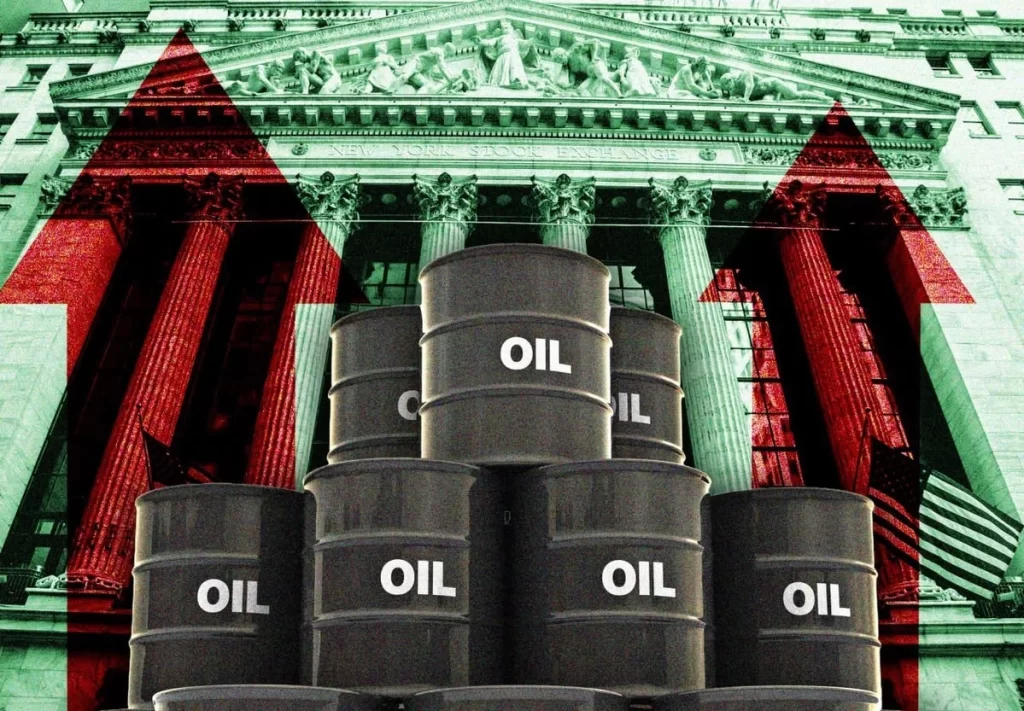
Oil prices are on the rise, approaching $110 a barrel, and the consequences are significant. This isn’t just a number on a screen; it’s affecting everyday experiences, from the gridlock in Mumbai to the fragile equilibrium of international trade.
Brent crude has surged over 8% in the past week, a result of geopolitical unrest, supply constraints, and robust demand. This rise in costs means higher fuel bills and a harder battle against inflation in India. Fuel is the engine of the economy, powering everything from auto-rickshaws to refineries.
What does this mean for you now?
The Rapid Climb: What Makes Prices Go So High?
It started out slowly, but now the oil market is like a pressure cooker that’s about to blow. Saudi Arabia and Russia led OPEC+ countries in extending output restrictions until mid-2026, which kept approximately 2.2 million barrels per day off the market. That’s not all; maritime routes are on edge because of rising tensions in the Middle East. Recent drone strikes near important facilities in the Persian Gulf shook up traders, sending WTI crude close to $105 and Brent even higher.
Demand isn’t going down either. China’s economy is bouncing back faster than expected. Factories are busy, and the need for jet fuel is up 15% from last year. In the meantime, travel in the U.S. and Europe after winter is using up a lot of gas. Analysts point to inventory data: U.S. stockpiles fell by 3.2 million barrels last week, which is far less than expected.
This is really near to home in India. The country gets most of its crude oil from the Middle East, and it imports more than 85% of it. The price of gasoline in Delhi has gone up to ₹105 per liter, up from ₹98 a month ago. The volatility of the currency is making things worse. Diesel, which is very important for trucks and farmers, isn’t far behind at ₹95. Small company owners, like Pune’s logistics companies, are changing their routes to save money. Have you ever thought about how much that extra ₹7 per liter adds up on a 500-km haul?
The New Nightmare of Inflation: From Grocery Bills to Factory Gates
The best part is that oil doesn’t simply fill up your tank; it also keeps the whole economy running smoothly. When the price of crude oil goes up to $110 a barrel, that affects everything. Transportation expenses go up first. For example, shipping charges for anything from imported technology to fresh vegetables go up. In India, where food prices are already high, the price of onions might go up another 20% if trucking costs keep going up.
Central banks all around the world are sweating. The U.S. Federal Reserve now thinks that inflation caused by oil prices will push the CPI up to 4% by summer, making it harder to decrease rates. The ECB in Europe is having similar problems since energy prices are affecting producer prices. The Reserve Bank of India has raised its inflation prediction for FY27 to 5.2%, primarily because of the rise in oil prices.
Make it simple:
Energy prices: Heating oil and natural gas prices are also going up, by 12% in Europe.
Manufacturing pinch: Plastics, chemicals, and fertilizers, all made from oil, get more expensive, which hurts farmers and companies.
Hit to consumers: Industry estimates say that airline tickets and package delivery could go up by 10–15%.
It’s a big hardship for regular people. Last week, a cab driver in Delhi told reporters, “My daily earnings are down ₹500 because passengers argue over charges.” What if this goes on for a long time? Will you change your mind about that weekend trip?
Travel Problems: Get Ready for More Expensive Trips
Dreams of summer trip are getting worse. Airlines are passing on the cost of jet A-1 fuel, which has gone up 9% over the world. IndiGo and Air India have said that prices will go up by 5% to 8% on domestic flights. Are there international flights from Mumbai to Dubai? Expect to pay an extra ₹2,000–3,000.
Road journeys are not safe. In India, where families drive to Goa or the hills as a rite of passage, petrol costs ₹110 per liter. This means that a 1,000-kilometer trip in a mid-size SUV would cost an extra ₹5,000. Electric cars help a little, but outside of areas like Pune and Bangalore, where charging stations are still being built, many people are still stuck with fossil fuels.
Tourism boards are in a hurry. Kerala’s backwaters and Rajasthan’s forts bring in a lot of people, but increased prices could keep them away. IATA says that if oil continues above $100, there will be 2–3% fewer passengers worldwide. If you’re on a budget, pay attention: apps like BlaBlaCar can become quite popular as people share rides to save money.
Winners and losers in the economy, and India’s balancing act
When you look at the big picture, the rise in oil prices changes economies. Saudi Arabia and Russia are happy because Aramco’s income could go up by 25%. U.S. shale drillers are also ramping up, but it takes time.
People who buy things and import things lose out. India’s oil import cost is now $150 billion a year, but it might go up by $20 billion if prices stay at $110 a barrel. That money won’t be used for infrastructure or welfare. The trade deficit is getting bigger, which is putting pressure on the rupee to reach ₹88 per dollar.
But there is some nuance. Higher prices encourage exploration in India. For example, ONGC and Reliance are speeding up projects in the Krishna-Godavari basin. Biofuel pushes, like the 20% ethanol blend, provide you some breathing room. The change is speeding up around the world: Europe’s prohibition on Russian oil has led to more LNG imports, while the U.S. is producing a record 13.5 million barrels of oil per day.
India’s economy is expanding at a brisk 7%, yet this surge is straining its resilience. The Manufacturing PMI dipped to 57 last month, a consequence of escalating input costs. Should Vietnam’s competitors benefit from more stable energy prices, India’s textile exports could find themselves at a disadvantage.
Job markets are also feeling it. The logistics and retail sectors, which employ millions, are getting ready for slowdowns.
At a glance, the most important effects are:
Good news for producers: Russia’s war chest expands, while India’s upstream companies’ profits climb.
Importers are under a lot of stress since the current account deficit could reach 2.5% of GDP.
Green push: Investment in renewable energy is rising, and solar power might reach 100 GW by 2027.
Geopolitical Sparks Setting Off the Fire
Politics are always a part in oil stories. There are still tensions between Iran and Israel, and tanker traffic through the Strait of Hormuz is down 5%. Even though there are discussions of a cease-fire, the war in Ukraine makes it hard for Russia to get supplies. Candidates in the U.S. elections are looking for ways to become energy independent.
India’s ability to balance things out in Asia is impressive. It buys Russian crude oil at a discount (40% of imports), which saves billions, but refineries have trouble with quality. PM Modi’s work in the Middle East to improve relations helps ensure supply, but problems are on the way.
What happens if a big facility stops working? According to JPMorgan estimates, markets might jump to $120 overnight.
Looking Ahead: Can the Surge Be Controlled?
Oil prices of $110 a barrel won’t last forever, but they are a warning. Expect volatility in the short future. Hurricanes in the Gulf or stimulus in China might make it go up. Long-term, peak demand is coming as more EVs hit the market; Tesla’s entry into India and Tata’s Nexon sales show this.
India’s plan is to increase its refining capacity to 300 million tonnes by 2030, diversify its imports, and focus on green energy. Net-zero promises around the world could mean that $110 is the last gasp for Big Oil’s dominance.
For now, families are cutting back on spending, businesses are being cautious, and authorities are making plans. The rise shows how much we depend on oil. How long will it be before other options really take over? It’s evident that everyone is monitoring the pump, from the streets of Pune to Wall Street.
Oil prices are on the rise, approaching $110 a barrel, and the consequences are significant.