The roar of rocket engines and the moon’s desolate beauty are edging closer to reality. The world is once again captivated by the prospect of humans returning to the Moon, thanks to NASA’s Artemis II mission, the inaugural crewed flight test within the Artemis program. This mission represents a significant leap forward, following years of setbacks, technical hurdles, and soaring aspirations. Scheduled for launch in late 2026, possibly as soon as September, it’s more than just a lunar orbit; it’s a powerful declaration of renewed vigor in space exploration, blending advanced technology with human determination. Why does this matter now, especially with the spotlight on companies like SpaceX?
Artemis II might open up the Moon’s resources and make it easier to get to Mars, all while making people in Houston and Bengaluru proud.
A Crew Ready to Shine
Four astronauts are at the center of the Artemis II mission. They have trained like no one else has before. Commander Reid Wiseman, a Navy test pilot who is good at staying calm under pressure, is in charge. Victor Glover, his pilot, made history by being the first Black astronaut to stay on the ISS for a long time. Now he’s going for a close-up on the moon. Christina Koch, the woman who has spent the most time in space alone, gives her knowledge of living in space. Jeremy Hansen, the first non-American on an Artemis crew, is from the Canadian Space Agency. This shows that this is a worldwide effort.
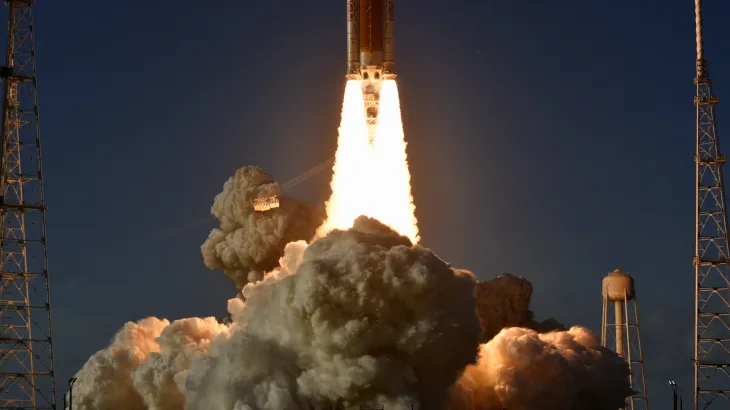
These people have been in zero gravity before. They’ve spent thousands of hours in simulators that imitate the strange things that happen on the Orion spacecraft. Imagine being strapped into a capsule that is going 24,000 miles per hour and going around the Moon without landing. The mission’s 10-day profile tests everything, from life support systems to heat shields for re-entry. The Artemis II launch date was moved back from 2024 to now because to concerns with the Space Launch System (SLS) rocket’s batteries and valves. But recent hot-fire tests in March 2026 set social media on fire. People were transfixed to recordings of the SLS core stage roaring for more than eight minutes.
What makes these astronauts want to keep going? In a press conference, Hansen once said, “It’s about showing the future generation that the stars aren’t just for dreaming.” That feeling is strong, especially in India, where ISRO’s Chandrayaan missions have made kids in Pune and other places crazy about space.
The Technology Behind This Lunar Leap
NASA’s Artemis II isn’t flying blind; it has some very powerful hardware behind it. The Orion spacecraft will take the crew into a very elliptical orbit, slingshotting them toward the Moon. It will sit on top of the SLS, which is the most powerful rocket in the world. This time, there will be no touchdown. Instead, the spacecraft will fly over and get within 80 miles of the Earth to test navigation and communications in deep space.
Important improvements stand out. After Artemis I’s 2022 uncrewed test showed that the heat shield was charring, it was strengthened and can now tolerate re-entry temperatures over 5,000°F. Life support recycles air and water with 95% efficiency, which is a good thing for extended voyages. And don’t forget the ESA-built service module, which has solar panels that open up like big kite wings.
And then there’s the people part. Suits have been altered to make it easier to move about. For example, Artemis III has flexible joints that let you walk on the moon. Protection against radiation? Orion’s storm shelter can protect against solar flares, which are a major threat on the Moon’s unprotected side.
For a quick look at the stack:
The SLS Rocket is 322 feet tall and has 8.8 million pounds of thrust, which is twice as much as the Saturn V.
The Orion Capsule can hold up to four people and can go as fast as 32,000 mph.
Path: Earth orbit → translunar injection → flyby of the moon → splashdown in the Pacific.
This technology isn’t just for NASA. Boeing makes Orion, Lockheed Martin puts it together, and other companies from around the world help out. In India, working with ISRO could lead to sharing lunar data in the future, which would make “Moon mission updates” more popular across the subcontinent.
Echoes of Apollo, Shadows of the Future
Artemis II feels like Apollo 8 all over again, that tense Christmas Eve orbit in 1968 that saw Earth for the first time as a frail blue marble. But the stakes are different now. It was a show of strength during the Cold War, but now it’s about being green. The Moon has helium-3, which might be used for fusion energy, and water ice, which could be used as rocket fuel. Picture gasoline stations in the craters of the moon. Artemis sets the stage for this.
The global context makes it more interesting. China’s Chang’e program wants to build bases in the South Pole by 2030, and Russia’s Luna missions are still going on. The U.S. is in charge of Artemis, but everyone has to work together. More than 40 countries, including India, have joined NASA’s Artemis Accords, which set principles for peaceful exploration.
However, significant challenges remain. Critics decry the $4.1 billion budget overruns associated with each SLS launch, labeling them “pork-barrel expenditure.”
Environmentalists are unhappy about the methane pollution from Launch Complex 39B. And what about the delays? Artemis I worked, but II’s human factor makes things harder. One mistake, and trust goes down.
If we can send four people around the Moon, what’s stopping us from putting flags on Mars next decade?
India’s Role in the Lunar Game
Closer to home, Artemis II is making people in India excited. In 2023, ISRO’s Chandrayaan-3 landed near the Moon’s south pole, dug up dirt, and showed that cheap space wins. Now, rumors about partnerships are growing. NASA’s Lunar Gateway station, which is in lunar orbit and staffed by astronauts, accepts Indian payloads. Think about trials using solar technology or mining resources that are made for tropical climes on Earth.
In Maharashtra, there are a lot of space startups in Pune. Companies like Skyroot Aerospace test launch vehicles based on SLS technology in order to win Artemis contracts. Late-night forums at IITs are full of students talking about the “Artemis II launch date,” mixing their love of cricket with their ambitions of space. India’s Gaganyaan crewed mission is also set for 2026, which fits with Artemis’s timetables for collaborative training.
Real-world connection: Water on the moon may power sustainable tourism or mining operations, making jobs from Hyderabad to Houston. “Artemis II isn’t just a flyby,” one expert says. “It’s the spark for a $100 billion space industry by 2040.”
Obstacles Out of the Way, New Possibilities Ahead
No sugarcoating the bumps. A leak in the propellant ruined an SLS test in January 2026, and Orion’s abort mechanism needed further work. Crew quarantines, which are now typical after COVID, add more levels. But NASA’s work at Kennedy Space Center has the bird ready for final checks.
What do people think? Powered by electricity. Fan art and countdowns for the “#ArtemisII” craze on social media. Kids in Mumbai schools make models of Orion, just like they did with Apollo. NASA is in a hurry because SpaceX’s Starship, which is important for Artemis III landings, is heating up the private sector. Last Thursday, Elon Musk tweeted, “Artemis II will spark the fire for Starship lunar jumps.”
Looking Beyond the Stars
The end of Artemis II is a blazing splashdown in the Pacific, with the crew waving from a helicopter. But it’s not the end. Lessons learned from Artemis III’s landing in 2027 will help Gateway develop and Mars scouts. What is the larger picture? A human race that lives on many planets, mines asteroids, and settles on moons.
This mission reminds us that space isn’t cheap or simple, but we can claim it. Will Artemis II start a new space race or bring us all together under those stars? As the countdown goes on, it’s evident that the Moon’s voice is getting louder and bringing dreamers from all over the world.
NASA’s Artemis II: The Crewed Moon Flyby Poised to Reshape Space Travel for All