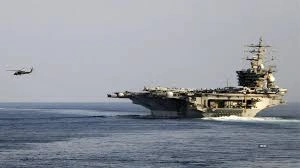
The Indian Navy, operating with a quiet resolve, has taken on the mantle of guardian, a vital role in a world where maritime paths are the lifeblood of commerce. India’s growing significance in securing maritime routes is underscored by its recent actions, including the provision of security for commercial vessels.
This is especially important in the Strait of Hormuz, a key passage for oil and other vital supplies. More than a fifth of the world’s oil travels through this constricted waterway daily.
Outages send ripples through the economy, affecting everything from the price of petrol at Indian pumps to the functioning of factories in Mumbai and beyond.
This isn’t just a display of India’s naval capabilities; it’s a shrewd move to safeguard the nation’s energy supplies in a volatile region.
The escort vessels, including the warships INS Chennai and INS Tarkash, underscore New Delhi’s desire to avoid getting entangled in Middle Eastern conflicts.
What does this mean for regular Indians who are dealing with increased costs? And how long can the Navy keep these vital routes secure as the threats increase?
The Strait of Hormuz: A Critical Chokepoint
Consider a narrow passage, just 21 miles across at its tightest, through which a staggering 30% of the globe’s seaborne oil trade flows. That’s the Strait of Hormuz, the gateway between the Arabian Sea and the Persian Gulf.
Iran is on one side and Oman is on the other. Recently, it has been a flashpoint. Recent fights caused by proxy conflicts, drone strikes, and sanctions have led to harassment of cargo ships, and some have even been taken. Just last month, there were indications that Iranian speedboats were following tankers, which forced them to change course, adding days and dollars to their trips.
This is really near to home for India. The country gets around 85% of its crude oil from other countries, and a big part of that—about 40%—comes through Hormuz. Prices go up when things go wrong here. For example, remember how the tanker assaults in 2019 brought Brent crude prices up 4% in one night? People in Pune and Delhi feel it first at the gas station, and businesses in textiles and electronics are dealing with rising shipping expenses. It’s a different tale around the world: Europe and Asia are scrambling as supply chains get stuck, just like the oil shocks of the 1970s that changed economies.
India’s interests are personal. Refineries at Jamnagar and Kochi depend on consistent flows from the Gulf. Two weeks ago, when tensions were at their highest because of reports of missile launches along the strait, oil futures fell and Indian markets fell by 1.2%. What did the Navy do? Under Operation Sankalp, which has been going on since 2019, assets are being deployed to make sure that trade routes are safe during geopolitical turmoil.
Navy’s Precision Play: Escorts in Action
It’s not like the cool things that happen in Hollywood movies; it’s real life grit. The Indian Navy has safely guided a convoy of five merchant ships, two of which were carrying crude oil to India, through the strait in the past two weeks. INS Sumitra, a corvette that can also fly helicopters, led the way, looking for dangers using drones and radar. The P-8I Poseidon planes patrolled the skies from a distance, and their long-range cameras could see trouble from miles away.
Later, the captains of those ships talked about how relieved they were. One said over the radio, “easy sailing, owing to the Indian shield.” This is part of a pattern: since 2023, the Navy has protected more than 300 ships in the area, stopping piracy and harassment. Some of the most important strategies are layered surveillance with ship-borne radars, aerial patrols, and satellite intel for 360-degree coverage; quick response drills like the recent live-fire exercises against drones and missiles; and diplomatic backchannels working with Oman and the UAE to get real-time threat information.
These movements aren’t done by one person. India works with the US-led Combined Maritime Forces in a flexible way, but it stays away from bigger coalitions so that Iran doesn’t become angry. It’s a tough job to safeguard the 1,200 Indian-flagged ships that pass these seas every year while also showing strength without starting a fight.
The Crisis’s Roots: A Tangle of Tensions
This doesn’t happen in a vacuum. The problems in the Strait of Hormuz come from a mix of old grievances and new ones. Iran’s nuclear program has been hurt by US sanctions since 2018, which has made Tehran show off its strength at sea. Add Houthi rebels in Yemen, who have Iranian drones, shooting at ships in the Red Sea, and the strait feels the ripple. Since October 2023, there have been more than 50 reports of proxy fights related to the Israel-Hamas war.
Forget about geopolitics; economic warfare is coming. Iran has threatened to mine the strait or completely block it off, which would be a “chokehold” maneuver that might cut the world’s oil supply by 20 million barrels a day. Experts say that a full closure would cost $100 billion in trade losses every week. For India, it’s bad: using several routes via Africa’s Cape adds 10 to 15 days and millions of dollars in gasoline.
But hope still shines through. Backchannel negotiations between Tehran and Washington, pushed by Gulf powers, are meant to calm things down. Oman, always the peacemaker, held covert meetings last week. Still, the Navy stands on guard because Iran’s Revolutionary Guards have promised a “strong response” to any attackers.
India’s Bigger Game: From a Regional Player to a Sea Power
Why is India leaning so hard? It’s about strategy and staying alive. New Delhi can’t afford black swan events because it is the third-largest oil importer in the world. The Navy’s patrols in Hormuz show that they can rely on themselves—no more begging allies, more leading the battle. This meshes with Modi’s “Atmanirbhar Bharat” drive, and soon there will be domestic ships like the Nilgiri-class destroyers in the fleet.
If you zoom out, you’ll see it’s part of a naval renaissance. India wants to have a blue-water presence from the Malacca Strait to the edge of the Indian Ocean. Exercises like Milan 2024, which will have 50 countries taking part, help to improve that image. Safe straits signify a steady rupee, which is important because inflation is around 5.5%.
Think about how this will affect businesses: Last month, a Coimbatore exporter avoided delays thanks to Navy escorts, which saved them lakhs in demurrage fees. Or look at Chennai’s ports, which are busy with goods coming from the Gulf. When it’s safe, trade happens; when it’s not, shelves are empty.
But there are still questions. Is India able to handle this without going too far? China is looking at the Indian Ocean through Gwadar, and the Hormuz operations send a message to Beijing: India’s navy means business.
Global Echoes and India’s Special Advantage
The world is watching. The US Fifth Fleet, which is based in Bahrain, does most of the hard work, but India’s neutral position makes allies. New Delhi trades oil with Iran, which gives it power that Tehran respects. Last year, it traded 5 million tonnes of oil. India may now accompany ships of various flags, from Greek tankers to Japanese bulkers, thanks to this “multi-alignment.”
People in India are both proud and worried. There is a lot of talk on social media about #IndianNavyStrong, but long lines for gas in Kerala lead to arguments: Should we get more suppliers more quickly? There are plans to bring in more Russian oil through Arctic routes and more US LNG, but Hormuz is still the best place to get oil. Every day, the strait moves 21 million barrels of oil, 2.5 million of which go to India. It also moves 20% of the world’s LNG, half of which India buys, and 3 million tons of dry cargo, which is important for grains and products.
During the Strait of Hormuz crisis, the Indian Navy stepped up as a safeguard for global commerce.